E-Paper



Cheetah project in Gujarat faces setback due to incessant rainfall
Gujarat government had aimed to complete the project by December. However, due to the delays caused by the heavy rains, the project is now expected to be finished by March or April next year


Ahmedabad/New Delhi: Incessant rainfall in Kutch this year has delayed the establishment of a ₹20-crore cheetah conservation breeding centre in the Banni grasslands, a project sanctioned by the Centre, said officials on Saturday.
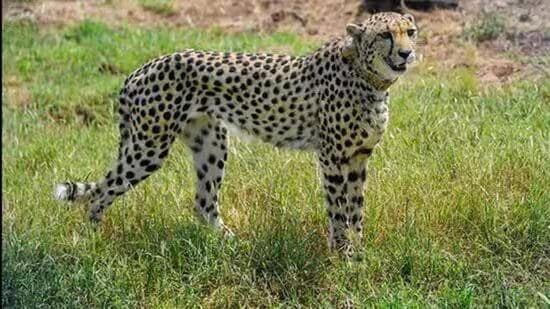
“The National Tiger Conservation Authority (NTCA) did not set a specific deadline for the project, but the Gujarat government had aimed to complete it by December. However, due to the delays caused by the heavy rains, the project is now expected to be finished by March or April next year,” said a senior Gujarat forest official, who requested anonymity.
He added that the Centre had already released ₹3 crore for the project.
Kutch district, which houses the Banni grasslands, witnessed exceptional rainfall this year, receiving 185% of its seasonal average by August 2024. The heavy downpours, which caused widespread flooding, disrupted the groundwork for this crucial conservation project, forcing authorities to reassess their implementation strategy in the region.
Earlier this year, the central zoo authority (CZA) approved the establishment of a cheetah conservation breeding centre in the Banni grasslands to facilitate the reintroduction of cheetahs to Gujarat after decades.
The centre is designed to house 16 cheetahs, furthering India’s wildlife conservation efforts, said officials.
The Gujarat forest department has set up a 500-hectare enclosure in Banni, Kutch, for the breeding centre. The project includes the construction of fencing, habitat redevelopment, and the establishment of a hospital.
“We have built a hospital, an administrative unit, and a quarantine unit. Additionally, we have designated 70-80 hectares of Buma, a controlled and enclosed area within the breeding centre, for the soft release of cheetahs. This area will help the cheetahs transition gradually from the quarantine unit to the larger breeding enclosure, allowing them to adapt to their new environment,” said Sandeep Kumar, chief conservator of forest (CCF), Kutch territorial forest circle.
Banni was chosen from ten potential sites identified in 2009 for cheetah reintroduction due to its savannah-like habitat, which resembles east African landscapes. The region also features Pilu trees (Salvadora persica), providing suitable perching spots. Historically, cheetahs were present in the area, with records of cheetah hunting in Saurashtra and Dahod until 1921 and references to their presence in Gujarat until the early 1940s, said officials.
To support the cheetahs, the forest department has improved about 14,000 hectares of grasslands at Banni and introduced a chinkara (gazella) breeding program to bolster the prey base.
“So far, 40 chinkaras have been released in phases to establish the prey base. These animals, sourced from the Rampara Wildlife Sanctuary, were introduced in batches of 20, 10, and 10, with the final phase completed recently. Next, the forest department aims to introduce blackbucks,” said Kumar.
HT sought a comment from the ministry of environment, forest and climate change (MOEF&CC) regarding the delay in the project and is awaiting a response.
In December 2023, a proposal initiated by the Gujarat government and submitted to the National Compensatory Afforestation Fund Management Authority (National CAMPA) was approved by the executive committee of National CAMPA.
The Banni grasslands, along with the Kutch Desert Sanctuary, cover approximately 5,000 km² in the Kutch district of north-western Gujarat. The area lies south of the Rann of Kutch mudflats, and parts of it get inundated by seawater during the rainy season.
The centre will introduce cheetahs either from Namibia or South Africa, including Kenya, with an equal mix of males and females, said another government official aware of the matter.
The primary focus of this conservation centre will be cheetah breeding and development, not tourism, officials emphasised.
“We may consider free-ranging cheetahs in the region with some tourism activity, perhaps a decade or two later once a substantial population has been established,” the official added.
Also Read: Ecostani | Two years of Project Cheetah: More pitfalls than success
“With proper management strategies and plans to restore the habitat in this presently degraded system, ungulate densities can increase substantially. Under such conditions, it would be possible for this region to support as many as 55 cheetahs, as per carrying capacity estimates,” reads a report, ‘Assessing the Potential for Reintroducing the Cheetah in India’ prepared by the Wildlife Trust of India and Wildlife Institute of India for the MOEF&CC.
The region is home to various carnivores, including hyenas, wolves, jackals, Indian foxes, caracals, and jungle cats. It also hosts seasonal visitors like the lesser florican and Houbara bustard and boasts around 32 species of palatable but salt-tolerant grasses. Three Great Indian Bustards have been reported in Abdasa grasslands, about 40 km away.
The Banni project initiative comes over two years after the launch of the cheetah reintroduction project at Kuno National Park in Madhya Pradesh on September 17, 2022.