
 E-Paper



Chief minister Fadnavis pitches Mumbai as Global South climate finance gateway
Fadnavis invited global institutions to partner with the state government for scalable climate transition models that can be replicated across emerging economies

 Prefer HTon Google


Maharashtra chief minister Devendra Fadnavis on Tuesday pitched Mumbai as a climate finance gateway for the Global South, which requires trillions of dollars for sustainable infrastructure in energy, transport, urban systems, and adaptation.
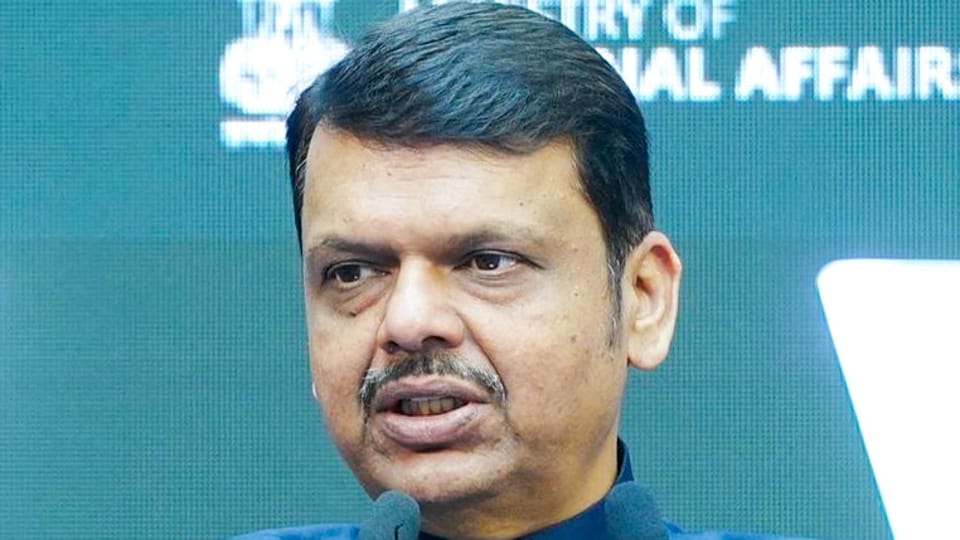
“The scale of climate transition required globally and in developing economies cannot be funded by public budgets alone. It requires catalytic capital. It requires blended finance. It requires innovative risk-sharing frameworks. It requires patient capital for early-stage technologies. And it requires confidence in execution,” said Fadnavis at the inaugural event of India’s first three-day citizen-led Mumbai Climate Week (MCW). MCW is the first such event in the Global South.
Heads of government, global and Indian business leaders, climate innovators, etc are attending the event, which seeks to transform climate dialogue into action. Former US Secretary of State Hillary Clinton, Union ministers, industry leaders, former cricketer Sachin Tendulkar, cosmonauts Rakesh Sharma and Shubhanshu Shukla are among those attending the event.
MCW is led by NGO Project Mumbai and is supported by the Maharashtra government, the environment and climate change department, Mumbai Metropolitan Region Development Authority (MMRDA), and the Brihanmumbai Municipal Corporation.
Fadnavis invited global institutions to partner with the state government for scalable climate transition models that can be replicated across emerging economies. He said Mumbai has deep financial markets, strong regulatory institutions, growing green finance platforms, and environmental, social, and governance-focused capital pools. “If climate capital must flow at scale, Mumbai is ready to become a medium for that flow,” said Fadnavis, addressing partners in multilateral institutions, finance, and philanthropy.
He said climate change is today’s governance challenge in a dense coastal megacity like Mumbai, the financial nerve centre of India. “When Mumbai experiences extreme rainfall, it is not a statistic. The trains halt. Homes [are] flooded...When heatwaves intensify, it is not a graph on a presentation. It is construction workers, street vendors, and farmers facing real hardship.”
He said climate finance is a critical aspect for making the green transition. He added that climate justice is equally central to the global climate dialogue. “Developing economies are building infrastructure for the first time at scale. We must build it sustainably. But we must also build it affordably and rapidly,” said Fadnavis. “The Global South must not be forced into a choice between growth and responsibility.”
Fadnavis said Maharashtra has made great strides in renewable energy. “India added an additional 55 GW to its 552 GW installed capacity in one year, the fastest ever... this has been led by 75% renewable sources. I am proud to say most of this has come from Maharashtra,” he said.
“In Maharashtra, we are roughly at 48 GW installed capacity with 21% renewable. But this number will change significantly by 2030. When we approach 84 GW installed capacity, we will have more than 50% from green and clean sources. We are doing this by scaling green hydrogen, electric mobility, biofuels, and sustainable infrastructure.”


