
 E-Paper



China moves troops to Doklam, Indian army says routine movement
Officers say China’s movement is part of winter stocking exercise.

 Prefer HTon Google


The India army has downplayed reports about heightened activity by the People’s Liberation Army (PLA) in the Doklam plateau and attributed this more to the rotation of troops and winter stocking than a desire by China to strengthen its presence in a region where armies of the two countries were locked in an uneasy 73-day standoff last year.
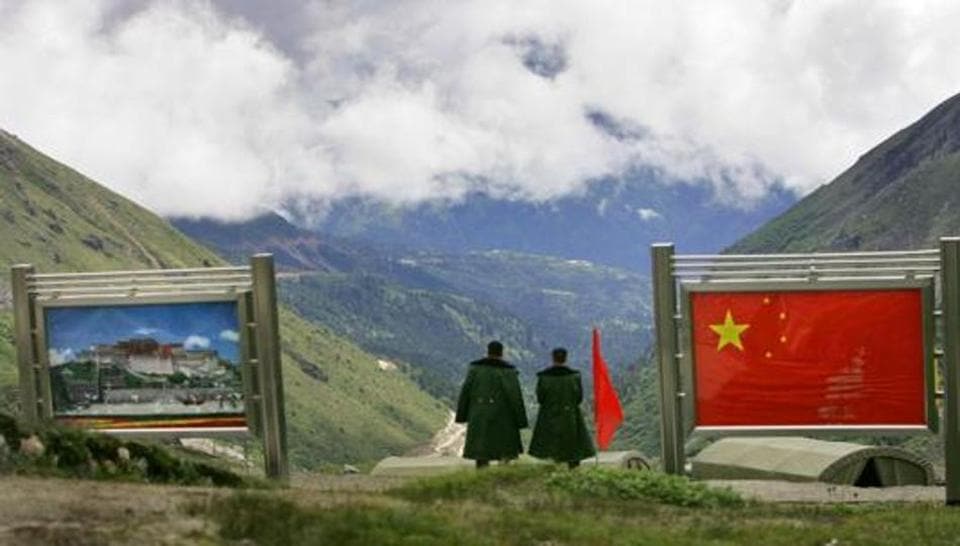
Senior army officers who spoke on condition of anonymity said the Chinese had made no attempt to cross the Torsa nullah that virtually bisects the 100 sq km plateau near the tri-junction of India, China, and Bhutan. They added that there had been no change in the ground situation.
The PLA, the Indian army (out of Doklam, or Doka La as India calls it) and the Royal Bhutanese Army (at Chela Post) are stocking their posts for winter. When there’s a changeover for troops, the strength of the posts is temporarily doubled with outgoing troops briefing their incoming counterparts.
The army’s explanation comes after US Congresswoman Ann Wagner said during a US Congressional hearing on Wednesday that the Chinese PLA had resumed activities in Doklam.
The army officers cited above added that, specifically, the PLA battalion guarding the Batang La-Meru La-Sincha La axis, which is part of the Doklam plateau, is being rotated with supporting logistics activity.
“As in the past year, the PLA plans to stay put in Doklam area this winter; the other two armies (India and Bhutan) are also stocking up for normal heavy snows in this mountainous region,” said one of the officers.
The Chinese PLA has around 700 troopers in the Doklam area with a back-up of heavy vehicles and large prefabricated barracks.
The Torsa Nullah, which meets Amu Chu in Chinese territory, divides the plateau in such a way that 60% is under Chinese control and the remaining with India.
Contrary to the reports, the PLA has no surface-to-air missiles or S-300 systems placed in the area as they would be sitting ducks in times of hostility with the Indian Army sitting on the dominating heights of Doklam plateau, the officers said. The Chinese do have surface-to-air missiles, but these are stationed deep within Chinese territory, in Yadong, the officers added. The Royal Bhutan Army also has a significant number of troopers at Chela Post to monitor Chinese movement despite Beijing putting pressure on Thimpu to resolve the border dispute between the two countries.
Although the Chinese PLA had been sending patrols to meet Bhutanese troops after crossing the Torsa Nullah gorge on Doklam since the previous decade, the 2017 stand-off occurred as the PLA tried to carve out a road to reach Jhampheri ridge at the point close to Indian positions in Doklam and where the Torsa Nullah was crossable on all-terrain military vehicles.
According to Indian Army officers, if the PLA had been allowed to cross the nullah at that place, the Indian positions would have been rendered vulnerable.


