The deployment of at least 50,000 People’s Liberation Army (PLA) troops along the Line of Actual Control (LAC) in eastern Ladakh and in the occupied Aksai Chin region, apart from heavy weaponry and missiles, is indicative of the Russian influence not only on Chinese military equipment, but also in war planning and execution, according to a top Indian Air Force (IAF) officer.
The officer, who dissected the Chinese positioning and war plan in a worst-case scenario for HT on condition of anonymity, said that a Chinese offensive, if and when it comes, is likely to involve troops moving forward under a barrage of artillery and rocket fire, with surface-to-air missile batteries giving protection to their weapon systems from IAF attacks. “This is the old Soviet way of fighting a war, with troops based in depth areas (in this case, Hotan airbase 320km from the Line of Actual Control) providing the air-defence cover,” the officer added.
While several strategic experts believe that any future war will be fought with stand-off weapons used to force Indian fighters to remain on ground, the IAF’s “disperse, absorb, recoup and retaliate” strategy has been war-gamed enough times (including in the Gagan Shakti 2018 exercise) to repel China’s plans, the officer said. He explained that the reaction of the IAF to any offensive is faster than that of the PLA Air Force due to the distance of the LAC from air bases such as Hotan, Lhasa or Kashgar, and that PLA’s surface-to-air missile sites become vulnerable to the stand-off air-to-ground missiles of Indian fighters. “Once air-defence missile systems are knocked out, the amassed artillery, rockets and troop concentrations become exposed on the Tibetan desert, where there is no natural camouflage cover for these systems,” the officer said.
The officer cited above further said that while the PLA has packed depth areas with troops, any aggression on mountainous terrain will not be easy against a dug-in adversary like the Indian Army in Ladakh. The 1999 Kargil war taught the Indian army that when the aggressor is concentrated and exposed, it becomes vulnerable to air interdiction. This makes the effort to hit Indian troops, who are dominating strategic heights both in the north and south of Pangong Tso, harder in the winter months. Even a Chinese stand-off weapon, given its circular error of probability (a measure of precision) may find it hard to target dug-in troops sitting on mountaintops in sub-polar temperatures, and in the absence of cover from attacking forces in the cold Ladakh desert and the Soda Plains, he added.
{{/usCountry}}The officer cited above further said that while the PLA has packed depth areas with troops, any aggression on mountainous terrain will not be easy against a dug-in adversary like the Indian Army in Ladakh. The 1999 Kargil war taught the Indian army that when the aggressor is concentrated and exposed, it becomes vulnerable to air interdiction. This makes the effort to hit Indian troops, who are dominating strategic heights both in the north and south of Pangong Tso, harder in the winter months. Even a Chinese stand-off weapon, given its circular error of probability (a measure of precision) may find it hard to target dug-in troops sitting on mountaintops in sub-polar temperatures, and in the absence of cover from attacking forces in the cold Ladakh desert and the Soda Plains, he added.
{{/usCountry}}The officer was confident that Indian forces could sustain a Chinese strike in a worst-case scenario.The military is prepared for a 10-day intensive war, with the Narendra Modi government allowing emergency purchases of critical ammunition and missiles after the 2016 Uri surgical strikes and 2019 Balakot strikes against Pakistan. “Any India-China hostility is unlikely to continue at an intense level without global intervention beyond 10 days,” the officer explained, adding that the indigenous ammunition is available for 40 days and conventional bombs for 60 days.
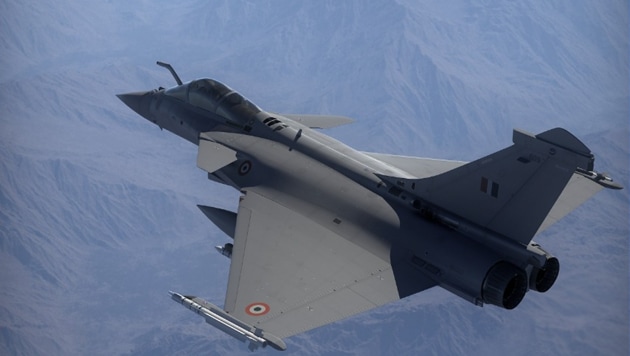
With four or five additional Rafale fighters, on which IAF pilots are training in France, ready to join the Ambala squadron next month, and a new Ladakh Corps Commander, Lt Gen PGK Menon, taking over, both the armies appear quite evenly matched, he said.
In tensions that began in early May, Indian and Chinese troops have come face-to-face at multiple points along the LAC. In some of these areas, particularly the Finger Area and Depsang, Indian forces have been cut off from points they could previously patrol. But the Indian Army now controls ridgeline positions on the lake’s southern bank that allow it to completely dominate the sector and keep an eye on Chinese military activity, with the positions scattered across Rezang La, Reqin pass, Gurung Hill and Magar heights.
The Indian Army has also taken control of key heights overlooking the PLA’s deployments on the Finger 4 ridgeline on the northern bank of Pangong Tso where rival soldiers are deployed barely a few hundred metres from each other.
Last week, defence minister Rajnath Singh told lawmakers in Parliament that no force in the world can stop the Indian Army from patrolling the country’s borders in the Ladakh sector, signalling a strong resolve to regain access to several areas that are now difficult to reach due to actions by the Chinese army along the LAC, even as the focus of multiple diplomatic and military talks between the two sides has been to “disengage and de-escalate”.
Lieutenant General AS Lamba (retd), former Vice Chief of Army Staff, said: “The situation on the LAC is escalating despite intense diplomatic efforts by India and talks between military commanders (of both the nations). It requires full operational readiness all along the LAC to pre-empt any reckless action by China.”