
 E-Paper



India prepared for a long haul over disengagement but not yield an inch in Ladakh
As of now, there is no change of situation on ground with People’s Liberation Army (PLA) troops still on finger four mountainous spur on north Pangong Tso lake and Indian Army dominating the Rezang La Rechin La ridgeline on the Line of Actual Control (LAC).

 Prefer HTon Google


Although India and China has agreed to stop sending more troops to Ladakh front-line, New Delhi is prepared for a long haul of multiple rounds of military-diplomatic talks before a firm political understanding is reached between two sides on complete disengagement.
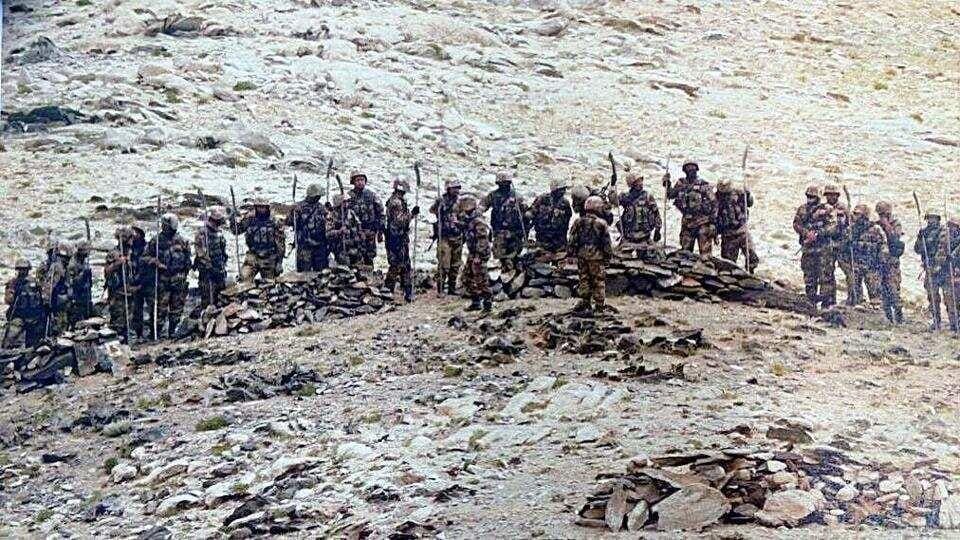
“This is going to be a long drawn out process and it will be foolhardy to assume that results will be achieved in one or two rounds of talks. While both sides have agreed in principle not to send more troops to the border, there is no means for both sides to verify this on ground as neither would like to share information collected through communication intercepts and spatial intelligence,” said a senior official.
As of now, there is no change of situation on ground with People’s Liberation Army (PLA) troops still on finger four mountainous spur on north Pangong Tso lake and Indian Army dominating the Rezang La Rechin La ridgeline on the Line of Actual Control (LAC). There has been no change in situation in Gogra-Hot Springs sector as the PLA have linked the withdrawal there to Pangong Tso disengagement.
ALSO WATCH | DRDO’s plan to help feed Indian forces amid Ladakh long haul against China
China watchers believe that the Ladakh situation will require a series of dialogues before understanding between the two sides builds up on how to keep the LAC quiet post May intrusions by the PLA in western sector. Given the continuous infra upgrade across the occupied Aksai Chin and Arunachal Pradesh by China, the PLA capacity to rapidly deploy on the LAC is better than Indian Army. This means that till such time a larger political understanding is reached, the Indian Army will have to be on alert all along the LAC as PLA cannot be allowed to take advantage again.
Apart from Ladakh, there has been PLA build-up in depth areas of Arunachal with focus around Nyingchi as the latter is going to connected soon with Lhasa by rail road. The Chinese are also building a rail road from Shigatse or Xigaze to Yatong or Yadong in Chumbi Valley, which will put pressure on Indian Siliguri corridor. The upgrade in Tibet and Xinjiang is not only designed to put pressure on India but largely to consolidate the hold of Han Chinese on these sensitive areas as part of the Communist party’s Sinicization programme.


