
 E-Paper



Clause 6 of Assam Accord: Panel member seeks firm steps to safeguard natives
This is the first time a member of the panel, Pallab Bhattacharya, has spoken on the mandate before the panel in the context of an updated citizens’ register released on Saturday.


A high-level committee formed by the Modi government to protect the ethnicity of native Assamese will have to recommend measures that will “adequately offset the public’s dissatisfaction” with the outcome of the National Register of Citizens (NRC), a member of the panel has told Hindustan Times.
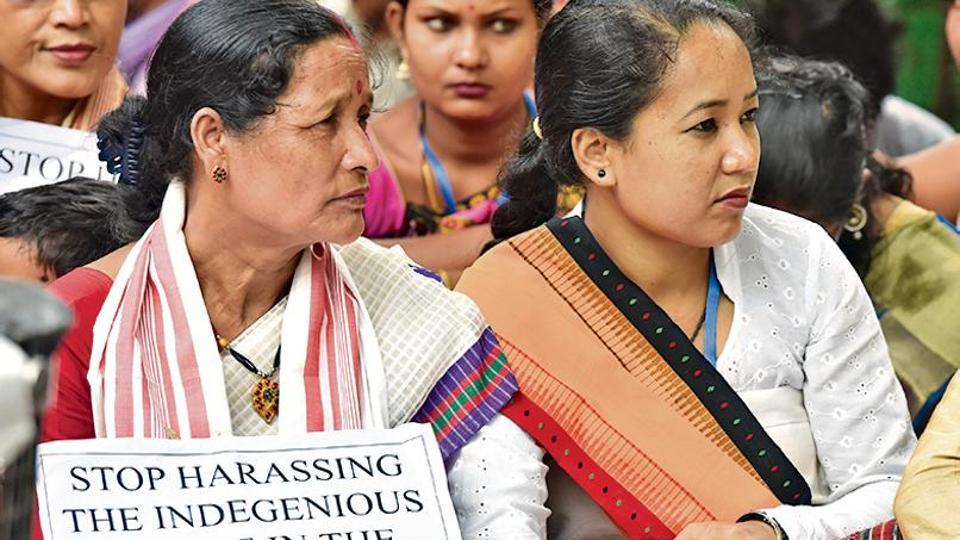
The committee’s mandate is to suggest steps to accomplish the objectives set out in Clause 6 of the landmark Assam Accord. This is the first time a member of the panel, Pallab Bhattacharya, has spoken on the mandate before the panel in the context of an updated citizens’ register released on Saturday. “We have seen that the NRC exercise hasn’t been to the satisfaction of a large number of organisations and the people. This has made our task both complicated and onerous,” Bhattacharya said.
The Assam Accord, an agreement, was signed in 1985 between the then Rajiv Gandhi government and the All Assam Students’ Union (AASU), ending a six-year mass movement against migrants alleged to have settled illegally from neighbouring Bangladesh.
Clause 6 of the agreement states that “Assamese people” would have “constitutional, legislative and administrative safeguards, as may be appropriate to protect, preserve and promote” their “cultural, social, linguistic identity and heritage.”
The Modi government had to reconstitute the committee on July 16 after members of an earlier panel had resigned, protesting the Modi government’s decision to amend the Citizenship Act to grant non-Muslim migrants from Bangladesh citizenship rights. The committee has invited suggestions from the public for the proposed recommendations, which will have to be submitted by September 20.
“Our feedback tells us that the entire people of the state is looking up to us and the clause 6 committee now,” he said.
Bhattacharya said one set of reference points for public suggestions was reservation for indigenous people in the state’s Assembly, Parliament, public sector units and even private enterprises.
Bhattacharya said indigenous people will also need “protection of their right to land”, meaning possibly that it would recommend measures to put restrictions on who could purchase land in the state. The question of land isn’t part of the clause 6.
Although these reference points were outlined in a public advertisement on August 22, Bhattacharya said it is possible that, additionally, it could look into regions within the state where the largest numbers of alleged “foreigners” had settled between 1951 and 1971.
“We have to look at these places and ascertain how have illegal migrations impacted people in these regions in the state. We do not know what has been the impact on their culture or language,” Bhattacharya said.
Assam’s “anti-foreigner agitation” in the 1980s, which led to the signing of the Assam Accord, was prompted by historical waves of migration from Bangladesh. Locals say they feel swamped by illegal migrants.
Bangladesh, from where people have supposedly migrated unabatedly, does not accept that these are its citizens and, in most cases, there is no
evidence to suggest that they belong to that country. It is this complexity that the updated citizens’ register, which weeded out 1.9 million residents, sought out to address through a labyrinthine bureaucratic process.
A tricky question before the panel is a standard definition of who is a native in a state that is a virtual museum of many ethnicities and races. Bhattacharya said a definition of an Assamese or indigenous person was suggested in 2012 by the Pranab Gogoi committee, which many parties had accepted. “We will work on it and look into suggestions, consult all tribes and academics.” Pranab Gogoi is a former speaker of the state’s legislative assembly.
Professor Sandhya Goswami, a political scientist who retired from Gauhati University, said the citizens’ register could be improved upon but it ought not to be rejected outright. “We cannot go on fighting about the number and, in my view, anybody who has fully assimilated within Assam’s culture is an Assamese. Of course, this is not the same as an indigenous person.”


