
 E-Paper



Colleagues recall encounters with Manmohan Singh
Speaker after speaker described Manmohan Singh as one of India’s greatest prime ministers, and yet a humble man.


Renowned economists, top diplomats, former colleagues and friends of the late PM, Manmohan Singh, offered riveting insights into his personality and career at an event organised by his family on Saturday in the national capital to celebrate the leader’s life.
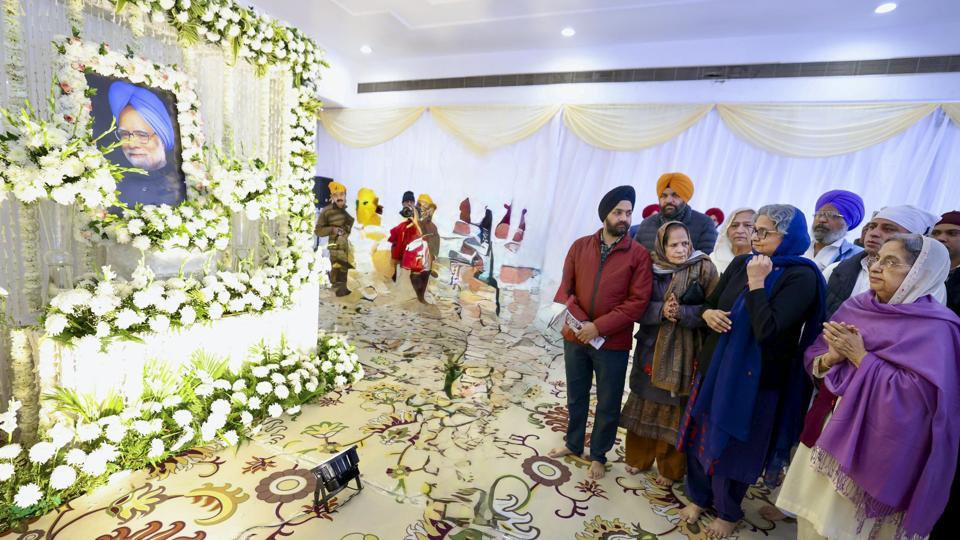
Speaker after speaker described Singh as one of India’s greatest prime ministers, and yet a humble man. Former foreign secretary Shyam Saran, who was a key negotiator of the landmark India-US civil nuclear agreement, recalled how and why Singh went for the deal, even putting his premiership on the line.
“The Indo-US nuclear deal was his gift to the nation. In November 2004, I came back from a visit to Washington as foreign secretary with a US proposal to negotiate a civil nuclear cooperation with India, which would de facto acknowledge India as a nuclear power.”
“The PM’s initial reaction was one of caution. He asked, ‘what would India have to give in return and what it would do for India?’ I said the negotiations would be difficult but it would result in the dismantling of all the technology-denial regimes, which had kept India hemmed in for decades.”
After being briefed about the “benefits” – diplomatic clout, strategic leverage and access to technology -- it took “only a few moments of reflection before he gave the go-ahead”, said Saran.
Also read: Bangladesh chief adviser Muhammad Yunus pays tribute to Manmohan Singh at Indian High Commission
Opening the memorial service, the late PM’s elder daughter Upinder Singh, a historian, said none of Singh’s children became politicians or economists because “all of us were very independent minded…and our parents gave us this freedom”. Her father was a good singer, she said, to everyone’s surprise.
Daman Singh, Singh’s other daughter, is an author. Amrit Singh, the youngest sibling who teaches at Stanford Law School, presented a song by poet Faiz Ahmed Faiz, as their mother Gursharan Kaur watched.
Poet and lyricist Javed Akhar, a former Rajya Sabha MP, said Singh was “fundamentally never a politician…because politicians are a different tribe”. “He didn’t have even one quality of a politician. He never banged his desk. He never made false promises. He never praised himself. How was he a politician?”
Nobel laureate Amartya Sen, in a video message, called Singh a visionary leader and said: “For me personally, he was the warmest of friends for nearly 70 years”. As finance minister in 1991, Singh changed the country’s economic landscape by opening up the economy and removing shackles from industry with his landmark reforms.
Also read: Manmohan Singh: The unsung maestro of Parliament
Sunil Bharti Mittal, the chairperson of Bharti Enterprises that runs telecom service provider Airtel, said Singh gave entrepreneurs like him “freedom”. Economist Montek Singh Ahluwalia recalled that when food prices spiralled extraordinarily during the premiership of Indira Gandhi, she asked Singh what should be done.
Most economists suggested nationalising the wheat trade to prevent traders from profiteering. Singh, then an economic adviser, told Gandhi that controlling prices through direct government control would be a bad idea and a classic combination of monetary and fiscal policy was needed.
“Indira Gandhi said to Singh: ‘Are you able to guarantee that if I follow this advice, the prices would come down?’ Singh’s reply: ‘Madam, I can guarantee you that prices will come down, but it would take about a year’. It was a tough decision, not easy to say this to the PM,” Ahluwalia said.


