E-Paper



Commercial LPG rate hiked by ₹195, jet fuel price doubled to ₹2 lakh
Aviation turbine fuel prices for domestic airlines rose from ₹96,638.14 per kilolitre to ₹207,341.22 per kilolitre in Delhi, registering a 114.55% increase.

 Prefer HTon Google


Amid a deepening global energy crisis, state-run oil marketing companies on Wednesday raised prices of commercial LPG and aviation turbine fuel (ATF), with the latter initially hiked by over 100% before being partially rolled back following government intervention.
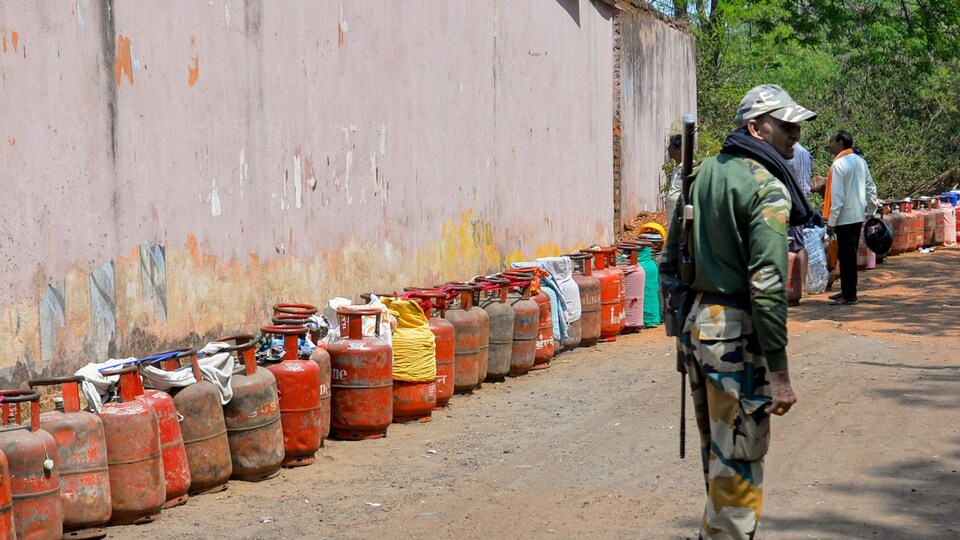
In Delhi, the price of a 19kg commercial LPG cylinder, used by hotels, hostels and restaurants, was increased by ₹195.50, from ₹1,883 on March 7 to ₹2,078.50, marking a 10.4% rise. Rates vary across cities depending on local levies.
This is the second increase in less than a month. On March 7, commercial LPG prices were raised from ₹1,768.50 per 19kg cylinder to ₹1,883, taking the cumulative increase to about 17.5% within a month.
On the same day, state-run oil marketing companies (OMCs) had also increased the price of domestic cooking gas (14.2 kg cylinder) by ₹60 across the country, pushing its retail price in Delhi to ₹913, the highest since August 2023.
The domestic fuel retail sector is dominated by three state-run OMCs — Indian Oil Corporation, Bharat Petroleum Corporation Limited and Hindustan Petroleum Corporation Limited.
The existing practice is that OMCs revise prices of non-sensitive petroleum products such as ATF on a monthly basis based on international benchmarks. Accordingly, ATF for domestic airlines was initially hiked by 114.55%, from ₹96,638.14 per kilolitre to ₹207,341.22 per kilolitre in Delhi. For international airlines, ATF prices rose by 107%, from $816.91 per kilolitre to $1,690.81 per kilolitre effective April 1, according to the Indian Oil Corporation website on Wednesday morning. One kilolitre is equal to 1,000 litres.
“Later in the day, after the government intervened and directed them not to fully pass on the ATF rates to airlines, they moderated ATF prices on domestic routes,” an executive of an OMC said, requesting anonymity.
While the government has moderated ATF rates for scheduled domestic airlines ( ₹1,04,927 per KL from April 1), private jets, chartered planes and unscheduled domestic airlines will pay higher rates of ₹207,341.22 per KL from Wednesday, another executive of an OMC said requesting anonymity.
Subsequently, the IOC website revised the ATF price for domestic routes in Delhi to ₹1,04,927 per kilolitre, effective April 1. However, access to other pricing details, including past rates, was removed from the website.
Later, the petroleum ministry said in a post on X: “ATF prices in India were deregulated in 2001 and are revised on a monthly basis based on a formula of international benchmarks. Due to the closure of Strait of Hormuz and extraordinary situation in global energy markets, the price of ATF for domestic markets was expected to increase by more than 100% on 1 April.”
“In order to insulate the domestic travel costs from the substantial increase in international prices, PSU oil marketing companies of the ministry of petroleum, in consultation with the ministry of civil aviation, have passed only a partial and staggered increase of 25% (only ₹15/litre) to the airlines. Foreign routes will pay for the full increase in ATF prices consistent with what they pay in other parts of the world,” it added.
In a post on X, Civil Aviation Minister K. Ram Mohan Naidu said: “Grateful to Hon’ble Prime Minister @narendramodi ji and the Hon’ble Petroleum Minister Shri @HardeepSPuri ji for this timely and considerate intervention on ATF pricing. This calibrated approach will help shield passengers from sharp fare increases, ease the burden on domestic airlines, and support the continued stability of the aviation sector at this crucial juncture.”
To shield consumers and ensure domestic availability of fuels, the government on March 26 reduced excise duty on petrol and diesel by ₹10 per litre each. The move aimed to provide relief to refiners facing under-recoveries, as fuel prices are linked to international benchmarks. It also imposed export levies of ₹21.5 per litre on diesel and ₹29.5 per litre on ATF to ensure adequate domestic supply.
Public sector OMCs have so far held retail prices of petrol and diesel steady at ₹94.77 and ₹87.67 per litre, respectively, in Delhi. However, on March 20, they raised prices of industrial diesel and premium petrol. Industrial diesel, sold in bulk to commercial users, was hiked by ₹21.92 per litre — a 25% increase — taking the price in Delhi from ₹87.67 to ₹109.59 per litre. Premium petrol prices were raised by ₹2 per litre, from ₹99.89 to ₹101.89.
On March 26, private refiner Nayara Energy, which operates over 7,000 fuel stations across India, increased the price of regular petrol by ₹5 per litre and diesel by ₹3 per litre.