
 E-Paper



Congress political crisis: The parallels in Rajasthan and Chhattisgarh
In both Rajasthan and Chhattisgarh, as much as the Congress governments have been battling the BJP, they have been waging an internal war too

 Prefer HTon Google


December 2018 should have been a time for celebration for the Indian National Congress. Faced with a dominant BJP, with six months to go for a national election, it had wrested three crucial states from the BJP- Madhya Pradesh, Rajasthan and Chhattisgarh. But the days after the declaration of results were far from smooth, with multiple leaders jockeying for Chief Minister’s post, refusing to back down. Even in victory, the party was far from united.
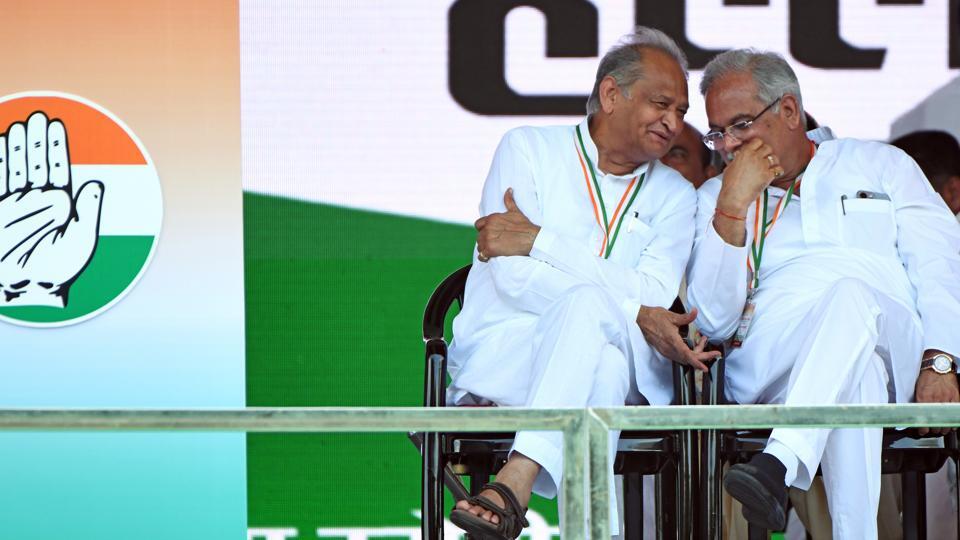
In many ways the genesis of the crisis that has played out in Rajasthan over the past two days lie in these choices made close to four years ago; an indecisive high command, “collective leadership” instead of clean lines of authority, and a state unit in constant strife, with un-mistakeable parallels to events in Chhattisgarh.
In 2018, both Rajasthan and Chhattisgarh had two powerful claimants to the top job. In Rajasthan, there was former Chief Minister Ashok Gehlot, wizened and experienced, with relationships across the party board, and importantly, within the state. His intra-party rival was Sachin Pilot, much younger, suave and well spoken, popular in Delhi. Pilot was made state party chief after the Congress rout in 2013, and his claim was based on a revitalization of the party that he said he anchored. In Chhattisgarh, on one side was Bhupesh Baghel, an OBC from Chhattisgarh’s plains who became party chief after the vacuum that the killing of Vidya Charan Shukla, Nand Kumar Patel and Mahendra Karma had left (they were killed in a Maoist attack in 2013). On the other was TS Singhdeo, from the royal family of Surguja, with influence in North Chhattisgarh. Erudite and soft spoken, his supporters claim he was the man behind a well-received people’s manifesto for the 2018 elections that helped the party’s decimation of the BJP.
In both states, the Congress dithered, with drama for days on end. In Chhattisgarh, there was a fraught, chaotic exercise in a Raipur hotel where the “opinion” of every MLA was sought. In the end, in Chhattisgarh, Baghel eventually became Chief Minister, but with a caveat, Singhdeo supporters have always argued, that it was to be a split-leadership, and that the latter would take over two and a half years later. The timeline was less clear in Rajasthan, but those close to Pilot have always argued that he was made a similar promise too.
Also Read |Rajasthan political crisis: All you need to know about the likely scenarios
What this flux has meant is that as much as the Congress governments in Rajasthan and Chhattisgarh have been battling the BJP, they have been waging internal war too. In both states, loathe to give up their positions, both Chief Ministers have consolidated their positions, angering the men that want to take over. In Rajasthan, Pilot has voiced policy positions at variance with the state government, and in Chhattisgarh, Singhdeo resigned from one cabinet portfolio, critical of his own government’s policies. Supporters of Pilot and Singhdeo have argued that they have been targeted by their own party’s government.
In this tense atmosphere there have been eruptions of revolt, that particularly in Rajasthan have bearing on this week’s events. In 2020, Sachin Pilot seemed to lead a failed revolt, with suggestions that he was hobnobbing with the BJP, and several MLA’s holed up in a Gurugram resort. The location was important, for the BJP is in power in Haryana. Gehlot tided over that crisis, but Pilot supporters argue that then too, he was promised that he was next in line, perhaps even before the 2023 elections. Yesterday, this failed revolt was mentioned several times, with MLAs close to Gehlot arguing that those that worked with the BJP, in an obvious reference to Pilot, should not become Chief Minister.
In Chhattisgarh, Singhdeo has spent many a day in Delhi, hoping for an audience, and coming away with the empty sentence that promises made, would be kept. The two and a half year marker was long gone, but much like Gehlot, Baghel conducted a show of strength of his own, as conversations of a change in guard picked up pace in August 2021. As Singhdeo waited, Baghel paraded 57 MLAs in Delhi as a show of strength, even as the central party asked them to return to Raipur. Both Singhdeo and Pilot supporters argue that this support that Gehlot and Baghel parade is not organic; there is great power vested in the Chief Minister that can be used to political ends; the use of state agencies; the ability to reward loyalists with influential positions. But regardless, these shows of public strength may have furthered a sense of constant flux, but they have worked in the short term, and no change of guard has taken place. Worse, in both places, the Congress leadership has been undermined, their hand forced by a regional pressure group.
Worryingly for the Congress, both Rajasthan and Chhattisgarh are due for an assembly election in late 2023, in the last state cycle before the Lok Sabha polls in 2024. With Punjab lost, and Madhya Pradesh now with the BJP, these are the only two states where the Congress leads the government. In theory, anti-incumbency notwithstanding, these are states they could retain. In Chhattisgarh, the BJP is desperately hunting for a face other than three-time Raman Singh with little success. In Rajasthan, the BJP has infighting of its own to deal with.
But whichever way this now pans out, unless the Congress can break pattern and actually find a long standing solution, they will head into the election season with a dysfunctional state unit, working at odds with each other. Before they beat the BJP, the Congress must find a way to beat its own demons.


