
 E-Paper



Contractor hired to clear waste buries it in villages of Aravalli
According to National Green Tribunal guidelines, waste dump sites require monthly air, soil and water testing to monitor any harmful contamination.

 Prefer HTon Google


TAURU/NUH : A contractor hired to clear 32,000 tonne of waste – household garbage, construction debris and industrial refuse – dumped it across different parts of the ecologically sensitive Aravalli hills in Tauru and nearby villages instead of processing it properly, an investigation by HT has found. The contract was worth ₹3 crore, with 50% paid to the contractor in December.
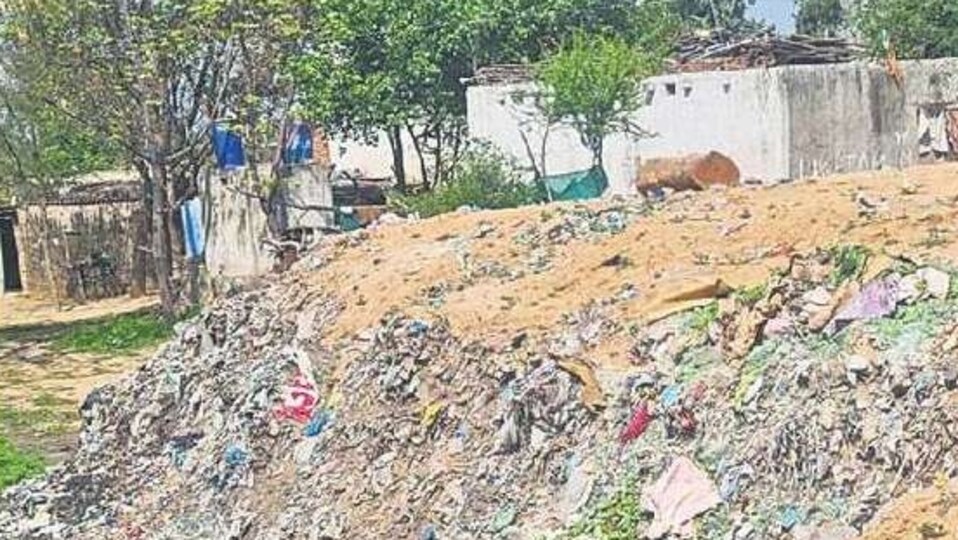
Spot visits by HT at various locations showed the waste was concealed with subsoil to avoid detection, potentially leading to environmental damage. The work order for the “bioremediation” of 32,000 tonne of legacy waste lying unattended for years was issued in November 2024.
Ground visits to at least 10 locations confirmed that rather than scientifically processing the waste, tractor trolleys and trucks transported it to over 20 dumping sites, including deep inside the Aravallis, where workers buried it under layers of subsoil.
Scientific processing involves creating windrows, spraying bio-culture, and passing the waste through trommels of varying capacities and sizes to separate the materials, a process that typically takes at least a month to complete.
The illegal dumping violates multiple environmental laws, including the Environment Protection Act, 1986, the Solid Waste Management Rules, 2016, and the Wildlife Protection Act, 1972.
According to National Green Tribunal guidelines, waste dump sites require monthly air, soil and water testing to monitor any harmful contamination. There were no monitoring records.
When contacted, contractor Jagjeet Nain defended his actions, stating, “It is my wish where I throw the waste,” demonstrating a disregard for environmental regulations.
Deputy commissioner of Nuh, Vishram Kumar Meena, responding to the findings, said strict action will be taken against both the contractor and the municipal body. “We will hold them accountable for environmental compensation, and legal proceedings will be initiated against the contractor,” he said.
Dr Sushil Malik, district municipal commissioner, Nuh, acknowledged the violations and promised a thorough investigation. “The violations have come to our notice, and we will send our team to inspect the sites and verify the claims. A detailed report will be submitted, based on which appropriate action will be taken against the contractor. If any irregularities are found, we will ensure that those responsible are held accountable,” he said.
Environmental activist Vaishali Rana, who works on waste management policies in Haryana, called the incident “a disaster in the making”. “The Aravallis are a crucial ecological zone, and dumping waste here will lead to irreversible damage. The fact that authorities did not ensure compliance with basic monitoring standards indicates systemic corruption and negligence,” Rana said.
Local residents reported witnessing suspicious activities. Younis Khan, a resident of Tauru, observed tractor trolleys loaded with waste heading towards the Aravallis late at night during November and December. “We raised objections, but no one listened. The contractor’s men paid local youths to help dump the waste so that no one could track where it was going. This was done quietly and in the dark to avoid attention,” Khan said.
A 49-year-old resident, who asked to be identified only as Shabnam, said she witnessed workers burying the waste and covering it with soil. When confronted, the workers allegedly threatened her. “Now the whole area stinks, and children can’t even play outside. It’s ruining our lives,” she said.
‘Told it was to build road’
Locals said they were misled into believing the waste was being used for road-widening projects. Residents were told the debris would fill low-lying areas before new roads could be laid.
“They told us they were strengthening the ground for new roads. But nothing has happened, and now we are left with garbage in our fields and on the roadsides. Who will clean this up?” asked Sati Mohammad of Silkho village.
The waste reportedly came not only from Tauru but also from Bhiwadi, an industrial hub. The mixing of different types of waste, including industrial and household garbage, has increased the risk of toxic contamination, experts say. They warn that the waste contains hazardous materials, including plastics and metals, which can leach into the groundwater and enter the food chain.
The use of subsoil — which has a distinct colour from topsoil — to hide the dumping suggests a deliberate attempt to conceal the activity. Site visits showed that the waste was visible just beneath the surface layer.
Experts noted that the municipal corporation of Tauru should have verified compliance before making payments.
Proper verification would have required fraction disposal reports, weighbridge slips, GPS logs, CCTV footage, and environmental test results. None of these checks was conducted, yet the contractor received half the total amount within a month of starting work.
Rana questioned who would take responsibility for the clean-up costs. “ Will they now pay another contractor to clean this up? How much public money will be wasted in this cycle of mismanagement?”
Residents are now calling for an independent inquiry and immediate remediation of affected areas. The illegal dumping has led to a surge in pest infestations, increased air pollution, and deteriorating public health. Local farmers report that contaminated runoff from the waste sites is affecting their fields, making the soil less fertile.
The incident has renewed concerns about waste disposal practices in Haryana. The rapidly urbanising cities of Gurugram and Faridabad generate large amounts of waste, much of which ends up in rural and forested areas, including the protected Aravalli region.
Activists fear accountability may be elusive. “Contractors get blacklisted, but new ones take their place and continue the same practices. The only way to stop this is to enforce strict legal action, blacklist firms, and make officials personally liable for such lapses,” Rana said.


