E-Paper



COP27: India calls for ambitious and concessional finance goal post-2025
The Organisation for Economic Co-operation and Development (OECD) has estimated the flow to be $83.3 billion in 2020 and $79.9 billion in 2018, while Oxfam estimated the mobilized amount to be $ 19-22.5 billion per year in 2017-18.

 Prefer HTon Google


SHARM EL SHEIKH: The new collective quantified goal for the post-2025 period needs to be ambitious and concessional, India said intervening at a high-level ministerial dialogue on climate finance at UN Climate Conference (COP27) on Monday.
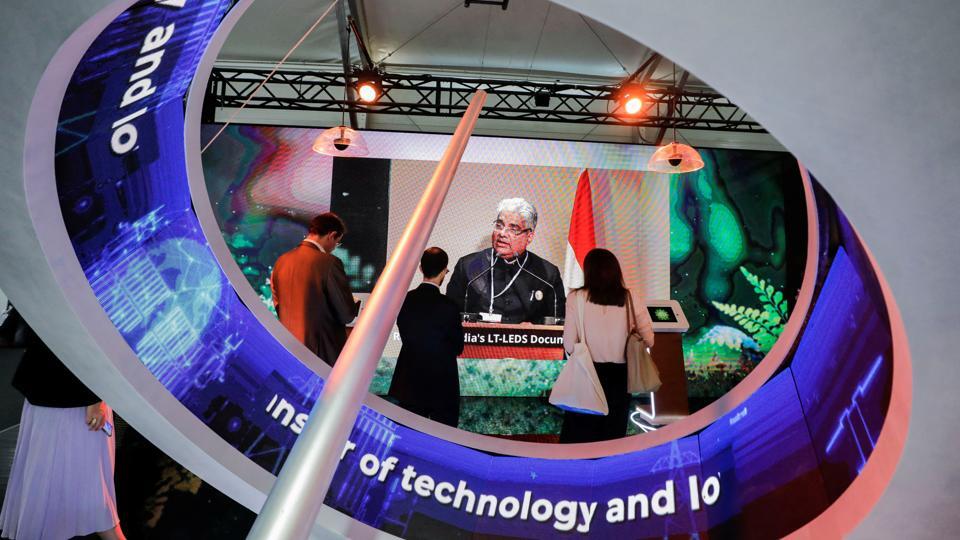
“We need mobilization target at grant/concessional term. We require an ambitious flow of financial resources from various sources - public and private with the developed countries playing a pivotal role in incentivizing flows to the developing countries so that finance - the key means of implementation- is at grant/concessional rates. The Nationally Determined Contributions (NDCs) and the needs determination reports could be a good basis to estimate the requirement,” Union environment minister Bhupender Yadav said in his statement at the ministerial dialogue.
“Access to finance and technology in developing countries is a must-have if we expect to protect our earth and ourselves from apocalyptic changes. The commitment made by the developed countries to mobilize $100 b from diverse sources by 2020 was a meagre amount and remains unachieved till now. The current needs of developing countries are estimated to be in the order of trillions,” Yadav said.
There are several estimates of climate finance.
The Organisation for Economic Co-operation and Development (OECD) has estimated the flow to be $83.3 billion in 2020 and $79.9 billion in 2018, while Oxfam estimated the mobilized amount to be $ 19-22.5 billion per year in 2017-18. Other estimates from United Nations Framework Convention on Climate Change, are $45.4 billion in 2017 and $51.8 billion in 2018, the statement said.
“Evidently, there is no understanding of what really comprises climate finance. Transparency and trust are the backbones of all multilateral discussions. Having a clear definition of climate finance will promote transparency and trust, vital for furthering constructive deliberations. While we take note of the work carried out by the Standing Committee on Finance, there is a need to further work in arriving at a meaningful definition of climate finance,” Yadav said.
“High transaction costs for accessing project preparation grants and considerable co-financing requirements from the developing country need to be addressed. Slow disbursements, lack of flexibility to adapt to changing requirements, and long complex approval procedures with stringent eligibility criteria make difficult access to climate finance difficult. It is not the absence of a bankable project pipeline, but the procedures, inflexibility in approach, and lack of trust with respect to direct access entities that is a problem”, he added.
A ‘Climate finance delivery plan progress report’ released by Canada’s environment minister Steven Guilbeault and Germany’s Special Envoy for Climate Action Jennifer Morgan on November 4 said developed countries have still not been able to mobilise $100 billion.
“In 2009, industrialised countries pledged to collectively provide 100 billion US dollars each year from 2020 onwards. Unfortunately, there is still a gulf between ambition and reality: in 2020, collective climate finance amounted to 83.3 billion US dollars,” a statement by the Federal Foreign Office of Germany said on November 4.
“It is abundantly clear that the global investments needed to respond to the climate change threat are much larger than USD100 billion and that we need to turn our attention to setting an effective, and fit for purpose, post-2025 climate finance goal. We also need to focus on the broader collective goal of making finance flows consistent with low greenhouse gas emissions and climate-resilient development,” the report added.
A climate finance delivery plan released last year ahead of COP26 by Canada’s Jonathan Wilkinson and Germany’s Jochen Flasbarth said developed countries will likely be able to mobilise $100 billion a year only in 2023, three years after the original deadline of 2020.