
 E-Paper



Coronavirus update- ‘Need time’: Kejriwal explains his Tablighi challenge to PM Modi on lockdown
As Arvind Kejriwal sat in front of a camera to participate in Saturday’s video conference with the Prime Minister, Lieutenant Governor Anil Baijal hit the streets to conduct surprise inspections to ensure that the lockdown and social distancing norms were being followed scrupulously.

 Prefer HTon Google


Chief Minister Arvind Kejriwal told Prime Minister Narendra Modi on Saturday that Delhi will follow the Centre on the lockdown but would need two weeks to make the national capital’s containment zones airtight after each and every contact of the Tablighi Jamaat has been verified and quarantined.
Kejriwal’s pitch for a two-week extension of the lockdown came amid mounting concerns in the city administration that the government may not have yet been able to locate every person who either was a part of the March congregation of the Islamic religious sect or their contacts.
Follow latest updated on coronavirus here
The chief minister’s stand, finalised in consultation with Delhi Lieutenant Governor Anil Baijal, comes a day after the Delhi government expanded the list of hotspots in Delhi to cover parts of central and south Delhi that have been associated with cases linked to the Tablighi Jamaat congregation.
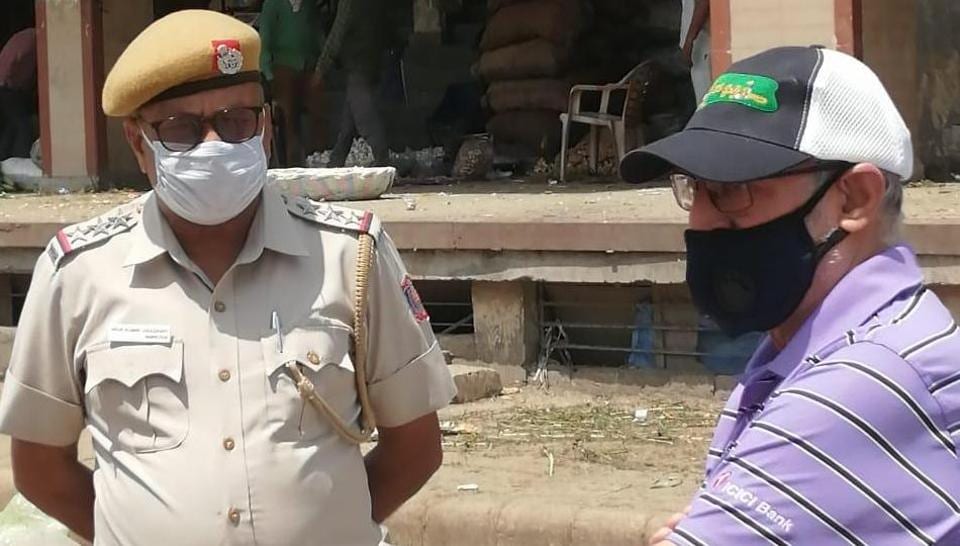
As Arvind Kejriwal sat in front of a camera to participate in Saturday’s video conference with the Prime Minister, Lieutenant Governor Anil Baijal hit the streets to conduct surprise inspections to ensure that the lockdown and social distancing norms were being followed scrupulously. His first stop was the Azadpur mandi, Asia’s largest fruit and vegetable wholesale market.
Also read: ‘I am always available’, PM Modi tells chief ministers during Covid-19 meet
This is one of the few places in the national capital that has been allowed to continue through the lockdown to ensure that there is no disruption in supplies of vegetables for millions of residents of Delhi. Baijal was accompanied by senior officers of the police and the Delhi Agricultural Marketing Board.
He next travelled 20 kms away, to the Ghazipur poultry market that had been opened after the Home Ministry exempted poultry and fish trade from the lockdown less than 24 hours earlier. Anil Baijal could spend some more time on the streets, visiting markets in Okhla and a few other spots as well, a government official said.
Baijal, who has underlined the Tablighi link to a majority of Delhi Covid-19 cases at several meetings, is on the same page as Arvind Kejriwal on the potential risk of rushing to lift the lockdown in Delhi.
Over 150 of the 183 people who had tested positive for the coronavirus disease in Delhi yesterday - it was Delhi’s highest single-day jump in Covid-19 cases - were linked to the Jamaat’s congregation. Already, the congregation has been linked to 554 of the 903 Covid-19 cases that were confirmed till Friday evening.
Also read: On Covid-19 lockdown, PM Modi to strike a balance between saving lives and livelihood
Prime Minister Narendra Modi hasn’t indicated his mind on the extension of the lockdown in the country yet. At the last video conference with chief ministers, he had asked them to look at how the country could exit the lockdown mode without compromising the safety of millions of people.
One option that Prime Minister Modi and his team are looking at is to divide the country into three zones - red, yellow and green - depending on the number of cases that have been reported. The ground rules for each of these zones would be different.


