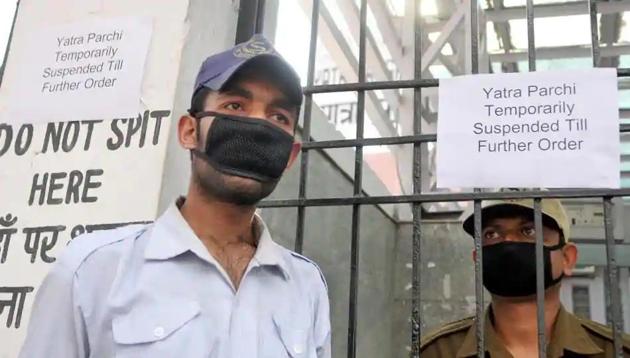
For the first time in the history of Shri Mata Vaishno Devi Yatra, no pilgrim visited the holy cave shrine during the ongoing nine-day long Navratri festival. This is due to the coronavirus outbreak and the ongoing nationwide lockdown. The holy festival of Navratri would culminate on Thursday.
The famous pilgrimage attracts lakhs of devotees from various parts of the country and abroad throughout the year. Katra, the base camp, bursts at the seams during Navratri festival when the footfall of the pilgrims goes up to 35,000 to 45,000 every single day.
However, this Navratri, the hustle-bustle was missing and the Katra town, two tracks and the sanctum sanctorum remained deserted.
Consequently, Shri Mata Vaishno Devi Shrine Board suffered a loss of around Rs 4 crores this Navratri.
“During Navratri festival, the base camp of Katra, on an average, witnesses a footfall of 35,000 to 45,000 pilgrims in a day. And, during this nine-day long festival, offerings in cash, ornaments and online donations accrue to Rs 45 lakhs on a single day. The major share always belongs to cash offerings and donations at the shrine. However, this Navratri festival no pilgrim could come to the holy cave shrine because of the Covid-19 infection and subsequent lockdown,” said an official of the shrine board.
He estimated that the shrine board may have suffered a loss of Rs 4.05 crores.
{{/usCountry}}He estimated that the shrine board may have suffered a loss of Rs 4.05 crores.
{{/usCountry}}“However, despite the lockdown, Pooja and other rituals are being performed twice a day in the morning and the evening by a team of dedicated priests,” he said.
“Devotees of the goddess were very disappointed because they could not come to pay obeisance here but the shrine priests have advised people on how and where to immerse “Saankh” and how to do “Kanya Poojan” on the culmination of the nine-day long festival,” said the official.
“The head priest said that social distancing has to be maintained at every cost to defeat this virus. He also advised the people that in place of worshipping ‘Kanjaks’ (little girls), they should worship “Suparis” (betel nuts). Similarly, ‘Saankh’ can be respectfully immersed in a utensil filled with water and then kept in flower pots in the house,” he added.
The pilgrimage, considered to be second richest after Tirumala Tirupati Devsthanam, was suspended on March 18 because of the coronavirus outbreak.