
 E-Paper



'Counter-productive': Why did Justice Nagarathna dissent on Pancholi’s elevation to SC by collegium?
While differing from the others' recommendation, Nagarathna stated that Justice Pancholi’s appointment would be “counter-productive” to justice.

 Prefer HTon Google


The Supreme Court collegium on Monday recommended the elevation of Bombay high court chief justice Alok Aradhe and Patna high court chief justice Vipul M Pancholi to the apex court.
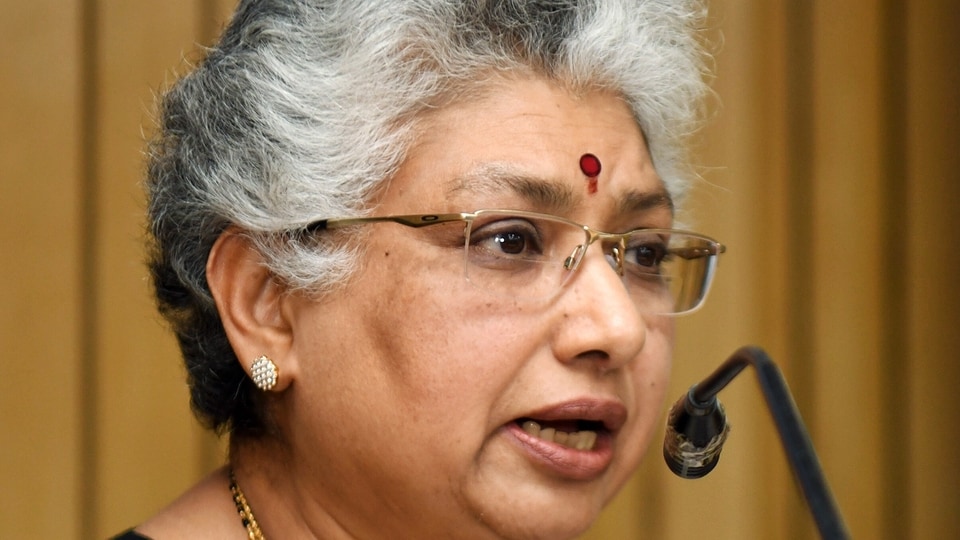
The five-member collegium took the decisions with a 4-1 split on Justice Pancholi's elevation. While Chief Justice of India Bhushan R Gavai and justices Surya Kant, Vikram Nath and JK Maheshwari recommended Pancholi, Justice BV Nagarathna, the lone woman judge on the panel, recorded a rare note of dissent from the majority.
Why did Justice BC Nagarathna dissent
While differing from the others' recommendation, Nagarathna stated that Justice Pancholi’s appointment would be “counter-productive” to justice, and would put the credibility of the SC collegium at stake, as reported by HT earlier.
Nagarathna's note of dissent referenced Pancholi's earlier transfer from the Gujarat high court to the Patna high court. The dissent note highlighted that Justice Pancholi's transfer was not a routine move but was taken after due deliberation at the highest levels.
It stated that in the lead-up to the transfer, opinions had been sought from multiple judges, all of whom had concurred with the decision, Nagarathna, while underlining the transfer, called for the confidential minutes underpinning the 2023 transfer to be perused.
According to a one of the persons mentioned above, Justice Nagarathna's dissent was in relation to all-India seniority, with Justice Pancholi ranking 57th among high court judges across the nation. Nagarathna's opposition was therefore owing to her opinion that there were multiple other meritorious and senior judges who could be considered for elevation before Justice Pancholi.
According to a person familiar with the development, Nagarathna's dissent note also flagged that the Gujarat high court already had representation in the Supreme Court in justices JB Pardiwala and NV Anjaria. Therefore, recommending a third judge from the same high court would tip the the scales and create imbalance, with many other high courts remaining unrepresented or under-represented.
Reservations against Pancholi's elevation in May
In her detailed dissent opposing the collegium's decision, Nagarathna underlined the disagreement she had expressed in May, when the idea of elevating Pancholi had first been brought up. Nagarathna and another member of the collegium had, at that time, opposed the elevation.
Following this, Justice NV Anjaria was elevated to the top court in May, on account of his seniority to Justice Pancholi in the Gujarat high court. This was also done to ensure that the Gujarat high court continued to be represented in the apex court following Justice Bela M Trivedi’s retirement in June.
Thus, Nagarathna highlighted her surprise at the proposal for Pancholi's elevation three months later, having believed it to be shelved. She also noted in her written dissent that on Justice Pancholi's appointment, he would now be in line to become the Chief Justice of India from October 2031 to May 2033. This, in her view, would not be in the judiciary's interests, given the concerns raised by her.



