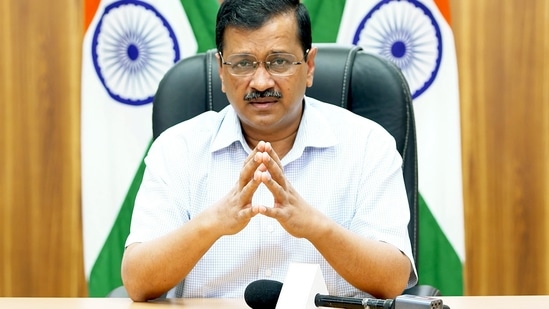
Amid rise in coronavirus disease (Covid-19) cases in the capital city, chief minister Arvind Kejriwal said that the existing lockdown in Delhi, which was supposed to end on May 3, will be extended by one week. Lockdown in Delhi was first imposed on April 19 for one week to curb the spread of the infection which has been on the rise in the city for the past one month. The April 19 lockdown was put in place till April 26, but was further extended till May 3.
Delhi on Friday recorded 27,047 new Covid-19 cases and 375 deaths, according to the health bulletin. The total number of active cases in Delhi stood at 99,361, and the overall Covid-19 caseload reached 1,149,333. As 25,288 patients recovered from the viral disease on Friday, cumulative recoveries stood at 1,033,825. The positivity rate in the national capital stood at 32.69 per cent while the case fatality rate stood at 1.40 per cent.
The rules under the existing lockdown, will therefore be extended till May 10, owing to which only essential facilities in Delhi such as groceries, dairies, shops selling fruits and vegetables, bakeries, and confectionaries shall remain open.
{{/usCountry}}The rules under the existing lockdown, will therefore be extended till May 10, owing to which only essential facilities in Delhi such as groceries, dairies, shops selling fruits and vegetables, bakeries, and confectionaries shall remain open.
{{/usCountry}}Read more: Senior doctor among 12 dead after Delhi hospital runs out of oxygen
Other than these, banks, insurance offices, ATMs, print and electronic media, telecommunication internet, broadcasting, IT and cable-related services and e-commerce delivery services are also allowed to function during the period of the lockdown. Petrol pumps, LPG, CNG, petroleum and gas retail and storage outlets shall also remain open.
Movement of essential services providers with a valid ID card will be allowed. These include medical personnel, banks employees, insurance officers, stock-related officers, telecommunications, internet services, broadcasting and people involved in the delivery of essential goods like food, pharmaceuticals. Additionally, central government officials, judicial officers, officials working in the offices of diplomats of other countries as well as persons holding any constitutional post are also exempted.
Read more: Vaccination for people between 18-44 yrs in Delhi to start on Monday: Kejriwal
Emergency medical and healthcare-related facilities, such as private hospitals, nursing homes, diagnostic centres, medicinal clinics, testing laboratories, pharmacies, medical oxygen suppliers and other associated services shall also remain functional during this period. Moreover, patients seeking medical services are allowed to travel for the same upon the production of valid identity cards, doctor's prescription, or medical papers.
Moreover, public transport facilities, such as Delhi Metro and public buses will be allowed with 50% seating capacity during the lockdown period while autos, e-rickshaws, taxis, and app-based cabs can carry can up to a maximum of 2 passengers.
Intra-state and inter-state movement of essential goods is not prohibited under the lockdown in Delhi.