
 E-Paper



Decoding the SC verdict on EWS quota, nuances of reservation
Justice Maheshwari remained categorical that the legal dispute cannot be converted into a wrangle between backward and forward classes for quota benefits. He rejected the petitioners’ arguments that the amendment provides for compensatory discrimination in favour of the forward classes.

 Prefer HTon Google


The Supreme Court verdict ratifying the 10% EWS quota law 3-2 is a continuation of the trend of the state’s affirmative actions landing before the doors of the highest court for final determination of their legality.
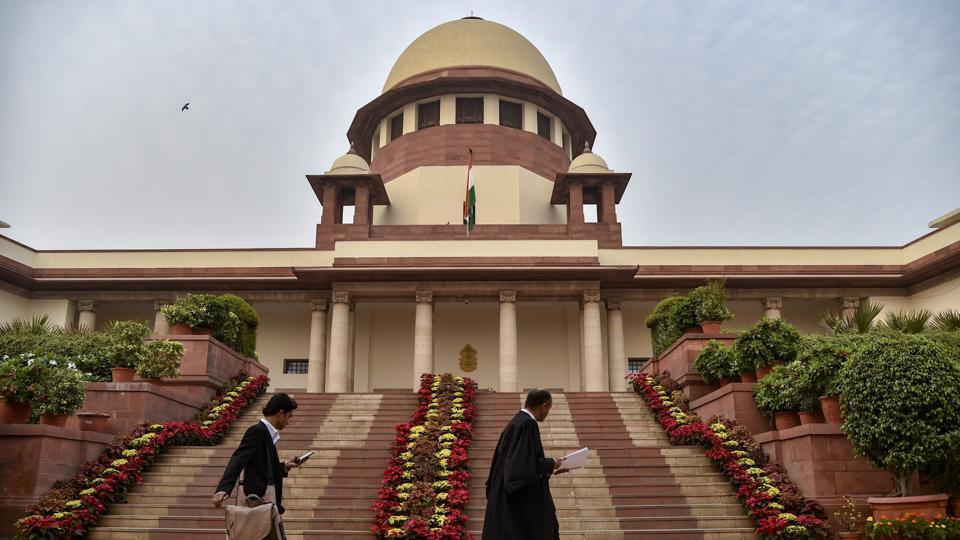
But the 399-page judgment, which draws from the precedents of the past, also shines light on some novel jurisprudential principles.
It made its decision on the well-established principles of the basic structure of the Constitution and also weighed in on the 50% ceiling on reservation fixed (“barring extraordinary circumstances) in the 1992 Indra Sawhney (famously known as Mandal Commission) case.
In the end, three judges backed the EWS quota law, for it intended to uplift a class historically denied the benefits of reservation . Two others, found the 103rd Constitution Amendment to be illegal for perpetuating “constitutionally prohibited forms of discrimination” by excluding the backward classes from its benefits.
Don’t reduce it to backward vs forward class: Justice Dinesh Maheshwari
Justice Maheshwari remained categorical that the legal dispute cannot be converted into a wrangle between backward and forward classes for quota benefits. He rejected the petitioners’ arguments that the amendment provides for compensatory discrimination in favour of the forward classes.
“Suffice it to observe that the amendment in question is essentially related to the requirements of those economically weaker sections who have hitherto not been given the benefit of such an affirmative action (particularly of reservation), which was accorded to the other class/classes of citizens namely, the SEBCs/OBCs/SCs/STs,” said the judge.
He emphasised that viewing this affirmative action of EWS reservation from the standpoint of backward class versus forward class is not in accord with the very permissibility of compensatory discrimination towards the goal of real and substantive justice for all.
Justice Maheshwari also junked an argument by the petitioners that while the State could take all other steps to deal with poverty of EWS, the affirmative action of reservation is envisaged by the Constitution only for socially and educationally backward citizens.
The judge added that in the State’s efforts of ensuring all-inclusive socio-economic justice, one disadvantaged section would not seek denial of affirmative action for another disadvantaged section.
“Any civilized jurisdiction differentiates between haves and have-nots, in several walks of life and more particularly, for the purpose of differential treatment by way of affirmative action...The expression ‘economically weaker sections of citizens’ is not a matter of mere semantics but is an expression of hard realities. Poverty is not merely a state of stagnation but is a point of regression,” said justice Maheshwari.
He added: “If an egalitarian socio-economic order is the goal so as to make the social and economic rights a meaningful reality, which indeed is the goal of our Constitution, the deprivations arising from economic disadvantages, including those of discrimination and exclusion, need to be addressed to by the State; and for that matter, every affirmative action has the sanction of our Constitution.”
Finding nothing wrong with the exclusion of backward classes from the purview of the EWS quota law, the judge pointed out that this exclusion is inevitable for the true operation and effect of the scheme of EWS reservation.
“Obviously, for the reason that those classes are already provided with affirmative action in terms of reservation, in the wisdom of the Parliament, there was no need to extend them or any of their constituents yet another benefit in the affirmative action of reservation carved out for other economically weaker sections,” he said.
Justice Maheshwari emphasised that SEBCs/OBCs/SCs/STs are having the existing compensatory discrimination in their favour wherein EWS are excluded.
Weighing in on the 50% ceiling on reservation, justice Maheshwari pointed out that the raft of judgments, starting the Indra Sawhney in 1992, would apply only to those reservations which were in place before the amendment in question. The judge was referring to the validity of Articles 15(4), 15(5) and 16(4) which were challenged before the top court in separate cases when the court prescribed the 50% ceiling.
“No decision of this Court could be read to mean that even if the Parliament finds the necessity of another affirmative action by the State in the form of reservation for a section or class in need, it could never be provided,” he said.
Justice Maheshwari added: “This ceiling limit, though held attached to the constitutional requirements, has not been held to be inflexible and inviolable for all times to come. . As mentioned hereinbefore, reservation by affirmative action is not having trappings of any such essential feature of the Constitution that its modulation with reference to any particular compelling reason or requirement could damage the basic structure of the Constitution.”
Time to put the clock on reservation: Justice Bela M Trivedi
Even as justice Trivedi concurred with justice Maheshwari in affirming EWS quota, she said that it was time to revisit the reservation system followed in India in the larger interest of the society as a whole, as a step forward towards transformative constitutionalism.
Justice Trivedi, in her judgment, underscored that the Preamble of the Constitution visualises to remove economic inequalities and to secure for all citizens of India, “Justice - Social, Economic and Political”.
“Economic empowerment to the weaker sections of the society is the fundamental requirement for ensuring equality of status and to promote fraternity assuring dignity as visualised by the framers of our Constitution. And therefore any positive discrimination in favour of the weak or disadvantaged class of people by means of a valid classification has been treated as an affirmative action on the part of the State,” she said.
According to the judge, equality of opportunity would mean a fair opportunity not only to one section or the other but to all sections by removing the handicaps if a particular section of the society suffers from the same. “...the Parliament has taken note that the economically weaker sections of the citizens have largely remained excluded from attaining the higher educational institutions and public employment on account of their financial incapacity to compete with the persons who are economically more privileged,” she pointed out.
Treating EWS as a separate class would be a reasonable classification, said justice Trivedi.
Upholding the exclusion of backward classes from the EWS quota law, the judge said that the 2019 amendment creates a separate class of EWS from the general or unreserved class, without affecting the special rights of reservations provided to the SC/ST and backward class of citizens covered under Articles 15(4), 15(5) and 16(4).
“Therefore, their exclusion from the newly created class for the benefit of EWS cannot be said to be discriminatory or violative of the equality code,” she held.
At the same time, justice Trivedi regretted that reservations have continued even after 75 years of India’s independence .
“...we need to revisit the system of reservation in the larger interest of the society as a whole, as a step forward towards transformative constitutionalism,” she said.
The judge highlighted Article 334, as per which, reservation of seats for SC/ST in the parliament and state legislative assemblies would cease to have effect on the expiration of 80 years from the commencement of the Constitution. Similarly, the representation of Anglo-Indian community in the parliament and in legislative assemblies by nomination already ceased in 2020.
“Therefore, similar time limit if prescribed, for the special provisions in respect of the reservations and representations provided in Article 15 and Article 16 of the Constitution, it could be a way forward leading to an egalitarian, casteless and classless society,” she stressed.
Reservation should not become a vested interest: Justice JB Pardiwala
Justice Pardiwala, supporting the 103rd amendment, held that the new concept of economic criteria introduced for affirmative action may go a long way in eradicating caste-based reservation. “It may be perceived as a first step in the process of doing away with caste-based reservation,” he added.
Citing the previous Supreme Court ruling which upheld the validity of Article 15(5) that empowered the State to make special provisions for admission of backward classes to educational institutions including private educational institutions, justice Pardiwala noted that the amendments could also be said to be consistent with the socialistic goals set out in the Preamble and the Directive Principles.
“Article 15(6), brought in by way of the Constitution (103rd Amendment) Act, 2019, which provides for identical reservation for the economically weaker sections of the citizens in private unaided educational institutions cannot be said to be altering the basic structure. It is constitutionally valid,” he held.
In a democracy governed by the rule of law, the judge pointed out, it is not possible to change the legal basis of social and economic life of the community without a corresponding change in the law.
“Therefore, social and economic justice in the context of our Indian Constitution must, be understood in a comprehensive sense to remove every inequality and to provide equal opportunity to all citizens in social as well as economic activities and in every part of life. Economic justice means abolition of those economic conditions which ultimately result in the inequality of economic values between men leading towards backwardness,” he said.
According to justice Pardiwala, in a country where only a small percentage of the population is above the poverty line, to deny opportunities of higher education and employment is to deny to those who are qualified and deserving what is or at least should be their due.
Citing the Indra Sawhney judgment which excluded the creamy layer from the quota benefits, the judge said that the top court then it took note of the events 42 years post the adoption of the Constitution. “It is 30 years since the seminal judgment of Indra Sawhney...Time enough for the Parliament to feel the necessity of attending to another section of deprived classes,” he underlined.
Justice Pardiwala added: “The insertion of the economically weaker sections is perfectly valid as a class for the extension of special provision for their advancement for admission and for reservation in posts.”
As larger percentages of backward class members attain acceptable standards of education and employment, the judge said, they needed to be removed from the backward categories so that the attention can be paid toward those classes which genuinely need help.
“In such circumstances, it is very much necessary to take into review the method of identification and the ways of determination of backward classes, and also, ascertain whether the criteria adopted or applied for the classification of backward is relevant for today’s conditions,” added justice Pardiwala.
The judge concluded: “The idea of Baba Saheb Ambedkar was to bring social harmony by introducing reservation for only ten years. However, it has continued past seven decades. Reservation should not continue for an indefinite period of time so as to become a vested interest.”
SC has for the first time affirmed a discriminatory principle: Justice S Ravindra Bhat
Justice Bhat, writing for himself and CJI Uday Umesh Lalit, expressed regret that the majority of the judges on the bench upheld the law.
“This court has for the first time, in the seven decades of the republic, sanctioned an avowedly exclusionary and discriminatory principle. Our Constitution does not speak the language of exclusion. In my considered opinion, the amendment, by the language of exclusion, undermines the fabric of social justice, and thereby, the basic structure,” he said.
Striking down the amendment, the judge concurred with the other members on the bench that the economic basis for reservation could be introduced as a new criterion.
“Yet, the ‘othering of socially and educationally disadvantaged classes, including SCs/ STs/ OBCs by excluding them from this new reservation on the ground that they enjoy pre-existing benefits, is to heap fresh injustice based on past disability,” he lamented.
Justice Bhat pointed out that the net effect of the entire exclusionary principle under the EWS quota law is Orwellian, which is that all the poorest are entitled to be considered, regardless of their caste or class, yet only those who belong to forward classes or castes, would be considered, and those from socially disadvantaged classes would be ineligible.
“The exclusion, however, is not based on deprivation but social origin or identity. This strikes at the essence of the non-discriminatory rule,” he added.
According to the judge, the law presented a dichotomy by using a neutral identifier entirely based on economic status and at the same time, for the purpose of exclusion, using social status, i.e., the castes of the socially deprived members, on the ground that they are already the beneficiaries of reservations.
“The exclusionary clause in the impugned amendment that keeps out from the benefits of economic reservation, backward classes and SC/STs therefore, strikes a death knell to the equality and fraternal principle which permeates the equality code and non-discrimination principle,” said justice Bhat.
He opined that EWS quota and the classification it creates is arbitrary, and results in hostile discrimination of the poorest sections of the society that are socially and educationally backward, or subjected to caste discrimination. “For these reasons, the insertion of Article 15(6) and 16(6) is struck down, is held to be violative of the equality code, particularly the principle of non-discrimination and non-exclusion which forms an inextricable part of the basic structure of the Constitution,” said the judge.
About the majority ruling on the 50% ceiling, justice Bhat said that this may lead to further infractions where demands of reservation as a right may increase.



