
 E-Paper



Delhi air quality turns ‘severe’ as mercury dips to 9.7 degrees Celsius
For the next five days, the IMD has predicted Delhi's minimum and maximum temperature to swing between 8-12 and 23-27 degrees Celsius respectively.

 Prefer HTon Google


As winters knock on the gates of the national capital, the temperature in Delhi dipped to 9.7 degrees Celsius on Saturday, which is 3.8 notches below normal for the season. This is the first time the minimum temperature in Delhi has gone below the 10 degrees Celsius mark during this year's winter season.
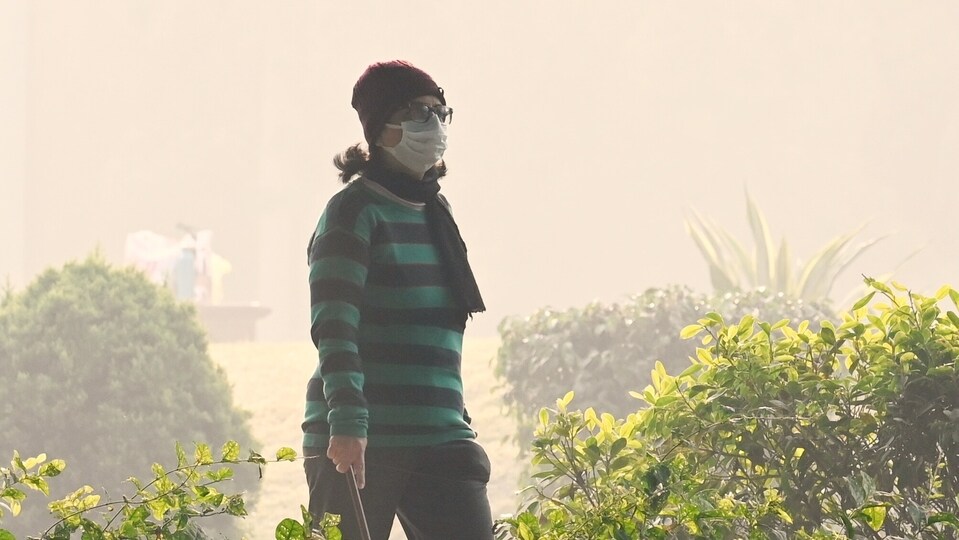
The maximum temperature recorded in the capital on Saturday was 26.6 degrees Celsius, which is also 1.9 degrees Celsius below normal for the season.
For Sunday, November 16, the India Meteorological Department has predicted minimum temperature between 09-11 degrees Celsius and maximum temperature between 24-26 degrees Celsius in Delhi. It also said that the sky in Delhi will remain “mainly clear with mist” and “shallow fog” during morning hours of Sunday.
For the next five days as well, the IMD has predicted Delhi's minimum temperature to swing between 8-12 degrees Celsius and maximum temperature between 23-27 degrees Celsius.
Delhi air quality turns ‘severe’
Delhi's continues to breathe toxins on Sunday morning, as of 8 am, Delhi's air remained ‘very poor’ with AQI of 385. However, in some areas such as Anand Vihar, Chandni Chowk, ITO, and Bawana, the air turned ‘severe’ as well with AQI of 412, 418, 417, and 436 respectively.
Delhi's air remained ‘very poor’ on Saturday as well with an AQI of 386, according to the Central Pollution Control Board data. On Friday too, the air was in the ‘very poor’ category, which is a slight improvement from earlier days during the week when Delhi's air turned ‘severe’.
On Tuesday, Wednesday, and Thursday, Delhi recorded AQI of 428, 418, 404 respectively, turning the air in the national capital hazardous.
According to CPCB, an AQI of 0-50 is considered ‘good’, 51-100 is considered ‘satisfactory’, 101-200 is considered ‘moderate’, 201-300 is considered ‘poor’, 301-400 is considered ‘very poor’, and 401-500 is considered ‘severe’.


