The Delhi government announced an ambitious plan on Tuesday to raise the state subsidy for residential rooftop solar installations in the national capital to ₹78,000, a move that would slash the upfront cost of setting up the clean energy system.
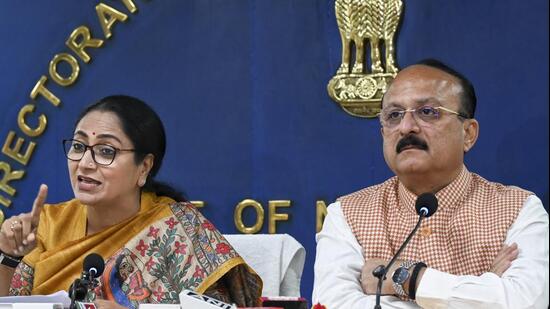
Chief minister Rekha Gupta said households with a monthly consumption of 400 units of electricity or less would effectively be eligible for a fully funded 3-kilowatt rooftop solar system under the revised Delhi Solar Policy.
Subsidies of up to ₹78,000
Under the changes made to the 2023 policy, the Delhi government will offer subsidies of up to ₹78,000 for a 3-kw solar panel system. Paired with equal funding from the central government’s PM Surya Ghar initiative, the total incentives will effectively cover the setup cost for standard 2- and 3-kw units.
Gupta said the government has targeted installing rooftop solar systems in 230,000 households across Delhi by March 2027.
Also Read: The supply chain behind solar panels
{{/usCountry}}Also Read: The supply chain behind solar panels
{{/usCountry}}“The government not only wants to reduce people’s electricity bills but also to support the installation cost of solar panels. The government will provide free rooftop solar panels to all households with monthly electricity consumption of 400 units,” Gupta said at a press conference.
Apart from the state subsidy of ₹78,000 for a 3-kW system, the policy also proposes an additional state top-up of ₹19,000 for consumers using up to 400 units of electricity a month. This would cover the installation cost of ₹1.75 lakh for a 3-kw system.
Also read | ₹35/kg: Rekha Gupta">Delhi receives 1,000 tonnes of onions from Centre for sale at ₹35/kg: Rekha Gupta
Households that consume more than 400 units would not receive the additional top-up of ₹19,000.
How it will work
For households consuming 0-200 units a month, the proposed support will vary according to the size of the solar system. A 2-kW system, estimated to cost around ₹1.30 lakh, will receive ₹60,000 as central subsidy, ₹52,000 as Delhi government subsidy and an additional ₹18,000 top-up. The total support of ₹1.30 lakh would effectively cover the listed cost of the system.
The policy also takes into account the savings and income generated from rooftop solar systems.
For consumers in the 0-200 unit category installing a 2-kW system, the government estimates electricity savings of around 200 units a month, translating into a benefit of about ₹300 per month at ₹3 per unit.
For a 3-kW system, consumers are expected to save around 200 units a month and export another 100 units to the grid. Payment for the exported electricity is estimated at ₹650 a month, taking the average additional monthly benefit to around ₹950.
For households consuming 201-400 units a month, the upfront subsidy structure will remain the same — ₹60,000 central subsidy, ₹52,000 Delhi subsidy and ₹18,000 top-up for a 2-kW system, and ₹78,000 each from the Centre and Delhi, along with a ₹19,000 top-up for a 3-kW system. The estimated average additional monthly benefit for this category is ₹1,659.
For households consuming more than 400 units a month, a 3-kW system costing ₹1.75 lakh will receive ₹78,000 each from the Centre and Delhi, while there will be no additional top-up. The proposed consumer contribution will be ₹19,000. The average additional monthly benefit is estimated at ₹2,143, with surplus electricity eligible for payment at ₹6.50 per unit.
Group housing societies
The revised framework provides for support to group housing societies for installing solar systems in common areas. A proposed 100-kW system, estimated to cost ₹45 lakh, will receive ₹18 lakh as central subsidy and ₹11 lakh as Delhi government subsidy, leaving a consumer contribution of ₹16 lakh. The estimated average additional benefit is ₹81,247 per month.
Gupta said the rooftop solar programme is part of the government’s “Green Delhi” initiative. At present, around 10,000 buildings in Delhi have rooftop solar panels installed and most of them government buildings, she said.