E-Paper



Delhi’s air quality remains ‘very poor’ for 5th day; min temp 3° below normal
An increase in wind speed on Sunday and a reduction in stubble burning led to the marginal dip in the AQI, which is forecast to remain “very poor”

 Prefer HTon Google


Delhi’s air quality remained “very poor” for a fifth day on Tuesday, with a thick layer of smog enveloping the city in the early hours, even as the minimum temperature of 9.6°C was three degrees below normal. An average AQI of 344 at 8am was marginally lower than 351 at 4pm on Monday, the Central Pollution Control Board (CPCB) data showed. It was 377 on Sunday.
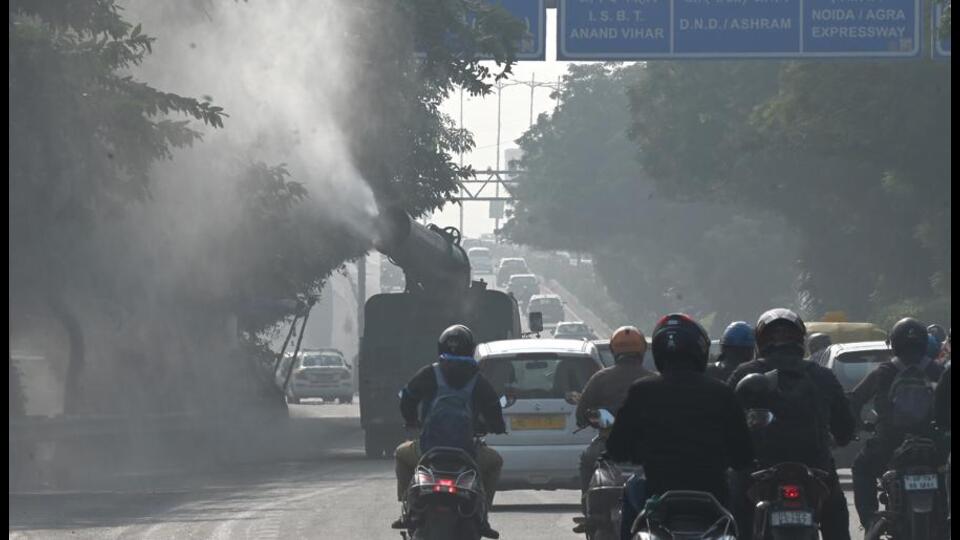
An increase in wind speed on Sunday and a reduction in stubble burning led to the marginal dip in AQI, which is forecast to remain “very poor”. A haze of smoke is expected to continue to shroud Delhi until at least Thursday.
“Delhi’s air quality is likely to be in the ‘very poor’ category from November 18 to November 20. The outlook for the subsequent six days shows the AQI is likely to be in the ‘very poor’ category,” said the Early Warning System, a forecasting model under the earth sciences ministry.
Curbs under Stage 3 of the Graded Response Action Plan have been in force since November 11 to check the pollution.
The mercury plunged to 9.6°C on Tuesday, a day after Delhi recorded its lowest minimum temperature of the season at 8.7°C. The minimum temperature is likely to oscillate between 9-11°C until Thursday as a winter chill persists.
A return of easterly winds is likely to raise the minimum above 11°C on November 21. A “cold wave” is declared if the minimum temperature is below 10°C and also 4.5°C or more below normal.
Private forecaster Skymet Weather vice president Mahesh Palawat said the dip in temperature was because of northwesterly winds and clear skies. He said they have led to radiational cooling, a phenomenon in which heat is lost quickly at night as there are no clouds to obstruct or trap it.
“There will be a gradual dip in the coming days, but a cold wave is unlikely. For a cold wave, the minimum would have to dip below 7°C,” said Palawat. He added that no significant western disturbance is expected until the end of the month.
The Decision Support System (DSS) Data showed that stubble burning contributed to Delhi’s total PM 2.5 was 16.47% on Saturday. It dipped to around 12.8% on Sunday. DSS did not share the actual contribution of stubble burning on Monday.