
 E-Paper



Delhiwale: Well, a ruin in Hauz Khas
The so-named Gung Wala Kuan looks as scenically dated as emperor Feroze Shah Tughlaq’s tomb a few lanes away, in another corner of the village. Parts of the well have collapsed.


They’re known for their restaurants and boutiques, their lake view rooftops and their loud music. But the lanes of Delhi’s HKV, the fashionable Hauz Khas Village, have village-like experiences to offer too. One lane ends into a sprawling yard with a lesser-known landmark. Full of stones and dust, it looks like the remains of a historic site.
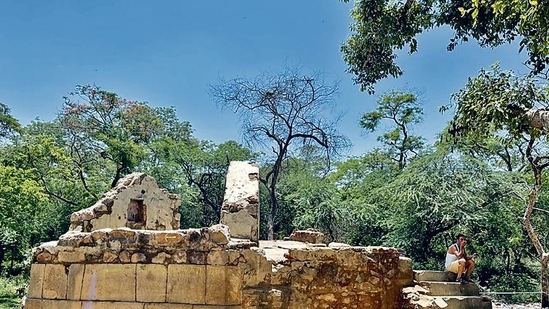
It’s a well.
The so-named Gung Wala Kuan looks as scenically dated as emperor Feroze Shah Tughlaq’s tomb a few lanes away, in another corner of the village. Parts of the well have collapsed. Solitary peepal leaves are growing out from between the stones. A forest of trees stands behind, making this edifice the last civilisational point of the village. The desolation makes one feel far from any city, though this is south Delhi’s heart.
This afternoon, a young man is sitting on the stone stairs leading up to the platform.
“It’s a centuries-old well but has been dead for many years... I remember the water tasted sweet,” says Mange Ram Gochhwal on phone; his family has been in the village for generations. In his 60s, he summons his childhood memories of the well, when HKV was an archetypical village with farmers working on the surrounding lands that yielded crops like chana (in winter) and jwar and bajra (in summer). For a good part of the day, a pair of bulls would circle this well, drawing water through a leather device called charsa. In the morning, the village men would bathe in the well. The village had no running water then and the women would walk to the well carrying pots on their head. The well was also a laundry-washing site. Mr Gochhwal’s grand-uncle, late Ghanshyam, once built a chubachha, or tank, beside the well, into which water would be stored in great quantity. It was like a swimming pool for the village kids, recalls Mr Gochhwal.
Today there’s no sign of that tank. On climbing the short flight of stairs, one fears a single misstep could end in a plunge into the well’s unknown depth. But it’s filled with earth, and the fear recedes.
One day the lockdown will lift, the pandemic will recede, the party crowd will reclaim the village, but this ruined well will continue to be permeated in its forever lockdown ambiance.


