E-Paper



Developed world should fund clean energy projects: Power Minister RK Singh
Power Minister said we have 800 million people around the world without access to energy and International Solar Alliance can play a major role in ensuring that access


Union minister for power and new and renewable energy, RK Singh on Wednesday said that developed countries should fund clean energy projects in poor countries through the International Solar Alliance.
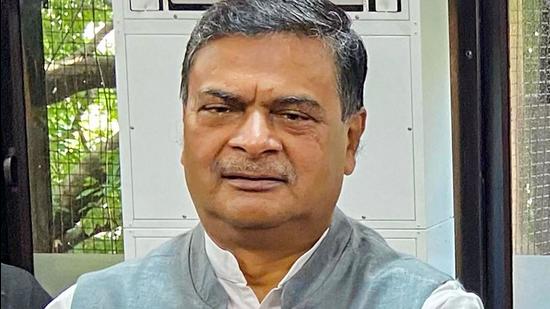
During the ministerial plenary of ISA’s fourth general assembly, in his opening remarks, Singh said, “It is your (developed nations) business. You developed nations used fossil fuels and occupied most of carbon space. You have created this emergency of climate change in some ways.”
“It is true that the available carbon space has been taken up mostly by the developed world. For the developing world to develop some carbon space should be free. We have 800 million people around the world without access to energy and ISA can play a major role in ensuring that access. It is incumbent upon the entire developed world to enable the ISA to do this... Direct your funding to ISA so that we can set up solar parks, renewable energy parks in countries that have problems with energy access,” Singh added.
The ISA is an inter-governmental treaty-based international organization with a global mandate to catalyse global solar growth by helping to reduce the cost of financing and technology for solar. International Solar Alliance (ISA) was initiated by India and conceived as a coalition of solar-resource-rich countries (which lie either completely or partly between the Tropic of Cancer and the Tropic of Capricorn) to address their special energy needs. It has 86 members
An Organisation for Economic Co-operation and Development (OECD) report last month flagged that developed countries had not delivered on their promise of mobilising 100 billion dollars a year even in 2019. This finance was meant to support climate change mitigation and adaptation to climate change impacts through resilient infrastructure and other means in developing countries. This year’s report shows that in 2019, total climate finance provided and mobilised by developed countries for developing countries was USD 79.6 billion in 2019, an increase of only 2% from 2018.
John Kerry, US Special Presidential Envoy on Climate also addressed ISA where he reiterated that the world needs to reach net zero emissions by 2050. “To keep 1.5 degree Celsius within reach, we need to take dramatic action during this critical decade in order to reduce emissions by half worldwide. If we don’t do enough between 2020 and 2030, we can’t achieve net zero by 2050 and we certainly can’t keep in limit the rise of the earth’s temperature by 1.5 degrees.” But he also made it clear that US alone shouldn’t be expected to “invest in solar energy”.
“President Biden recognizes the clean energy opportunity of the value of solar energy. The United States has communicated a strong new NDC (Nationally Determined Contributions) ahead of the COP 26 Summit in Glasgow next month...”
Frans Timmermans, European Commission Executive Vice President for the European Green Deal announced a project of 1 million Euros that “will allow the deepening of cooperation between EU and ISA including by connecting and mobilising academic, financial and business communities”.
Ajay Mathur, Director General, International Solar Alliance (ISA) said “The solar power landscape is evolving everyday with new technologies, investment sources and ever lower tariffs being discovered across the globe. At ISA, we are making significant efforts to accelerate solar power deployment in every corner of the world and mobilising USD 1 trillion in solar investments...”.