Personal tragedy during the early years of Mother Teresa’s life was the main reason why she decided to enter religious life and chose India as the destination to serve the poor, according to new research at the University of Birmingham.
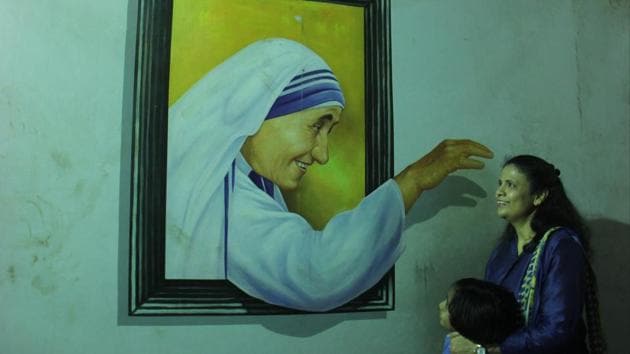
Mother Teresa’s ‘dark night of the soul’ period involved her father’s poisoning by Slavic nationalists when she was nine in 1919, which marked the beginning of her attempts to replace him with Jesus and the start of her lifelong doubts about the existence of God.
Gëzim Alpion, from the university’s department of social policy, sociology and criminology, contends that such painful experiences, together with her brother’s association with Benito Mussolini’s fascist army, and her concern about the safety of her mother and sister in communist Albania post 1945 caused her to never speak about her private issues.
Mother Teresa, awarded Bharat Ratna in 1980, passed away in 1997.
Alpion suggests that the nun’s ‘dark night of the soul’ determined all her decisions, including leaving the Loreto order to set up her Missionaries of Charity congregation and expanding her work outside India from 1967.
“Mother Teresa entered the religious life and chose India as her destination not simply or primarily to serve the poor but in the hope that, through them, she would discover the elusive God, as well as to get rid of her ‘dark night of the soul’. Her devotion to the poor was unwavering and genuine to the end”, says Alpion.
{{/usCountry}}“Mother Teresa entered the religious life and chose India as her destination not simply or primarily to serve the poor but in the hope that, through them, she would discover the elusive God, as well as to get rid of her ‘dark night of the soul’. Her devotion to the poor was unwavering and genuine to the end”, says Alpion.
{{/usCountry}}“Her spiritual aridity began during 1919 to 1922 when she lost her father and eight close relatives. The ever-presence of death in her early years had a lifelong traumatic impact on her spirituality and relationship with family members, her nation and especially vulnerable people”.
According to Alpion’s research published in Celebrity Studies journal, Mother Teresa was never cured of her doubts about Godm but always held sacred the dignity of every human being.
He adds that her projects in Australia in 1969 began as another attempt to escape her spiritual desolation as she began to realise that it was an incurable condition.
Alpion also announced for the first time the existence of a hitherto unknown member of Mother Teresa’s family in Australia, a first cousin who was adopted by the nun’s mother as an orphan at the age of six, who he discovered during a visit to Melbourne in 2011.
Since then Alpion has been using the information from this and other new sources to write the study provisionally titled Rooting Mother Teresa: The Saint and Her Nation, a monograph which will be published by the end of 2019.