Germany’s support for Pakistan by calling for a UN role in Kashmir without mentioning a word on cross-border terror smacks of envy of India’s strategic autonomy and Islamabad’s leverage over Berlin for extraction of loyal Afghans from the Taliban-ruled Emirate.
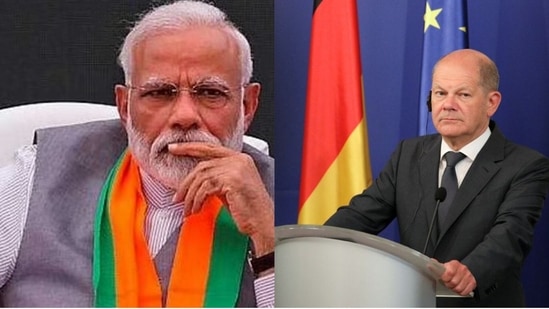
India has already strongly objected to Germany’s self-acquired “role and responsibility with regards to the situation in Kashmir” as publicly projected by foreign minister Annalena Baerbock last Friday in the presence of visiting Pakistani counterpart Bilawal Bhutto Zardari. The 41-year-old Minister, however, chose to ignore the violence and terror that the union territory of Jammu and Kashmir suffered and continues to suffer at the hands of Pakistan based terror groups since 1990s.
Berlin watchers believe that foreign minister Baerlock’s gripe against India on Kashmir in the joint press conference with Pak minister Zardari was due to leverage that Islamabad holds over Germany for getting Afghans, who served the German forces during US-led occupation in the past two decades, out of Taliban-ruled Kabul to safer climes of Deutschland. While the number of Afghan immigrants to Germany is expected to be in the thousands, Berlin also wants Islamabad to not only screen but also restrict the Sunni Pashtun immigrants. As Pakistan is willing to offer the travel channel to Germany as in the past, the German Foreign Minister’s sanctimonious Kashmir intervention is more self-serving than for the larger cause of the Valley people. At a time when Pakistan Army Chief Gen Qamar Bajwa ignores the word Kashmir in his Saturday speech and talks about peace, the Shehbaz Sharif government is still stuck on the K-word due to vote bank politics and competing rivals.
{{/usCountry}}Berlin watchers believe that foreign minister Baerlock’s gripe against India on Kashmir in the joint press conference with Pak minister Zardari was due to leverage that Islamabad holds over Germany for getting Afghans, who served the German forces during US-led occupation in the past two decades, out of Taliban-ruled Kabul to safer climes of Deutschland. While the number of Afghan immigrants to Germany is expected to be in the thousands, Berlin also wants Islamabad to not only screen but also restrict the Sunni Pashtun immigrants. As Pakistan is willing to offer the travel channel to Germany as in the past, the German Foreign Minister’s sanctimonious Kashmir intervention is more self-serving than for the larger cause of the Valley people. At a time when Pakistan Army Chief Gen Qamar Bajwa ignores the word Kashmir in his Saturday speech and talks about peace, the Shehbaz Sharif government is still stuck on the K-word due to vote bank politics and competing rivals.
{{/usCountry}}Another reason for Germany’s angst against the Modi government is not toeing the western line led by Berlin on the Ukraine war. While Germany has been at the forefront of bringing Russian militarily and economically down to its knees for the Ukraine invasion, India has a strategically autonomous position that advocates cessation of hostilities on both sides. India has made its stand clear not only to the Russian President but also to the Ukrainian leader. The Indian stance on the Ukraine war and its compulsions were communicated to close allies US and France, but clearly Germany wanted India to be penalized for not following the west on the war in Ukraine. Germany's auto-car sales and exports have also been hit by QUAD’s strong stance on China, the largest consumer of Audi and Mercedes cars.
According to a former Indian foreign secretary, the German leadership is also envious of India’s growing global role with US President Joe Biden signalling American support for India, Japan, and Germany in the expanded UN Security Council. Germany finds it hard to digest that India is being equated with major European power.
While the call for UN role in Kashmir by German foreign minister may have been a major diplomatic coup by Minister Zardari, the relevant resolution 47 of 1948 has been rendered infructuous and non-implementable as its conditions were not adhered to in letter and spirit by Pakistan.