
 E-Paper



Explained: Who were 'Razakars' and why are they back in Bangladesh's discourse
The protest in Bangladesh took an ugly turn after PM Shiekh Hasina dubbed the demonstrators as 'Razakars'.

 Prefer HTon Google


At least 131 people have died in clashes between police and university students in Bangladesh over reservations in government jobs.
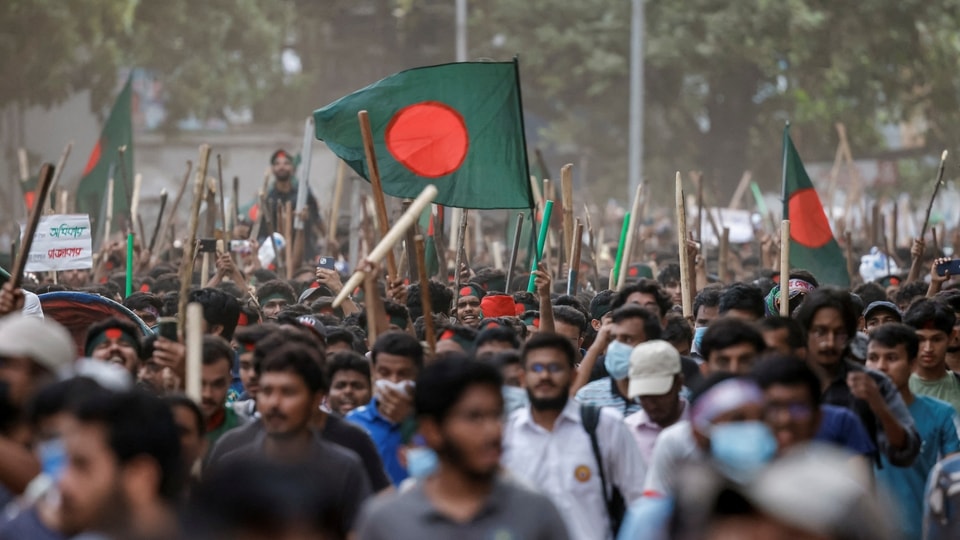
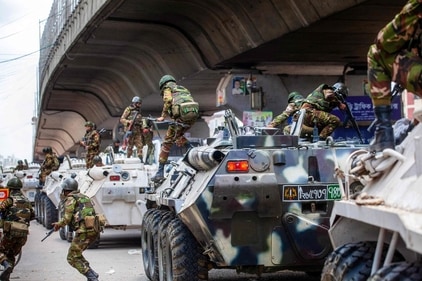
The widescale rampant violence has prompted the Sheikh Hasina-led Bangladesh government to implement extreme security measures such as nationwide curfew, deployment of the Army and shutting down of internet services. Authorities have also passed a ‘shoot-on-sight’ order for the cops and military.
The protestors, mostly students, have been holding protests in Dhaka and other cities against the system of reservation in public sector jobs, including that for the relatives of war heroes who fought for the country's independence from Pakistan in 1971.
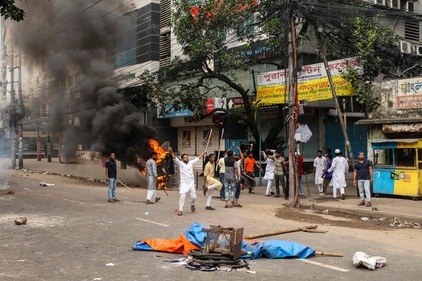
They argue the system is discriminatory and benefits supporters of Prime Minister Sheikh Hasina, whose Awami League party led the independence movement. They want it replaced with a merit-based system.
Also Read | Nearly 1,000 Indians return from violence-hit Bangladesh: MEA
However, Bangladesh Prime Minister Sheikh Hasina has defended the quota system, saying that veterans deserve the highest respect for their contributions to the war regardless of their political affiliation.
The protest took an ugly turn after Hasina, during a conference, dubbed the demonstrators as 'Razakars'.
She said: "If not the grandchildren of the freedom fighters, then who will get quota benefits? The grandchildren of the 'Razakars''? This is my question. I want to ask the people of the nation. If the protesters don't comply, I can do nothing. They can continue their protest. If protesters damage properties or attack cops, the law will take its course. We can't help."
Angered by the statement, the student demonstrators doubled down on the protest, with a war cry: “Tui ke? Ami ke? Razakar, Razakar! (Who are you? Who am I? Razakar, Razakar!)”.
Who were the Razakars?
The 'Razakars' were a paramilitary force in East Pakistan (now Bangladesh) during the Bangladesh Liberation War of 1971.
They were formed by the Pakistan Army and primarily consisted of local collaborators who opposed the independence movement.
Dr Muntasir Mamoon, Bangabandhu Chair at Bangladesh's Chittagong University, told the Indian Express that the Razakars' origins can be traced to the erstwhile princely state of Hyderabad in post-independence India. They were a paramilitary force the Nawab of Hyderabad used to resist integration with India post-1947. After India defeated the Razakars in Operation Polo, its leader, Qazim Rizvi, migrated to Pakistan.
In May 1971, Maulana Abul Kalam Muhammad Yusuf, a senior member of the Jamaat-e-Islami, formed the first set of Razakars in East Pakistan's Khulna. Armed Razakars comprised migrated people and socio-economically deprived poor people who helped the Pakistan Army's campaign to suppress pro-independence freedom fighters and terrorise civilians during the war.
The Razakars, along with other militia groups, were involved in atrocities, including mass killings, rapes and other human rights abuses against Bengali civilians who supported the independence of Bangladesh.
In modern Bangladesh, the worst form of slur and indignity is to be labelled as a ‘Razakar’.
In 2010, Hasina's government formed an International Crimes Tribunal to prosecute those accused of war crimes during the 1971 conflict.
Yusuf was arrested in 2013 and was charged with crimes against humanity. He died a year later in detention due to a cardiac arrest.
In 2019, her government published a list of 10,789 Razakars who collaborated with the Pakistani forces during the country's Liberation War in 1971.


