
 E-Paper



Bangladesh protests: Curfew imposed as 105 killed; over 400 Indians evacuated | Top updates
Bangladesh students protest: The Sheikh Hasina-led government said that the curfew was being imposed to help the administration keep order.

 Prefer HTon Google


The Sheikh Hasina-led government in Bangladesh late Friday imposed a nationwide curfew across the country and ordered the deployment of military forces to maintain order following days of deadly clashes over the allocation of government jobs. News agency AFP reported that at least 105 people have been killed in the clashes so far across the country. Over 1,500 have been injured.
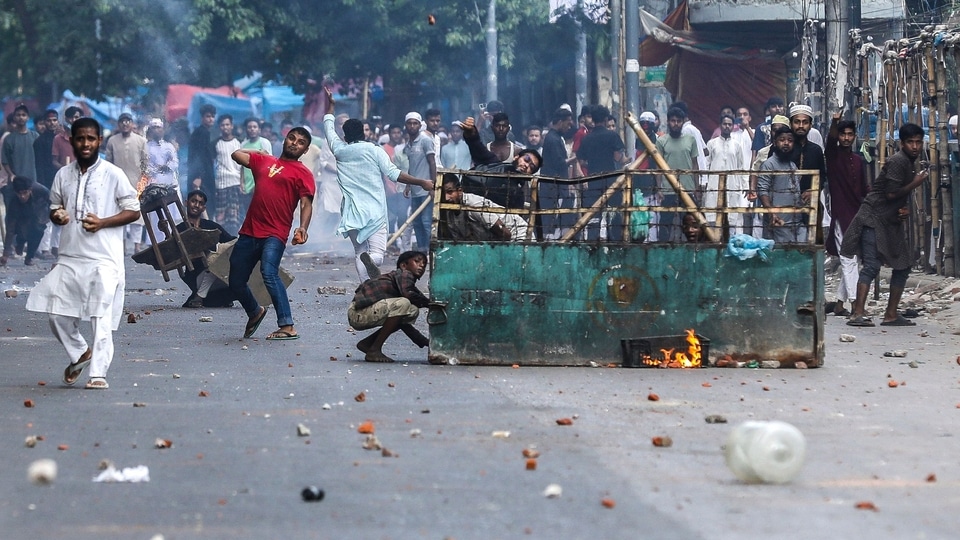
The curfew in Bangladesh was announced by Obaidul Quader, the general secretary of the ruling Awami League party, who said it was being done to help the civilian administration keep order.
The decision comes hours after police and security officials fired bullets and lobbed tear gas on protesters and banned all gatherings in the capital, Dhaka, on Friday. The protestors, mostly students, have been holding protests in Dhaka and other cities against the system of reservation in public sector jobs, including that for the relatives of war heroes who fought for the country's independence from Pakistan in 1971.
Also Read | All Indians in Bangladesh are safe, says MEA; calls protests an internal matter
They argue the system is discriminatory and benefits supporters of Prime Minister Sheikh Hasina, whose Awami League party led the independence movement, and they want it replaced with a merit-based system.
However, Bangladesh Prime Minister Sheikh Hasina has defended the quota system, saying that veterans deserve the highest respect for their contributions to the war regardless of their political affiliation.
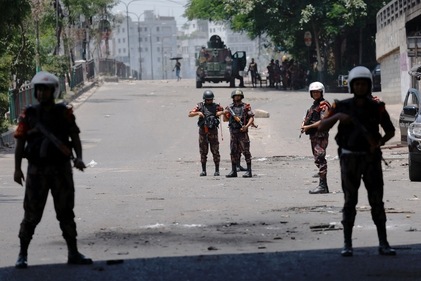
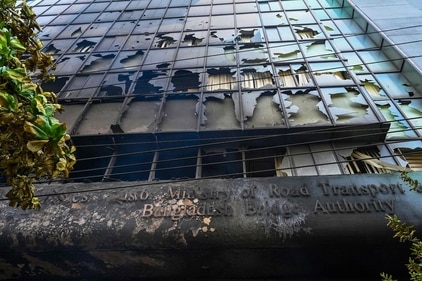
The protest took an ugly turn on Thursday after demonstrators set fire to the country's state broadcaster. The violence prompted authorities to shut the metro rail inside the capital alongside the railway services to and from Dhaka. The government also ordered the shutdown of mobile internet networks across several parts of the country. Schools and universities are shut indefinitely.
On Friday, websites of several Bangladesh newspapers faced trouble and did not update and were also inactive on social media, according to Reuters.
Also Read | Complete shutdown in Bangladesh as violent protests put PM Hasina in a spot of bother
News television channels and state broadcaster BTV went off the air, although entertainment channels were normal. Some of them displayed messages blaming technical problems and promising to resume programming soon.
The official websites of the central bank, the prime minister's office and the police also appeared to have been hacked by a group branding itself the “THE R3SISTANC3”, according to Reuters.
"Operation HuntDown, Stop Killing Students," read messages splashed on the sites, adding in crimson letters: "It's not a protest anymore, it's a war now."
Student protestors also stormed a jail in the Narsingdi district and freed the inmates before setting the facility on fire.
"I don't know the number of inmates (freed), but it would be in the hundreds," a police officer told AFP on condition of anonymity.
Meanwhile, India on Friday declined to comment on violent protests in Bangladesh but said around 15,000 Indian nationals living in the neighbouring country were all “safe and sound”.
“We see this as an internal matter of Bangladesh,” external affairs ministry spokesperson Randhir Jaiswal told a regular media briefing while responding to questions on how India views the violent protests.
Until Friday, 245 Indians have crossed over from Bangladesh at the Gede immigration check post in West Bengal till 8 pm. Another 202 Indian nationals, mostly students, crossed over via the Dawki check post in Meghalaya on Thursday. This check post was also used by some 101 Nepalese citizens and seven Bhutanese nationals to leave Bangladesh.


