E-Paper



Explainer: Why introducing African Cheetahs brings hope—and several challenges
How is the African Cheetah different from the Asiatic Cheetah? What is the controversy surrounding its translocation? What are the challenges ahead for India? Should we be hopeful? HT explains

 Prefer HTon Google


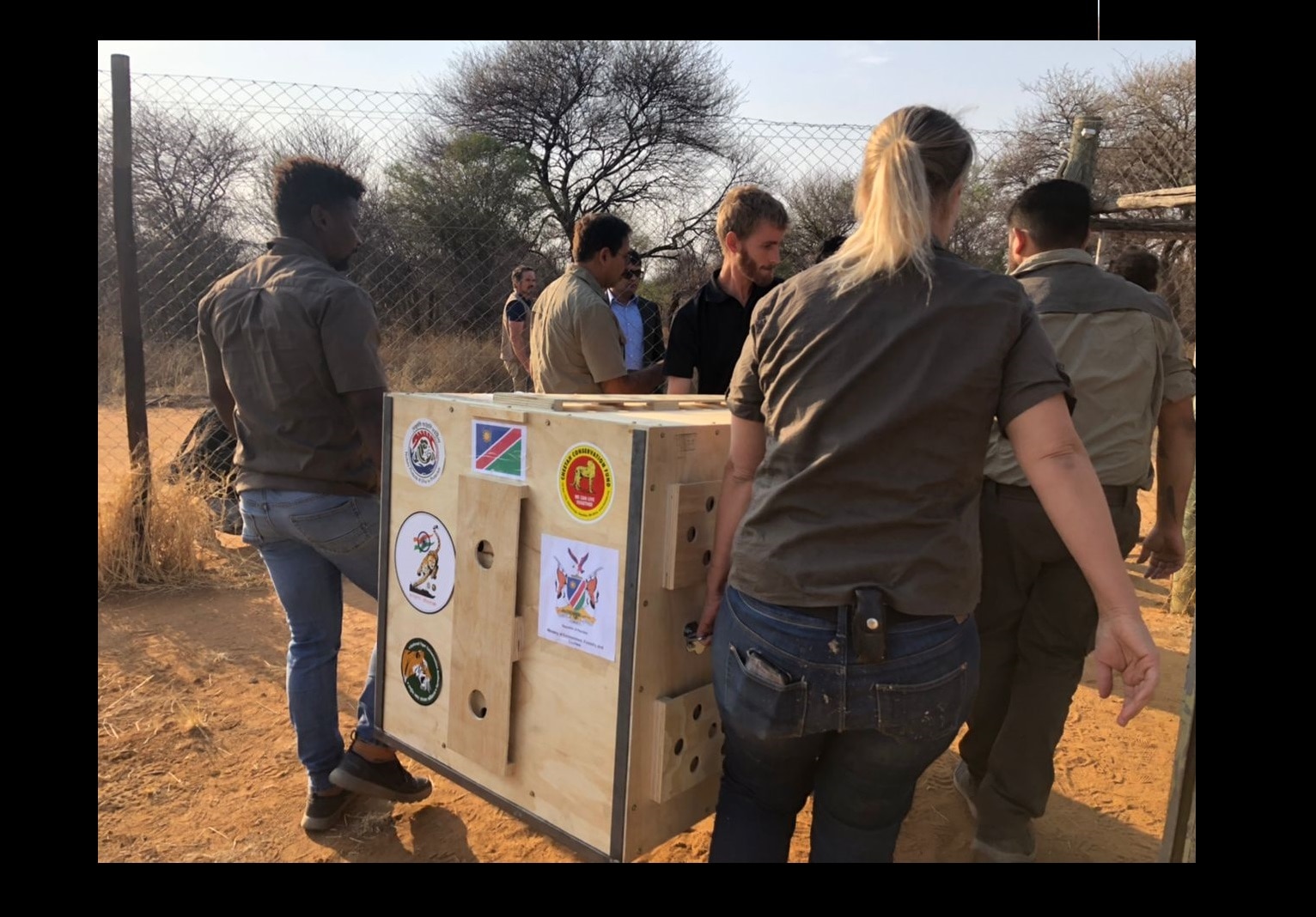
Tomorrow morning, eight African Cheetahs are to arrive from Namibia to Madhya Pradesh’s Kuno National Park in an effort to reintroduce cheetahs in India after the Asiatic Cheetah became extinct in the 1950s due to indiscriminate hunting. The reintroduction of cheetahs in the Indian landscape is expected to be the first inter-continental translocation globally. But this translocation has been fraught with challenges and controversy for over a decade since then environment minister Jairam Ramesh envisaged the translocation in 2010.
What is the controversy surrounding the cheetah translocation?
First and foremost, several wildlife biologists and wildlife experts have asked if India can provide the expanse of land and resources for cheetahs to thrive once again in India. National Geographic quoted Arjun Gopalaswamy, an independent conservation scientist, saying: “There’s not any chance for free-ranging cheetah populations now. Cheetahs in India perished for a reason… so the first question is, Why is this attempt even being made?”
India’s inviolate wilderness for other big cats like tigers and lions is also shrinking and lacks connectivity. And hence, other conservationists also say that this is nothing but a vanity project. “This is not a conservation priority for India. If the introduction of African cheetah is so important, why doesn’t it figure in our National Wildlife Action Plan? The Asiatic Lion does figure in it. It’s a vanity project. Isn’t the Asiatic Lion as a predator higher up the food chain than the cheetah? All the ecological roles and functions claimed as benefits from the introduction of African Cheetahs would be more than fulfilled by the translocated lions,” wildlife biologist and conservation scientist, Ravi Chellam, said on July 21, when Namibia and India inked the agreement to transfer eight African Cheetahs to India.
Another important reason for widespread criticism of the project is that Kuno National Park was initially identified for the translocation of the Asiatic Lion from Gujarat’s Gir where an isolated population of around 600 are surviving, but are threatened because of the lack of genetic diversity and a larger range distribution for their habitat. The government was, however, not keen on translocating the Asiatic Lion to Kuno. Why? A senior official in the environment ministry put it like this: “That’s a political issue. It’s completely hypothetical with no science to explain.”
On July 25, while answering a question raised by Bharatiya Janata Party (BJP) Member of Parliament (MP) Sanjay (Kaka) Patil on whether the government has been trying to translocate Asiatic Lions into different parts of the country, Ashwini Kumar Choubey, minister of state for environment informed Lok Sabha that “a committee was constituted by the ministry of environment, forest and climate change to assess the suitability of habitat for lions in potential sites in Gujarat and make recommendations regarding the facilitation of the natural dispersal of lions and the modalities for the establishment of the lion population in newly identified sites in the state of Gujarat.” These charismatic animals are also political symbols, and state and central governments see them as ambassadors of certain states, officials explained.
On January 28, 2020, the Supreme Court allowed the Centre to introduce the African Cheetah to a suitable habitat in India. The court was hearing an application filed by the National Tiger Conservation Authority (NTCA) seeking permission for the introduction of the African Cheetah from Namibia as the court is monitoring the government’s ambitious project.
The apex court set up a three-member committee, consisting of the former director of Wildlife Trust of India (WTI), Ranjitsinh, a retired Indian Forest Service officer, and having officials from the environment ministry guide the NTCA in deciding on the issue.
How is the African Cheetah different from the Asiatic Cheetah?
There are less than 7,500 cheetahs in the wild today, according to the Cheetah Conservation Fund. The cheetah is listed as “Vulnerable” by the International Union for Conservation of Nature’s Red List of Threatened Species. Two subspecies, the Asiatic Cheetah (Acinonyx jubatus venaticus) and the Northwest African Cheetah (Acinonyx jubatus hecki) are listed as “Critically Endangered”. The cheetah is found in only 9% of its historic range in Africa, of which 77% is outside of protected areas. The species is nearly extinct in its entire Asian range, except for a remnant population in Iran, about 20 individuals or less.
The one being introduced in India is Acinonyx jubatus jubatus is the southern/eastern African Cheetah, and its range includes the eight countries of Namibia, Botswana, South Africa, Zimbabwe, Angola, Zambia, Tanzania, and Kenya. This is the largest population of wild cheetahs in the world. Smaller, fragmented populations of Acinonyx jubatus soemerengii, the Horn of Africa Cheetah, also called the Somali Cheetah, are found in some parts of Ethiopia and some of the Horn of Africa countries.
“There is no breeding of the Asiatic Cheetah in the wild, which is on the verge of extinction. As per the Convention on International Trade in Endangered Species of Wild Fauna and Flora [CITES] rules, you can translocate an animal like the cheetah from one country to another when the donor country has a viable or sustainable population. And hence, there is no possibility of getting Asiatic Cheetahs from Iran,” explained SP Yadav, member secretary, NTCA at a press briefing on Monday.
What are the challenges for India?
The Kuno National Park is only 748 sq km in area. The habitat in Kuno is similar to the African Cheetah’s habitat in Namibia or South Africa and is generally favourable according to Laurie Marker, executive director of Cheetah Conservation Fund (CCF), who is coordinating the translocation of the big cats from Namibia.
CCF’s research shows that in semi-arid regions of Namibia, cheetahs utilise a huge home range of about 1500 sq km. The home range size requirements in India will likely be lower due to the more productive habitats, they said. “It is imperative that potential threats to cheetahs at release sites be addressed, or plans are in place to mitigate the threat. A habitat suitability study should be conducted at each site to ensure there is sufficient vegetation to support viable prey populations to sustain the introduced cheetahs for the long-term. Such studies have already been conducted at potential release sites. The reintroduced population needs to be protected from anthropogenic threats, and the potential impact of unnaturally high competition among cheetahs and with other predators needs to be managed,” a statement by CCF said.
In an interview to HT, Marker explained that cheetahs should remain an isolated population in Kuno, but a metapopulation must be allowed to be developed over time. Cheetahs are otherwise very adaptable and had a wide distribution until a hundred years ago. They will be able to survive most of the climate conditions in India. In the parts of Africa where cheetahs are found, the temperatures can vary between very, very hot in the day to cold at night, and cheetahs can adapt to the seasonal shifts. For hunting, cheetahs do well in open savannahs and grassland environments and can also occur in areas with moderate woody vegetation cover, explained CCF’s FAQ.
Their prey, however, will be completely different in India, from fast-moving ungulates like impalas and gazelles, they will now depend on chital, sambars, nilgai, wild pig, chowsingha, langur and so on. Cheetah numbers will be supplemented every year from Namibia and South Africa to create a sustainable population in Kuno and other national parks within India.
Why should we be hopeful about the introduction?
If India manages its wildlife and forest habitats well, the endangered cheetah could find a home. According to the study, Disappearing spots: The global decline of cheetah Acinonyx jubatus and what it means for conservation, published in Proceedings of the National Academy of Sciences (PNAS), fewer than 7,100 cheetahs remain in the world and their habitat is fast declining. One of the oldest of the big cat species, cheetahs were once widely dispersed throughout Asia and Africa in great numbers. Today, they occupy less than 9% of their historic range. Cheetahs are threatened by human-wildlife conflict, illegal wildlife trade, poor sperm quality, and a lack of genetic diversity, but one of their greatest challenges to survival is the loss of habitat together with the loss of prey base.
“Cheetahs live in some of the most arid regions of the world. These regions are getting hotter and drier due to climate change, affecting the antelope population that the cheetahs hunt. The impact of global warming on arid regions, particularly temperature variation, is concerning,” said Marker during her interview to HT.
The cheetah is the world’s fastest land animal and Africa’s most endangered big cat. It is capable of reaching speeds greater than 110 kilometres per hour, in just over three seconds. But they cannot sustain a high-speed chase for very long and they must catch their prey in 30 seconds or less. Cheetahs spend most of their time sleeping and they are minimally active during the hottest portions of the day. They prefer shady spots and will sleep under the protection of large shady trees. Cheetahs do not hunt at night, CCF said. They normally do not get into conflict with humans but are mostly docile.