E-Paper



Failed surgery alone does not imply medical negligence: SC
The court stressed that complications, even unexpected ones, do not necessarily imply that a doctor has failed to perform their duties with due diligence and skill

 Prefer HTon Google


The Supreme Court has emphasised that medical professionals cannot be held liable for negligence solely because surgery or treatment does not produce the expected results, asserting that the culpability of doctors must stem from clear evidence pointing to a deviation from accepted medical practices.
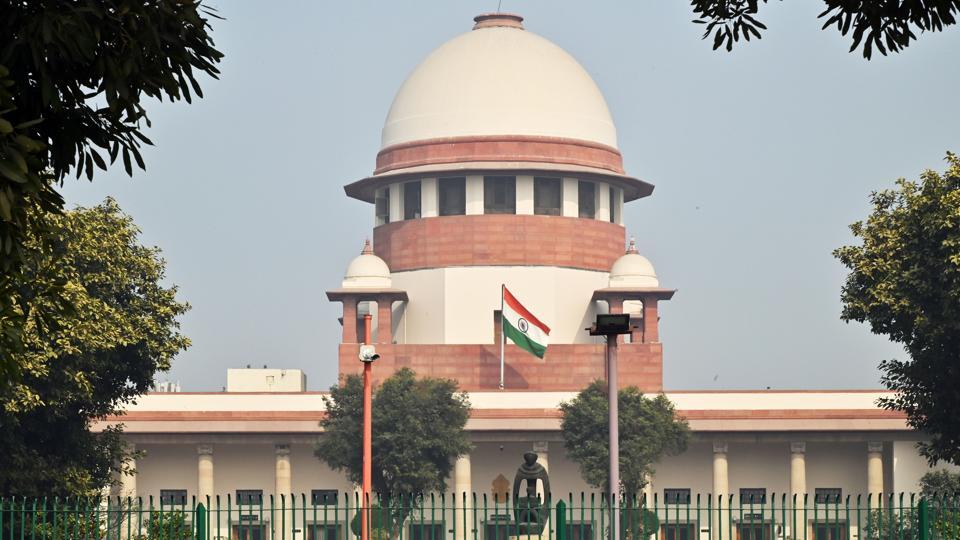
In a ruling that underscored the protection of medical professionals against allegations of negligence, the court stressed that complications, even unexpected ones, do not necessarily imply that a doctor has failed to perform their duties with due diligence and skill.
“Simply for the reason that the patient has not responded favourably to the surgery or the treatment administered by a doctor or that the surgery has failed, the doctor cannot be held liable for medical negligence straightway by applying the doctrine of ‘Res Ipsa Loquitur’ [ Latin term meaning ‘the thing speaks for itself’] unless it is established by evidence that the doctor failed to exercise the due skill possessed by him in discharging of his duties,” said a bench of justices PS Narasimha and Pankaj Mithal.
The principle of “Res Ipsa Loquitur” implies that negligence is so obvious that it needs no further proof.
The bench maintained that a poor outcome does not necessarily equate to negligence. Rejecting the assumption that a failed surgery or unsatisfactory medical outcome inherently points to negligence, the court underscored that medical procedures come with inherent risks, and the unpredictability of outcomes should not automatically lead to the conclusion of malpractice.
The case in question revolved around a complaint of medical negligence in a minor eye surgery of a child diagnosed with congenital ptosis, a condition characterised by the drooping of the upper eyelid. The surgery was carried out by a qualified ophthalmologist at the Post Graduate Institute of Medical Education & Research (PGI) in Chandigarh in June 1996. When the surgery did not bring about the expected improvement and the child’s condition seemed to deteriorate, the patient’s family filed a complaint, seeking compensation for what they alleged as substandard medical care.
Initially, the state consumer commission dismissed the complaint, finding no evidence of negligence. The National Consumer Disputes Redressal Commission (NCDRC) reversed the decision, awarding a compensation of ₹3.5 lakh to the complainants and holding the doctor and PGI jointly liable. The case eventually reached the Supreme Court, which took a different stance, ultimately exonerating the doctor and the medical institution.
A key aspect of the court’s analysis was its reaffirmation of the Bolam Test, a standard that has long been recognised in medical negligence cases. Originating from the 1957 English case Bolam Vs Friern Hospital Management Committee, this test states that a doctor is not negligent if they act in accordance with a practice accepted by a responsible body of medical professionals. In the Indian context, the court endorsed the Bolam Test in the case of Jacob Mathews Vs the State of Punjab (2005), holding that only if a doctor lacks requisite skills or fails to exercise reasonable competence should liability be imposed.
In the present case, the court applied this well-established benchmark, concluding that the treating doctor had the necessary qualifications and experience to perform the surgery. It added there is no evidence suggesting that the doctor failed to exercise due care or had deviated from acceptable medical standards. The court concluded that the complications post-surgery were not indicative of any medical negligence.
The judgment clarified the three essential components required to establish medical negligence—a duty of care owed by the medical professional to the patient; a breach of that wherein the doctor’s actions fall short of the expected standard and consequential harm directly linked to it.
In the absence of clear evidence of negligence, the court said the failed outcome could not be construed as a failure of duty. It acknowledged that complications could arise even with the best medical practices and that a doctor should not be unfairly penalised for rare or unfortunate outcomes.
“Deterioration of the condition of the patient post-surgery is not necessarily indicative or suggestive of the fact that the surgery performed, or the treatment given to the patient was not proper or inappropriate, or that there was some negligence in administering the same. In the case of surgery or such treatment it is not necessary that in every case the condition of the patient would improve, and the surgery is successful to the satisfaction of the patient,” said the judgment.
When reasonable care is extended or rendered to the patient, the bench said, evidence to the contrary ought to be proved for fastening medical professionals with actionable negligence.
The verdict has significant implications for medical professionals, offering them protection from unwarranted liability if they have followed established medical practices and exercised reasonable care even as it seeks to balance patient rights with safeguarding doctors from undue harassment.
Dr DK Gupta, founder of Felix Hospital, applauded the Supreme Court’s decision, stressing the importance of understanding the inherent uncertainties in medical care. “We thank the court for recognising the realities of medical practice and supporting an environment where healthcare providers can perform their duties without fear of baseless legal consequences. We also reaffirm our hospital’s support for our dedicated professionals who prioritise safety, transparency, and patient-centered care, ensuring that each patient journey is guided by both skill and compassion,” said Gupta.