
 E-Paper



Farmers say govt using ‘brute force’, 'We don't want to clash' | 10 points
Farmers said the government deployed paramilitary forces against the protesters as if they are the enemies.

 Prefer HTon Google


On the second day of the farmers' Chalo Dilli march which was stopped at the Punjab-Haryana border on Tuesday night, the farmer leaders said they do not want to clash with the cops but the government is using brutal forces against them treating them like enemies. The government on the other hand maintained that they are ready to talk to the farmers and already many of their demands have been accepted. Security was upped at the Punjab-Haryana border with the Haryana police guarding their side to ensure no farmer is able to enter the state. The Punjab government has not stopped the farmers but the police are on alert. Hospitals have also been alerted after Tuesday's clash between the farmers and the Haryana police.
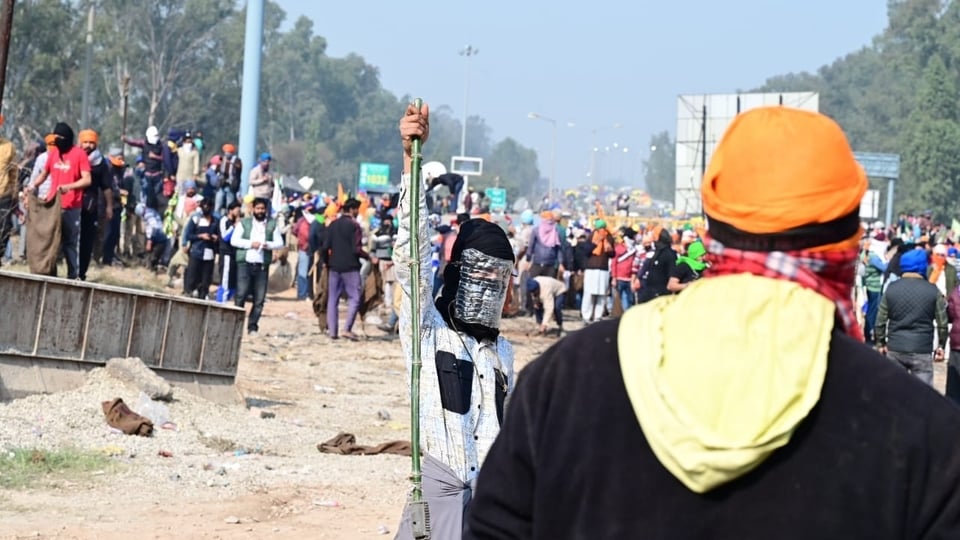
Day 2 of farmers' protest: Follow LIVE updates
Farmers' protest Day 2: Here are the top 10 developments
A fresh clash started between the police and the farmers as the march resumed from the Punjab-Haryana Shambhu border. Haryana police fired multiple rounds of teargas shells.
Punjab Congress leader Navjot Singh Sidhu said the government must not allow Haryana to attack farmers inside Punjab's territory.
More farmers joined the protest on Wednesday but they are yet to enter Haryana.
Owing to more security checks put up in Delhi on the second day, long traffic jams were seen in several areas in Delhi -- on the border areas.
Farmer leader Sarwan Singh Pandher addressed a press conference on the Shambhu border and said the government is defaming the farmers while their protest is peaceful and apolitical.
Also read: ‘Cannot treat farmers like criminals’: Bharat Ratna awardee MS Swaminathan's daughter
Pandher said this must be the first time that paramilitary forces were deployed against the farmers. "We only want our demands...we don't want to clash with the government," the farmer said.
A political row broke out after the Congress claimed on Tuesday that if they are voted to power, they will implement the Swaminathan Commission report and will give a legal guarantee to MSP. The UPA government, however, in 2010 rejected the Swaminathan Commission recommendation.
"This recommendation, however, has not been accepted by the government because MSP is recommended by the Commission for Agricultural Costs and Prices based on objective criteria and considering variety of relevant factors. Hence, prescribing an increase of at least 50% on cost may distort the market," the UPA government replied in 2010.
Farmer unions which called Bharat Bandh on February 16 said they received messages from the government regarding a meeting. BKU (Ekta-Ughrahan) announced rail roko in Punjab on Thursday from 12pm to 4pm, as a mark of support towards protesting farmer organisations.
Minister Arjun Munda said farmers should not inconvenience the common people. "I had already said that our efforts to hold positive discussions with the farmers' union will continue. Farmers' organizations must understand that the decision on the law that is being talked about cannot be taken in such a way that people criticize the situation without thinking and understanding in the coming days. Rather, we should try to keep in mind all the aspects of it and discuss it," he said.


