E-Paper



Final SC hearing of pleas against CAA on May 5
As many as 243 petitions have been filed since the law was passed by Parliament on December 11, 2019 and received Presidential assent the following day.

 Prefer HTon Google


The Supreme Court on Thursday fixed May 5, 2026 as the date to commence final hearing in the batch of petitions challenging the constitutional validity of the Citizenship (Amendment) Act, 2019 (CAA) and the rules framed under it, setting the stage for what could be one of the most significant constitutional adjudications of the decade.
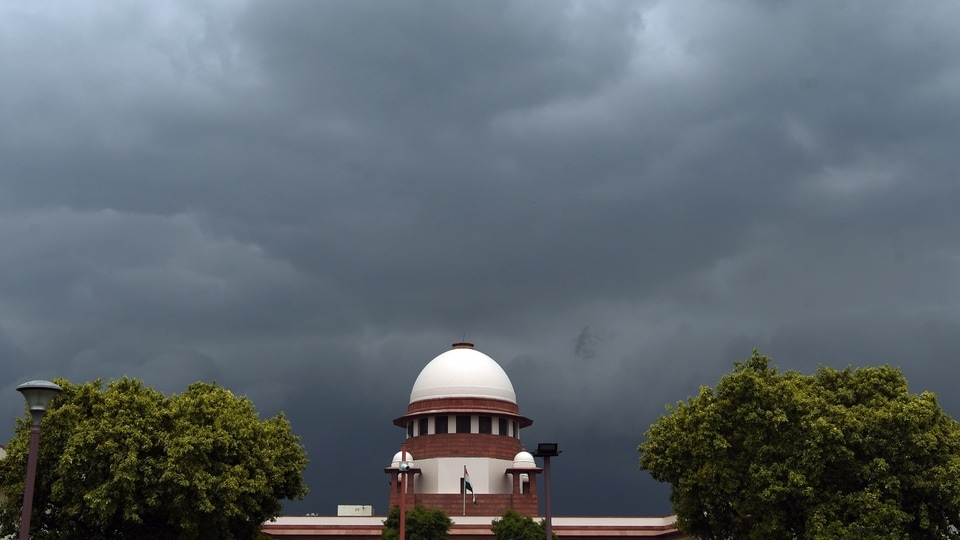
A bench comprising Chief Justice of India (CJI) Surya Kant, and justices Joymalya Bagchi and Vipul M Pancholi, sought clarity from counsel on the time required for arguments before drawing up a structured hearing schedule.
Recording that there are “two sets of cases assailing CAA 2019”, the bench noted that the matters had earlier been categorised into two groups: Assam and Tripura cases, and those from the rest of the country. It directed nodal counsel to identify which petitions fall into which category within two weeks. The registry will then segregate them accordingly.
The court ordered that the matters be listed “seriatim for final hearing in the week commencing May 5, 2026”. Petitioners will be heard on May 5 (first half) and May 6 (first half), with respondents to follow on May 7, and rejoinder arguments scheduled for May 12.
As many as 243 petitions have been filed since the law was passed by Parliament on December 11, 2019 and received Presidential assent the following day. The Indian Union Muslim League (IUML) was among the first to move the court. Over time, the litigation expanded to include Congress leader Jairam Ramesh, AIMIM chief Asaduddin Owaisi, RJD MP Manoj Jha, TMC MP Mahua Moitra, the All Assam Students’ Union, Tripura royal scion Pradyot Kishore Deb Barman, and several others.
The law amends Section 2 of the Citizenship Act, 1955 by inserting a proviso to Section 2(1)(b), redefining who will not be treated as an “illegal migrant”. It fast-tracks citizenship for Hindus, Sikhs, Buddhists, Jains, Parsis and Christians from Pakistan, Bangladesh and Afghanistan who entered India on or before December 31, 2014, and who were exempted under the Passport (Entry into India) Act, 1920 or the Foreigners Act, 1946.
By excluding Muslims from this carve-out, the CAA triggered nationwide protests in late 2019 and early 2020 - protests that ebbed only with the onset of the Covid-19 pandemic, and prompted constitutional challenges alleging religious discrimination and violation of Article 14’s guarantee of equality.
On December 18, 2019, the Supreme Court had issued notice to the Union government but declined to stay the law at the time, noting that the rules had not yet been framed.
The legal landscape shifted on March 11, 2024, when the Centre notified the Citizenship (Amendment) Rules, 2024, four years after the Act was passed, operationalising the mechanism for grant of citizenship through certificates of registration and naturalisation.
Announcing the notification, Union home minister Amit Shah wrote on X that the rules would enable minorities persecuted on religious grounds in Pakistan, Bangladesh and Afghanistan to acquire Indian citizenship, and described the move as fulfilment of a promise made by Prime Minister Narendra Modi.
The timing of the notification, ahead of the 2024 general elections, drew sharp criticism from Opposition parties, who questioned the political context of the move.
Following the notification, a fresh wave of applications sought an interim stay on the Act and the Rules. In March 2024, the Supreme Court sought the Centre’s response to the pleas but declined to grant an interim stay.
In its detailed affidavit filed in October 2022, the Union government took a strong stand on the limits of judicial review. It argued that matters of citizenship and immigration policy lie squarely within Parliament’s sovereign domain and may not be amenable to judicial interference through public interest litigation.
The Union ministry of home affairs asserted that the power to exclude or include immigrants is an incident of sovereignty and directly implicates foreign policy and national security. “In matters concerning immigration policy and citizenship in particular, it is the executive policy of the sovereign manifested by competent legislation which would govern,” the affidavit stated.
The government also sought to dispel fears of demographic disruption, contending that those eligible under the CAA are already residing in India and that the law does not incentivise fresh influx of illegal migrants. It maintained that the presence of the specified minority communities does not amount to “external aggression” or “internal disturbance” under Article 355 of the Constitution.
“The future grant of citizenship rights… will not compromise the political rights of the existing citizens of India,” the affidavit underscored, adding that the CAA does not impinge upon the secular or democratic rights of any Indian citizen.
The petitioners, however, have consistently argued that classification based solely on religion, while excluding Muslims from similarly placed neighbouring countries, is arbitrary and unconstitutional.