
 E-Paper



First tigress tranquilized, radio-collared for translocation to Rajaji Tiger Reserve
The project for translocation of tigers to the western part of Rajaji was approved by the central government in 2016.

 Prefer HTon Google


After years of waiting, the Uttarakhand forest department on Wednesday tranquilized the first tigress in the state in the Corbett landscape, for translocating it to the Rajaji Tiger Reserve.
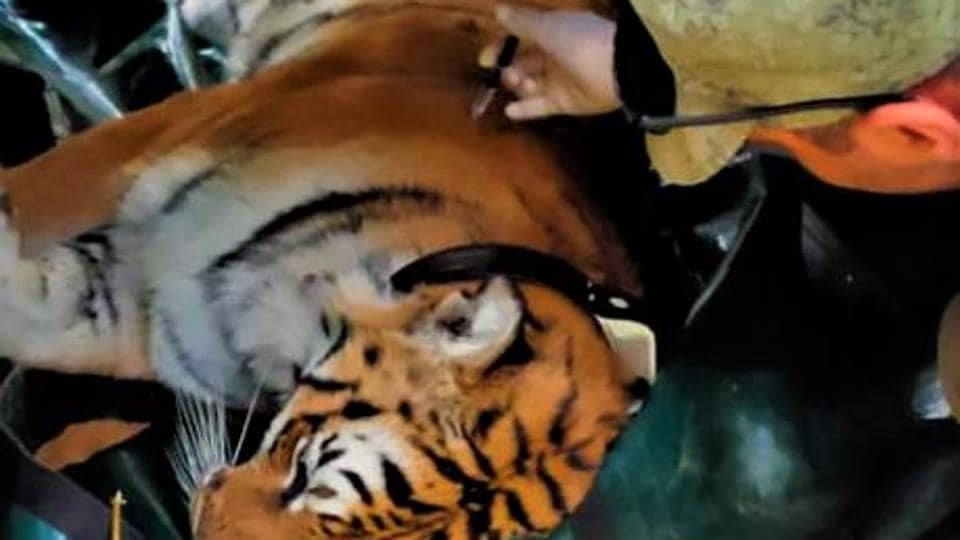
JS Suhag, chief wildlife warden of Uttarakhand forest department said, “The first tigress in Uttarakhand was tranquilized in the buffer area of Corbett Tiger Reserve on Wednesday. The tigress will be shifted to Rajaji Tiger Reserve on Thursday as part of the project to increase the density of the big cat there.”
The project for translocation of tigers to the western part of Rajaji was approved by the central government in 2016.
Last September, a team from the National Tiger Conservation Authority (NTCA) visited Rajaji to conduct reconnaissance for the translocation exercise and had suggested a soft release of a pair of tigers in the reserve’s western side.
In a soft release, tigers are released in a large enclosed area where they are kept for a few days to check if the animals have any diseases before being completely released in the wild.
A total of five tigers, including two females, will be translocated to Rajaji Tiger Reserve. .
Rajaji Tiger Reserve at present has around 37 tigers with only two tigresses in its western part, which is spread over 570 sq km. The reserve has a carrying capacity of 83 tigers, revealed a recent survey conducted by the state forest department. The eastern and the western part of the reserve are divided by a busy traffic corridor making it difficult for the tigers to migrate between the two parts.
On Wednesday, director of Corbett wrote to the Garhwal Motor Owners Union Limited stating conditions ahead of starting a bus service between Pakhro-Morghatti-Kalagarh-Ramnagar.
Rahul, director of Corbett Tiger Reserve, who uses his first name, in the letter, wrote that this bus service will continue till further orders with only one-way traffic on any single day.
The conditions further state that buses will not run during heavy monsoon, fare will be charged only at Pakhro and Dhela gates, from the point of view of wildlife conservation two forest officers will be allowed to travel daily free of cost. The bus will not be allowed to ply before sunrise and after sunset.
During forest fire season, bus drivers will be held responsible if any passenger throws any combustible item outside the bus like match sticks and that bus staff will help the forest department by reporting about fire incidents. The bus will not stop anywhere while crossing the tiger reserve area and no one will be allowed to de-board. The conditions also state that wildlife will have the first right to cross roads and if they are hurt in the process then action will be taken under relevant sections of the Wildlife (Protection) Act.


