E-Paper



First university for co-operative sector will end nepotism: Amit Shah in Anand
Union minister Amit Shah said only those who graduate from the cooperative university will get jobs in the cooperative sector, which will bring more transparency


Ahmedabad: Union home and cooperation minister Amit Shah said on Saturday that India’s first national university for the cooperative sector in Gujarat will end nepotism by ensuring only trained professionals get jobs in the sector.
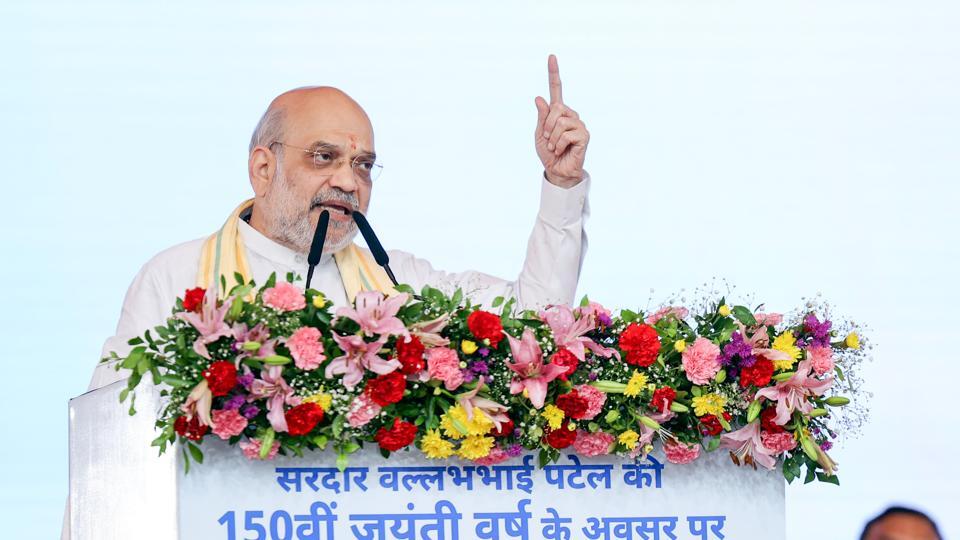
He was addressing a gathering at Anand Agriculture University after laying the foundation stone of Tribhuvan Sahkari University (TSU) to be built in Gujarat’s Anand on 125-acre land for a cost of ₹500 crore.
“Earlier there was no proper system to train employees and members of cooperative societies for the development of the cooperative sector. The employees were given training after recruitment in the cooperative. But after the formation of this university, only those who have undergone training will get jobs,” he said.
He said that laying of the foundation stone of “Tribhuvan” Sahkari University is an important initiative to fill all the gaps in strengthening the cooperative sector. He said that under the leadership of Prime Minister Modi, the cooperative movement is progressing very fast across the country and that the upcoming university is a revolutionary step under the leadership of Prime Minister Modi. Presently, 40 lakh workers are associated with the cooperative movement across the country, 80 lakh are members of boards and 30 crore people, that is, every fourth person in the country, is associated with the cooperative movement, he added.
“Now, you will not like what I say next, but this university will ensure that the bhai-bhatija vaad (nepotism) in the cooperative sector will end. Only those who graduate from the cooperative university will get jobs in the cooperative sector, which will bring more transparency. In this university, the youth will not only learn technical expertise, accounting, scientific approach and all the qualities of marketing, but they will also learn the values of cooperation that the cooperative movement is for the Dalits, tribals and women of the country. Many problems of the cooperative sector will be solved by this university,” he added.
Shah said that some people in the Congress had questioned as to why this university is named Tribhuvan.
“I want to tell the Congress leaders today that the university is not named Tribhuvan after some God. It is named after Tribhuvandas Kashidas Patel… These Congress leaders do not even know that Tribhuvandas Patel was not a leader of my party, but he belonged to the Congress party of that time. My party (BJP) was not even formed at that time.”
He said that the foundation of this cooperative university has been laid to promote transparency, accountability, research, and the spirit of cooperative federalism.
“There could be no more fitting name for the university than that of Tribhuvan Das Patel. Tribhuvan Das Ji had sown the seed of a new idea on this land under the guidance of Sardar Patel. Tribhuvan Das Ji formed a small group of milk collectors and through it, he ran a huge campaign to empower the farmers. In 1946, Kheda District Cooperative Milk Producers Union was established and today the seed sown by Tribhuvan Das has become a huge banyan tree in which 36 lakh sisters do a business of ₹80,000 crore and none of them has invested more than ₹100,” he added.
He said that today Amul has emerged as the most valuable brand of food items in the world. “Due to the vision of Tribhuvan Das Ji, today the cooperative dairy of our country stands tall in front of the private dairies of the world,” he said.
He also spoke about Dr Verghese Kurien, hailed as the milkman of India for his role in India’s co-operative movement.
“They acknowledge Dr. Kurien’s significant contribution, which is undeniable and well-recognised. Gujarat’s value system ensures we never forget his contributions. However, those now speaking about it did nothing for his centenary celebrations. It is Amul that is celebrating Dr. Verghese Kurien’s centenary year. It was Tribhuvandas Patel who sent Dr. Kurien to the Netherlands for his studies and supported him in advancing the cooperative movement,” said Shah.
Shah said that Prime Minister Modi has decided to form 2 lakh new Primary Agricultural Credit Societies (PACS) in the country, out of which 60 thousand new PACS will be formed by the end of this year. He said that 2 lakh PACS alone will have 17 lakh employees.
Similarly, many district dairies are being established and the need for trained manpower for all these will also be fulfilled by Tribhuvan Sahkari University. “This university will work on policy making in cooperatives, data analysis and devising 5 years’, 10 years’ and 25 years’ strategies for the development of cooperatives in the country,” he concluded.