
 E-Paper



'Had received inputs…': Foreign secretary explains why India carried out strikes on terror sites in Pakistan and PoK
Foreign Secretary Vikram Misri Pakistan failed to act against terrorist infrastructure following the Pahalgam terror attack that killed 26 people on April 22.

 Prefer HTon Google


India on Wednesday strongly justified its airstrikes, named as 'Operation Sindoor', on terror camps in Pakistan and Pakistan-occupied Kashmir, with foreign secretary Vikram Misri stating that Pakistan failed to act against terrorist infrastructure following the Pahalgam terror attack that killed 26 people on April 22.
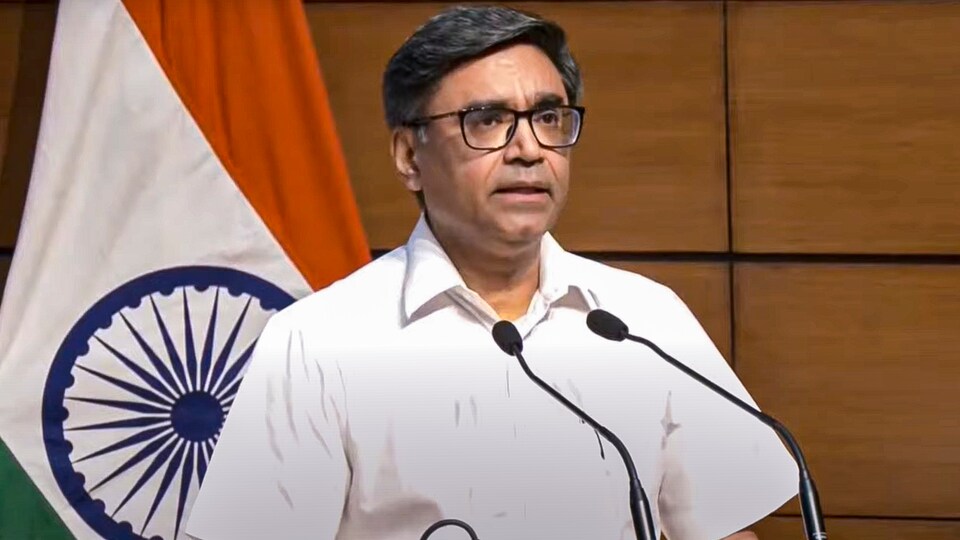
Addressing a press briefing hours after India’s targeted operation, Vikram Misri said, “A group called the Resistance Front has claimed responsibility for the Pahalgam attack. This group is connected with Lashkar-e-Taiba. Pakistan links have been clearly established.”
Follow Operation Sindoor live updates
He added that despite credible intelligence and mounting global concerns, Pakistan did not take any action to dismantle the terror networks operating from its soil. “Pakistan has made an identity in the world as a safe haven for terrorists,” he said.
“It is notable that India had given inputs about the TRF in the half-yearly report to the monitoring team of the UN's 1267 Sanctions Committee in May and November 2024, bringing out its role as a cover for Pakistan-based terrorist groups earlier too. In December 2023, India had informed the monitoring team about Lashkar and Jaish-e-Mohammed, operating through small terror groups such as the TRF. Pakistan's pressure to remove references to TRF in the April 25 UN Security Council press statement is notable in this regard. Investigations into the Pahalgam terror attack have brought out the communication nodes of terrorists in and to Pakistan. The claims made by The Resistance Front and their reposting by known social media handles of the Lashkar-e-Taiba speak for themselves,” Misri said.
Misri noted that the modus operandi of the Pahalgam attack was designed to provoke communal discord in Jammu and Kashmir and other parts of India.
India’s intelligence agencies, the foreign secretary said, had received reliable inputs indicating further planned attacks, prompting decisive military action. “Our intelligence agencies monitoring terrorist activities have indicated that there could be more attacks on India, and it was felt essential to both stop and tackle them,” Misri explained.
Defending the pre-emptive strikes, he said, “This morning, India exercised its right to dismantle terror infrastructure.”
"The latest attack in Pahalgam has, understandably, generated deep anger in Jammu and Kashmir and in other parts of India. Following the attacks, the Government of India naturally responded with a set of initial measures relating to our engagement with Pakistan. You're all aware of the decisions that were announced on the April 23. However, it was deemed essential that the perpetrators and planners of the April 22 attack be brought to justice.
“Despite a fortnight having passed since the attacks, there has been no demonstrable step from Pakistan to take action against the terrorist infrastructure on its territory or on territory under its control. Instead, all it has indulged in are denials and allegations. Our intelligence monitoring of Pakistan-based terrorist modules indicated that further attacks against India were impending. There was thus a compulsion both to deter and to preempt,” the foreign secretary said in the media briefing.
India's operations targeted key facilities of Lashkar-e-Taiba, Jaish-e-Mohammed and Hizbul Mujahideen across Pakistan and PoK. The airstrikes followed days of high-level meetings and intelligence assessments after the Pahalgam incident.


