E-Paper



Forensic Science key to justice in digital age: CJI Surya Kant
Addressing NFSU in Gandhinagar, CJI Surya Kant calls forensic science a protective shield against cyber intrusions and data crimes

 Prefer HTon Google


Chief Justice of India (CJI) Surya Kant on Friday said cyber intrusions, digital fraud and transnational data crimes challenge traditional investigative models, making forensic science a vital shield safeguarding the integrity of justice from technological deception and informational chaos.
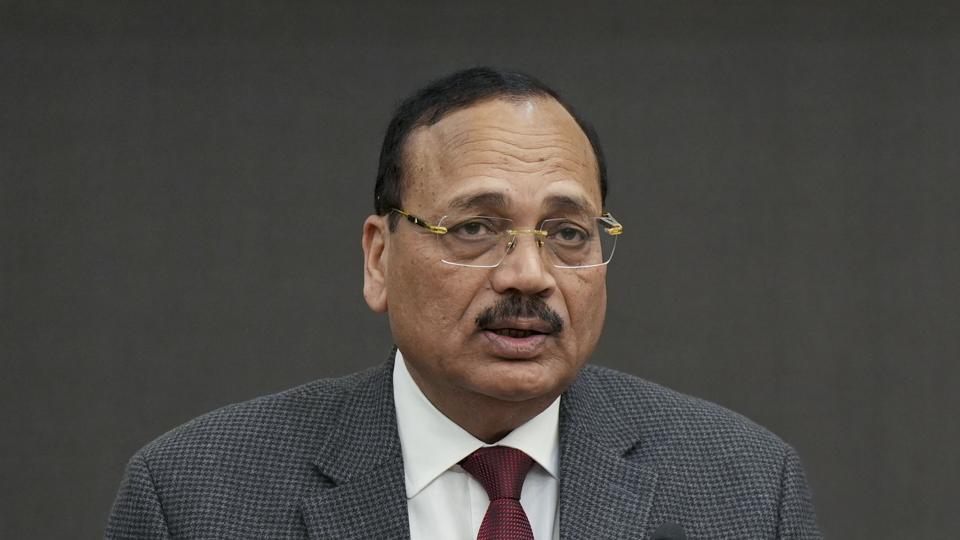
Addressing the convocation of the National Forensic Sciences University in Gandhinagar, the CJI said the digital age has transformed both the nature of crime and the process of investigations.
“The quality of justice delivered in any legal system depends fundamentally on the quality of the evidence placed before decision makers. Judicial reasoning is only as strong as the factual clarity that supports it,” the CJI said.
He described forensic science as a compass that points to truth and said it strengthens judicial processes by grounding conclusions in verified facts rather than competing assertions.
“Cyber intrusions, digital fraud, identity manipulations, and transnational data crimes challenge traditional investigative models. In such an environment, forensic science becomes more than a technical discipline. It becomes a protective shield safeguarding the integrity of justice against both technical deception and informational chaos,” he said.
“When forensic science functions as a suraksha kavach in an increasingly technological environment, it does more than resolve individual disputes. Rather, it sustains institutional legitimacy itself. The stabilising role you perform in interpreting complex digital evidence places public trust in your hands,” he added.
He said that while citizens may not fully understand the technological processes behind forensic analysis, they trust that those processes are conducted with neutrality, discipline and integrity. The legitimacy of the justice system ultimately rests upon this trust, he added.
The dignitaries present at the event included Gujarat Deputy Chief Minister Harsh Sanghavi and Justice Sunita Agarwal, Chief Justice of the Gujarat High Court, among others. Dr J.M. Vyas, Vice Chancellor of NFSU, conferred degrees on 1,799 students, including 17 PhD recipients, during the convocation ceremony. In recognition of academic excellence, 52 gold medals were also given to meritorious students.
CJI Kant, in his speech, said that when courts evaluate electronic evidence or deal with technology-based disputes, they depend on professionals capable of bridging scientific complexity and legal standards. “Your expertise, therefore, serves as a stabilising force, ensuring that technological advancement strengthens rather than undermines the rule of law,” he told the graduating students.
NFSU, established in 2009 and formerly known as Gujarat Forensic Science University, offers undergraduate, postgraduate and doctoral programmes in forensic sciences, cyber security, criminology and related disciplines.
The CJI cautioned that the growing reliance on scientific material also increases responsibility. “The more decisive scientific analysis becomes in shaping legal outcomes, the more essential it is that such analysis remains guided not only by technical proficiency but by ethical clarity. Scientific analysis cannot exist in a moral vacuum.”
Emphasising the centrality of evidence in adjudication, Justice Kant said, “The quality of justice delivered in any legal system depends fundamentally on the quality of the evidence placed before decision makers. Judicial reasoning is only as strong as the factual clarity that supports it.”
He said that legal systems have gradually moved “from reliance on assertions towards reliance on authenticated facts.”
“Human memory, though indispensable, is not infallible. Perception can be subjective. Recollection can be influenced by time and circumstances. And narratives may diverge despite honest intention,” he said, adding, “A person can lie, but not documents.”