
 E-Paper



Fresh protests in Arunachal against project meant to counter Chinese dam risks
The government has maintained that the Siang Upper Multipurpose Project would counter the potential risks a mega Chinese hydropower project across the border on the same river poses

 Prefer HTon Google


Hundreds of people took to the streets in three Arunachal Pradesh districts on Friday against the deployment of central paramilitary forces for surveys for a hydropower project on the Siang river at Beging in the state’s East Siang district. The government has maintained that the Siang Upper Multipurpose Project (SUMP) would counter the potential risks a mega Chinese hydropower project across the border on the same river poses.
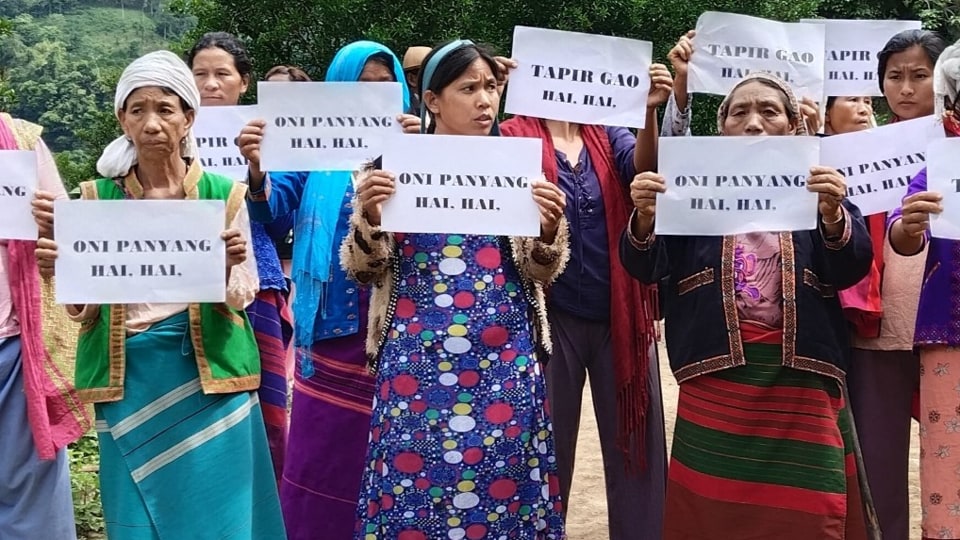
Residents have opposed SUMP and held protests since November. They have resisted attempts to conduct surveys and feasibility studies, prompting the Union government to deploy central paramilitary for them and thwart protests. The deployment triggered the fresh protests.
Nith Paron, a resident, said peaceful protests were underway. “...as hundreds of residents gathered...there was some chaos which resulted in damage to a hanging bridge across the river. Police and paramilitary forces have not used force on the protesters,” he said.
There have been a series of protests against SUMP, which is estimated to affect at least 100,000 residents who could be uprooted. There are also concerns about the environmental impact of the project involving construction activities on the Siang River in Dite Dime, Parong, and Uggeng.
The government has stressed the project’s national importance in countering potential threats from China’s release of large volumes of water from a dam being built on the Siang in Tibet.
Arunachal Pradesh chief minister Pema Khandu in November said the damming of the Siang River, which the Chinese call Yarlung Tsangpo, in Tibet poses significant threats, including flash floods and water scarcity. “These risks could have devastating consequences for downstream areas in the Siang region and beyond.” He added that the SUMP has been conceived to address these challenges. “The project will not only store water to mitigate shortages but also serve as a safeguard against sudden flash floods caused by upstream water releases. If we do not act now, we risk being at the mercy of external forces that could harm our people and our lands.”
On Thursday, residents under the banner of Dibang Resistance issued a statement, saying they were deeply disturbed by the forceful deployment of armed forces despite protests from affected landowners. “This heavy-handed approach is unjust and undermines the voices of those who will bear the brunt of these decisions.”
The residents urged the state government to have a constructive dialogue with the affected families. “It is essential that we listen to their concerns and work collectively towards a solution that acknowledges their rights and perspectives,” said the statement. “A meeting with the actual affected families can pave the way for a more peaceful and respectful resolution.”
The residents condemned what they called a draconian activity. “We stand in solidarity with our community and will continue to advocate for fairness and justice.”
In December, China approved the construction of what will be the world’s biggest hydropower dam on the eastern rim of the ecologically fragile Tibetan plateau. The approval triggered concerns about the impact of the dam, which could affect millions downstream in India and Bangladesh.
The Power Construction Corp of China estimated the $137 billion dam on the lower reaches of the Yarlung Tsangpo could produce 300 billion kilowatt-hours (kWh) of electricity annually. It would be three times more energy than that China’s Three Gorges Dam, currently the world’s largest with an installed capacity of 88.2 billion kWh, produces.



