
 E-Paper





Follow the latest breaking news, major developments and agenda-setting stories from India and around the world with the newsdesk at Hindustan Times. Operating round the clock, the desk brings together experienced editors, reporters and correspondents to deliver fast, accurate and contextual reporting across subjects that influence public policy, governance, business, society and international affairs. The HT News Desk covers politics, elections, government policies, the economy, business and markets, science and technology, the environment, law and order, infrastructure, education, climate issues and geopolitics, while closely tracking developments across states, institutions and global capitals. The team also leads coverage of major breaking news events, policy announcements, court proceedings, natural disasters, public emergencies and significant international developments. Reports published by the newsdesk are based on information gathered from reporters on the ground, official statements, government agencies, court records, regulatory filings, recognised institutions and other authoritative sources. Stories undergo editorial scrutiny and verification processes to ensure accuracy, fairness and relevance, and are updated as events evolve and additional information becomes available. Whether covering a key political decision in New Delhi, an economic policy shift affecting millions, a landmark court ruling or a major global event, the HT News Desk aims to provide readers with reliable, fact-based journalism that delivers not only the latest developments but also the context and analysis needed to understand their wider implications.
From June 1, govt to restart 200 trains but without ACs, bookings to start soon
These trains will run with non-air conditioned coaches and are expected to cater to small towns, according to officials aware of the developments. The schedule will be announced soon, the railway ministry said.


Indian Railways will run 200 special passenger trains a day from June 1 and online ticket booking will begin soon, railway minister Piyush Goyal said on Tuesday, in a fresh step aimed at gradually resuming normalcy in the services of the national carrier.
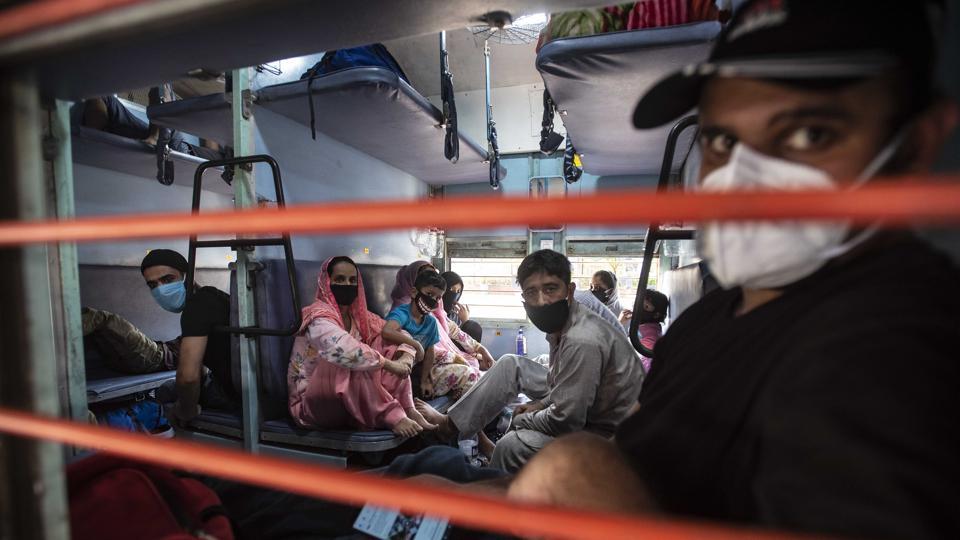
These trains will run with non-air conditioned coaches and are expected to cater to small towns, according to officials aware of the developments. The schedule will be announced soon, the railway ministry said.
The 200 trains announced on Tuesday will run in addition to the premium passenger trains connecting New Delhi with 15 cities across India, and the ones ferrying stranded migrant labourers to their hometowns.
“Apart from this, from June 1, railways will run 200 non-AC trains a day according to the time table…online bookings will begin soon,” Goyal tweeted.
In a statement announcing the new trains, the railway ministry said: “No tickets will be sold at any railway station and prospective travellers should not come to the railway station to buy tickets.”
According to officials who did not want to be named, these passenger trains will run long distance and are likely to connect smaller cities. They could also help expedite the transport of migrants stuck in different parts of the country due to the lockdown imposed to stop the spread of the coronavirus disease (Covid-19).
On Twitter, Goyal also said the railways will increase the number of Shramik Special trains to 400 a day — from the current 150 — within the next two days. “All migrants are requested to stay where they are, Indian Railways will get them back home over the next few days,” he said.
On May 1, the government began operating Shramik Special trains after demands by several states.
And on May 12, Indian Railways resumed its passenger services after a gap of nearly two months with 15 pairs of trains connecting Delhi with Dibrugarh (Assam), Agartala (Tripura), Howrah (West Bengal), Patna (Bihar), Bilaspur (Chhattisgarh), Ranchi (Jharkhand), Bhubaneswar (Odisha), Secunderabad (Telangana), Bengaluru (Karnataka), Chennai (Tamil Nadu), Thiruvananthapuram (Kerala), Madgaon (Goa), Mumbai Central (Maharashtra), Ahmedabad (Gujarat) and Jammu Tawi (Jammu and Kashmir).
Railways stopped its passenger services in an unprecedented move on March 22 in the wake of the Covid-19 outbreak.
The 167-year-old rail network of India ran nearly 14,000 passenger trains and ferried 23 million passengers a day before the lockdown.


