
 E-Paper



From red stronghold to retreat: Paparao’s surrender marks turning point in Bastar
For over two decades, Paparao operated deep inside the Indravati–Abujhmad forests as a key leader of the Communist Party of India (Maoist).

 Prefer HTon Google


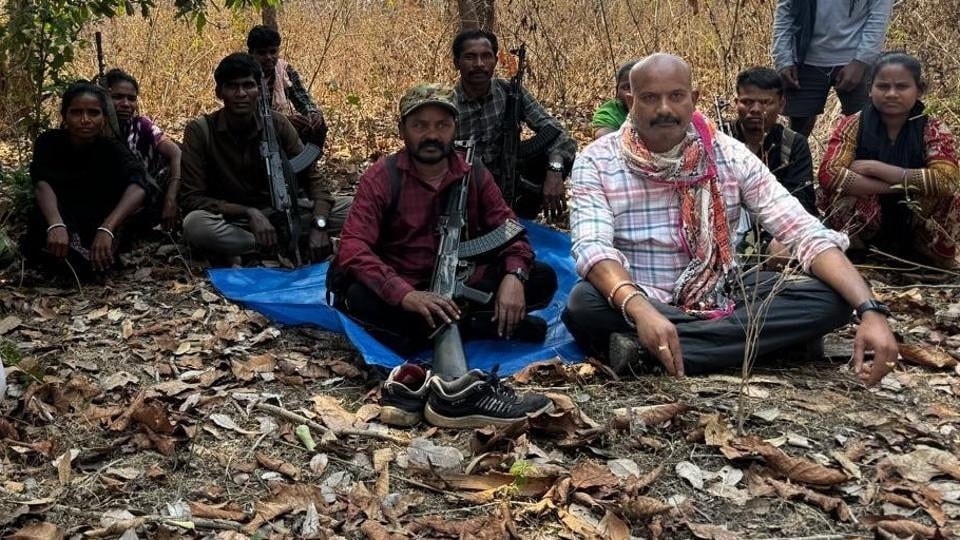
The surrender of senior Maoist commander Paparao alias Mangu in Bastar marks more than the end of one militant career; it reflects the steady erosion of Left-Wing Extremism in a region that once served as the nerve centre of the insurgency. For over two decades, Paparao operated deep inside the Indravati–Abujhmad forests as a key leader of the Communist Party of India (Maoist), orchestrating attacks on security forces and sustaining the group’s operational network. His decision to lay down arms now mirrors a broader shift in Chhattisgarh, where sustained security operations, development initiatives and rehabilitation programmes have significantly weakened the Maoist movement.
A decade ago, Bastar was widely regarded as the epicentre of Left-Wing Extremism in India. Today, the numbers tell a very different story. Government data indicates that the number of active Maoist cadres in Chhattisgarh has fallen sharply from around 1,600 in 2025 to about 100 as of March, 2026. At the national level, the total number of active Maoist cadres has dropped from 2,018 in 2025 to only 216 in 2026.
One of the clearest indicators of the weakening insurgency has been the surge in surrenders. Chhattisgarh has witnessed thousands of Maoist cadres abandoning the movement over the past decade. Government records show a steady trend beginning with 413 surrenders in 2014 and 323 in 2015, followed by a major spike to 1,198 in 2016 as intensified operations and outreach programmes encouraged many underground cadres to return to the mainstream. The trend continued with 370 surrenders in 2017, 390 in 2018 and 294 in 2019. Even during the pandemic years, the momentum remained strong, with 323 surrenders in 2020 and 520 in 2021. The numbers stayed significant thereafter, with 373 surrenders in 2022 and 736 in 2024. The year 2025 marked an unprecedented breakthrough when 1,573 Maoist cadres surrendered in Chhattisgarh alone—the highest in any single year—highlighting the steady depletion of the insurgency’s human resource base.
This transformation has been driven by a coordinated multi-pronged strategy pursued by both the Union and state governments. Security forces have expanded their presence into remote forested areas that were once Maoist strongholds. The establishment of forward operating camps, improved intelligence coordination and sustained operations by the Central Reserve Police Force and state police units have gradually dismantled insurgent networks in Bastar.
Alongside security operations, the government has focused on development and welfare initiatives aimed at addressing the conditions that once allowed Maoist ideology to gain traction. Programmes such as the Aspirational Districts Programme, Pradhan Mantri Gram Sadak Yojana and Jal Jeevan Mission have improved connectivity, drinking water access and basic infrastructure in remote tribal areas. Roads and mobile connectivity, once scarce in Bastar’s forests, are now steadily expanding, linking isolated villages to markets, healthcare and education.
Rehabilitation policies have also played a key role in encouraging cadres to surrender. Under the government’s surrender and rehabilitation policy, former Maoists receive financial assistance, vocational training and support for reintegration into society. These measures have enabled many former insurgents to rebuild their lives while signalling to those still underground that returning to the democratic mainstream is both possible and beneficial.
Several high-profile surrenders have further accelerated this trend. Among the most significant was the surrender of Satish alias T Vasudev Rao in 2025, a Central Committee member of the CPI (Maoist) who served as the group’s intelligence chief and was known for his expertise in improvised explosive devices. Other prominent surrenders include Ranita, secretary of the Maad Divisional Committee; Paklu alias Pradeep Oyam, secretary of the Kalahandi area; Nila alias Nande, a Divisional Committee member and secretary of the Nelnar Area Committee; and Deepak Palo, a Divisional Committee member and secretary of the Indravati Area Committee.
Paparao’s surrender fits into this broader trajectory. As one of the last senior commanders in Bastar, his decision further weakens an already fragile network and highlights how sustained security operations, development initiatives, and rehabilitation policies have steadily eroded the insurgency. Once described as India’s biggest internal security challenge, the Maoist movement is now nearing its endgame, with shrinking cadres and growing surrenders signalling a shift from armed struggle to reintegration into the democratic mainstream.


