
 E-Paper



US blames Russia, China for expanding ‘obstructionism’ in G20
The official indicated that as is often the case with such summits, negotiations will go down to the last minute in New Delhi.


The G20 has become an “increasingly contested space”, with Russia and China not merely “blocking progress on language around Ukraine” but extending their “obstructionism” to broader issues in the joint statement, a senior United States (US) administration official has said. For its part, the US, the official said, is “very focused and supportive” of India’s efforts towards a common statement and expects that the final outcome will boil down to the last-minute negotiations in Delhi during the summit.
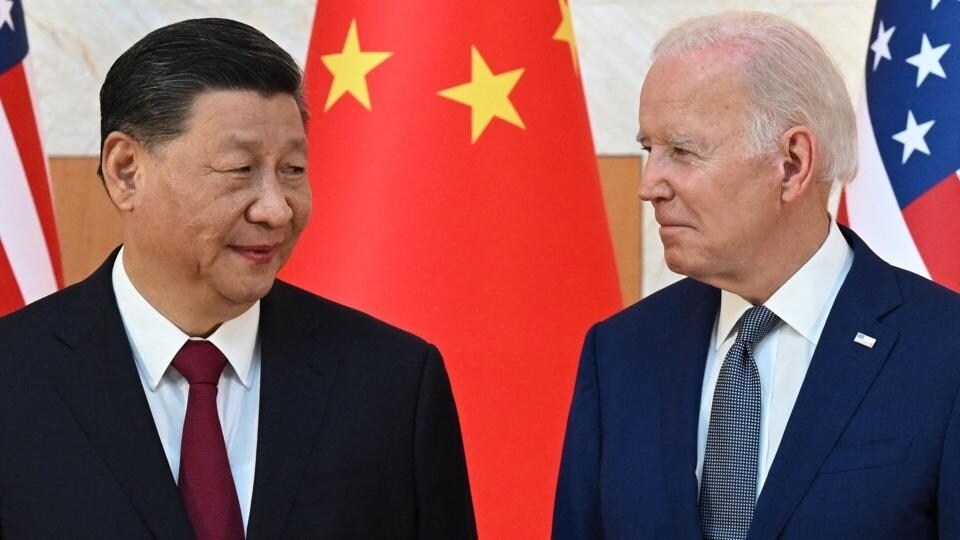
Asked about the challenge that India is confronting in its quest to issue a joint communique at the end of the G20 summit because of differences between the West and Russia and China on Ukraine, and what the US was doing to help, the official said that the US has urged everyone to move towards a joint communique.
“We are troubled by the fact that not only have Russia and China — and this is probably to be expected — sought to block progress on language associated with Ukraine, but they are basically extending that obstructionism to broader issues in the larger statement.”
Adding that the “opposition and intractability” from Moscow and Beijing has been real, the official indicated that as is often the case with such summits, negotiations will go down to the last minute in New Delhi.
“I think the larger question that we just don’t know is whether President Xi is actually coming to Delhi and I don’t have an answer. It’s certainly been rumoured and discussed, but we do not know ultimate plans,” he added. Xi’s participation in the summit is not yet confirmed. Putin has already said he will not attend.
On the other items in the agenda, from reform of multilateral development banks (MDBs) and climate finance, the US administration official said those are being “discussed intensively” at the level of the G20 sherpas and other officials. But the official also underlined the challenges that go beyond the West-Russia/China binary and said Washington was committed to engaging deeply on all issues.
“The G20 is increasingly a contested space and so on almost every issue there are hard negotiations and it’s not just between the US and China or between like-minded countries. There are major issues that are being debated across many vectors. And look, it just requires intensive engagement, which the US is embracing.”
India’s eastern challenge
In a different context, the official acknowledged that the US is talking to India about the political situation in Bangladesh, where Delhi and Washington have differences on the Awami League government in Dhaka and the conditions under which elections are scheduled to be held.
The US official said that the US is “respectful of India’s perspective” and recognises that Bangladesh is in “India’s backyard”. Delhi and DC are also closely engaged in developments in Myanmar, where the US believes both countries share goals but have limited leverage to influence events even as the situation on the ground is getting worse.
In Dhaka, India is seen as backing Prime Minister Sheikh Hasina, and believes that the Awami League is the best bet against radicalisation and terror to its east.
The US has been critical of Hasina’s democratic record, sceptical of the prospects of free and fair elections, and announced sanctions against both members of the Rapid Action Battalion on grounds of human rights abuses and visa restrictions on those officials seen as undermining electoral integrity. In recent weeks, reports have indicated that Delhi has taken up concerns around Bangladesh with DC.
Asked about the issue, the official said, “We have been talking about it and I think it’s fair to say that we have listened carefully and we understand India’s perspective. We also understand that Bangladesh is directly in India’s backyard and we have to be respectful of India’s perspectives and I think we are seeking to do that.”
On Myanmar, where the anti-regime protests and ethnic unrest has led to cross-border refugee flows to India and is among the contributory factors leading to the turmoil in Manipur, the US has taken a strong position against the military junta while India has been careful and continued its engagement with the military rulers due to security concerns.
But the Biden administration believes that there is more convergence than divergence between Delhi and DC on goals, even if the ability to achieve those goals has been limited.
“The challenge frankly between the US and India on Myanmar is not that we are not aligned. It is that the progress and the challenges inside the country are so deep and profound in that the violence continues, economic growth has completely stalled and the only real country that Myanmar has deep ties with right now is China,” the official said.
Recognising that Delhi had concerns about Myanmar’s links with China and sought to diversify its ties, the US sense is that both Delhi and DC’s tools are “limited” even if they are both quite concerned by the trajectory in Myanmar.
While recognising the the Association of Southeast Nations (Asean) has taken the diplomatic lead in restarting dialogue and moving the country towards elections and restoration of democracy, the US is pessimistic about the return of popular rule and normalcy. “I can’t in good conscience leave you with an enormous amount of optimism here. This is a tragic set of circumstances and the situation on the ground in many respects is getting worse, not better.”
America’s China approach
The senior official also explained the American approach to China, where “intense competition” coexists with intensified efforts at engagement to prevent accidents. Amid concerns that Washington was going too far in wooing Beijing even with a lack of reciprocity, the official insisted this was not a situation where US was an “ardent suitor” and laid out a set of specific actions taken by Washington which showcase its strength and its commitment to the wider region.
At a time when the US has stepped up its engagement with China, under its broad policy of both competing but also maintaining lines of communication to responsibly manage ties with Beijing, the official, who is closely involved with shaping and executing policy on the issue, laid out the American thinking on its foremost geopolitical rival. The US believes that its recent engagements with China show that the relationship is becoming more steady and there isn’t as much concern about whether DC-Beijing ties are “in free fall”.
“We believe that the dominant paradigm continues to be intense competition, but at the same time, we want a predictable, practical set of interactions in which we are able to explain what our goals and objectives are in our diplomacy and our economic policies. We believe in the general mantra of no surprises, and we are seeking to apply that directly to China.”
The official said that the US was standing firm on issues such as the South China Sea, the maintenance of peace and stability across the Taiwan straits, and stands with friends who continuing to feel substantial pressure from Beijing.
But was the push towards engagement giving a sense that the US was weak? The official rejected the premise of the question, laying out why Washington did not think so and believed that its engagement was coming from a position of strength instead.
“Look at how things have changed in just the last couple of years. The American economy is booming, China’s economy is struggling. The network of allies and partners that the US has been able to both erect and knit together is rather dramatic.”
The official pointed to Quad, Aukus (the Australia-United Kingdom-US nuclear submarine deal), developments in the Philippines (where US’s access to military bases has increased), Washington’s “improved relations on the military and security side” with Japan, and the close partnerships between Europe and the Indo-Pacific as evidence of American strength, adding, in the same context, “We are extremely proud of where things stand between the US and India and how much progress we have made there.” In the same vein, the official also pointed to the US-Pacific Island forums, its engagements with Asean, and the recently held trilateral summit between the US, Japan and South Korea.
The fact that Biden is heading to Vietnam right after visiting India in September was a part of the same effort. “And we will seek to consecrate that with major initiatives, in many respects modelled after what we have done in the US-India relationship.”
All of this, the Biden administration believes, shows that the US record is powerful, deep and it is engaging “from a position of strength”.
This was not a situation, the official underscored, where the US was an “ardent suitor”. But Washington also thinks that there were areas where “lines of communication” were critical to “prevent accident and miscalculation”.
“And we are going to continue to try to build those bridges in the midst of uncertainty in Beijing.”
 ABOUT THE AUTHORPrashant Jha
Prashant Jha was formerly the US correspondent and editor of HT Premium at Hindustan Times, and has also served as the newspaper's editor-views and national political chief. He is the author of 'How the BJP Wins: Inside India's Greatest Election Machine' and 'Battles of the New Republic: A Contemporary History of Nepal'.Read More


