E-Paper



G20 Summit: Global South adversely impacted by food, fuel, fertiliser crisis due to global conflicts, says PM Modi
PM Modi made the remark during the first session of the G20 Summit in Brazil's Rio de Janeiro.

 Prefer HTon Google


The G20 should focus on the challenges and priorities of the Global South, which have been most affected by the food, fuel and fertiliser crisis brought on by global conflicts, Prime Minister Narendra Modi said on Monday.
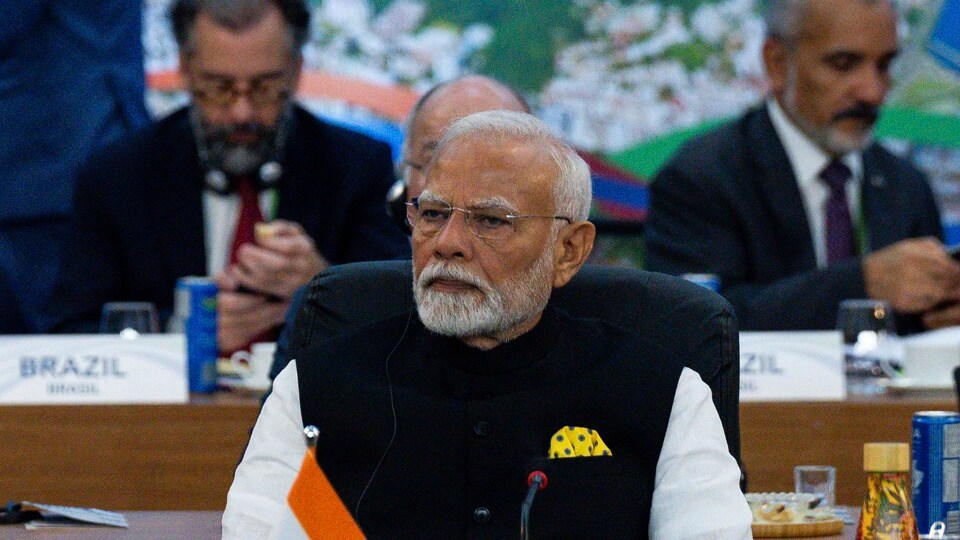
Modi’s remarks, made during the first session of the G20 Summit in Rio de Janeiro that focused on “Social inclusion and the fight against hunger and poverty”, built on India’s efforts to project itself as the voice of the Global South.
As part of a major push to improve food security around the world, Modi backed the initiative by Brazil, which is hosting the G20 Summit, for a “Global Alliance against Hunger and Poverty”. Modi arrived in Brazil late on Sunday after a visit to Nigeria.
“I would like to say that countries of the Global South are most adversely impacted by the food, fuel and fertiliser crisis caused by global conflicts. So, our discussions can only be successful when we keep in mind the challenges and priorities of the Global South,” Modi said.
“And just as we amplified the voice of the Global South by granting permanent membership of G20 to the African Union during the New Delhi Summit, we will reform institutions of global governance."
Modi noted Brazil’s G20 presidency has taken forward people-centric decisions made at last year’s G20 Summit in India, including priority for the sustainable development goals (SDGs), aspirations of the Global South and inclusive development.
Highlighting India’s initiatives to tackle hunger and poverty, Modi said the country lifted 250 million people out of poverty in the past decade and is distributing free food grains to 800 million. A total of 550 million people benefit from the world’s biggest health insurance scheme, while 60 million senior citizens will benefit from free health insurance.
In the field of food security, more than 40 million farmers received benefits worth $20 billion under the world’s largest crop insurance scheme. Aid worth more than $40 billion was given under the farmers scheme, and institutional credit worth $300 billion was given to farmers.
Using a mix of natural and organic farming and new technologies, India has focused on sustainable agriculture, protecting the environment, and nutrition and food security by promoting millets. It also developed more than 2,000 climate resilient crop varieties and started the Digital Agriculture Mission.
“India is also contributing to global food security. We have provided humanitarian assistance to Malawi, Zambia and Zimbabwe recently,” Modi said.
Brazil’s left-wing President Luiz Inacio Lula da Silva opened the G20 Summit by launching the Global Alliance against Hunger and Poverty and describing world hunger as a “scourge that shames humanity”. A total of 81 countries signed on for the initiative, though Argentina was the only G20 member country not to endorse it.
The Global Alliance also has the backing of international organisations such as the European Union and the African Union – both G20 members – and financial institutions and NGOs, bringing the total number of signatories to 147.
The initiative aims to reduce world hunger, which affected 733 million people last year or 9% of the global population, by putting international financing behind it and replicating successful national programmes in other countries. It also aims to improve nutrition
in early childhood, provide free school canteens and support small farms with the goal of enhancing food access and quality for 150 million children by the end of the decade.