
 E-Paper



Gadag farmers face loss as red chillies turn black in storage amid low prices
A bumper chilli crop in the district last year led to a significant drop in prices. To avoid selling at a loss, farmers opted to store their produce.


Over the past five to six months, red chillies stored in farmers’ houses and air-conditioned warehouses in Gadag district, north Karnataka, have been turning black due to prolonged storage and quality degradation, thus, adding to the farmers’ struggles who are already burdened by falling prices and financial stress, people familiar with the matter.
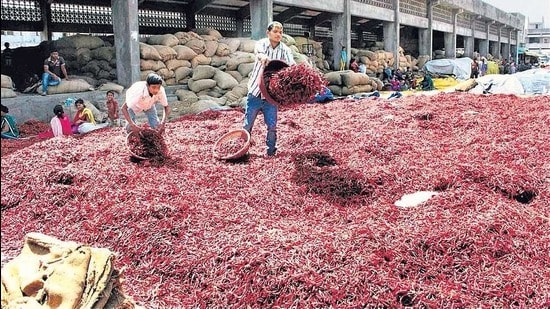
According to officials, a bumper chilli crop in the district last year led to a significant drop in prices. To avoid selling at a loss, farmers opted to store their produce.
Deputy director of the Gadag district horticulture department Shashi Kantha Kattimani said: “The main reason for the price fall was that the area of chilli cultivation expanded in neighbouring Andhra Pradesh, and Yadgiri, Raichur, and Haveri districts in Karnataka.
In Gadag district, green gram used to be grown but due to poor rainfall last year, farmers switched to red chilli cultivation. The number of chilli-growing districts increased due to poor rainfall, hence, prices fell due to excess supply. Additionally, large quantities of Guntur variety chillies entered Byadgi, Asia’s largest chilli market, causing further price drops.”
Initially, farmers received between ₹40,000 and ₹45,000 per quintal for their chillies in markets like Hubballi, Byadgi and Gadag district due to favourable weather conditions, an official said. However, since February, the anticipated price increase did not materialise, and prices dropped to ₹8,000– ₹10,000 per quintal, Kattimani said. This led to farmers storing their unsold chillies at home.
Gadag-Betageri twin cities, which have three privately owned cold storage facilities, have not been able to prevent the chillies from deteriorating, further worsening the farmers’ plight.
Rudra Gowda , a farmer, said: “The dry chillies stored for the past five months in privately owned cold storage facilities come with a hefty fee of ₹30 per bag per month. I stocked 30 bags of chillies in cold storage; I could not afford to pay ₹900 rent per month amid the price fall. I am now forced to sell them at a low price.”
The onset of the monsoon has worsened the situation. Leaking roofs and humid conditions have caused the chillies stored at home to turn black. Without a favourable market price, farmers are unable to sell their deteriorating stock, leading to increased financial hardship, the official added.


