E-Paper



Germany pushes to boost ties amid delay in EU FTA
The negotiations were first launched in 2007 and then suspended in 2013 due to “a gap in ambition”. The talks resumed after the India-EU leaders’ meeting in May 2021.

 Prefer HTon Google


New Delhi A protracted delay in finalising the India-EU free trade agreement due to the European Union’s insistence on non-trade matters such as carbon tax is prompting some members such as Germany to bilaterally engage India for greater cooperation in infrastructure, clean energy and defence projects, people familiar with the matter said on Wednesday.
Some EU members are getting anxious over the prolonged FTA negotiations, the people said, requesting anonymity. India and the EU relaunched negotiations on the trade deal in June 2022 after a gap of almost a decade but the talks have dragged on for various reasons and a speedy conclusion of the FTA is unlikely, the people said.
The negotiations were first launched in 2007 and then suspended in 2013 due to “a gap in ambition”. The talks resumed after the India-EU leaders’ meeting in May 2021.
“As the third largest economy, Germany is a key member of EU but due to historical reasons, it gives way to other EU members to lead the FTA negotiations. Meanwhile, it is keen to have bilateral investment and strategic economic cooperation with India,” one of the people cited above said.
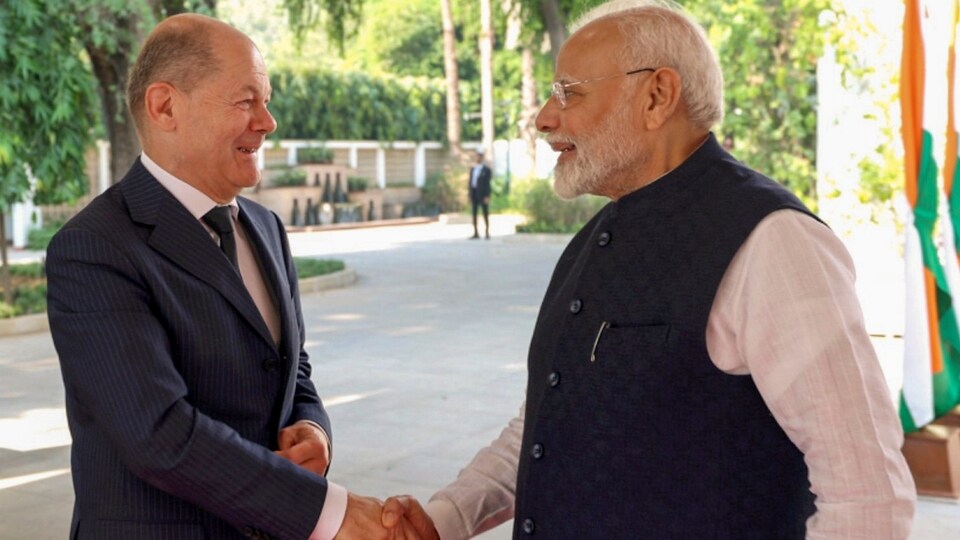
The intent to have greater cooperation outside the scope of the FTA was clear during the visit of a high-level business delegation, which was in New Delhi during German Chancellor Olaf Scholz’s trip this month for the biennial Inter-Governmental Consultations, the person said.
Read more: India, Maldives ink currency swap agreement, to initiate talks on FTA
Speaking at the Asia Pacific Conference of German Businesses (APK 2024) in New Delhi on October 25, German economic affairs minister Robert Habeck expressed dismay at the FTA negotiations continuing for more than two decades. He described the prolonged negotiations as a “joke” and hinted at creating “a new path” to take the relationship forward.
Germany’s eagerness is seen in the recently launched “Focus on India” document released by the foreign ministry with the active participation of the German cabinet. The document outlines a blueprint for bilateral collaboration to become a force for global good, he said.
“Alongside a free trade agreement between the European Union and India…we want to expand our bilateral relations quickly and comprehensively and to further enhance the framework for this,” the document said. Some of the areas identified for cooperation are solar supply chains, green hydrogen, e-mobility and startups.
Due to historic reasons, most of the 27 EU member states don’t want Germany to take the lead, a second person said. The EU members are Austria, Belgium, Bulgaria, Croatia, Cyprus, Czechia, Denmark, Estonia, Finland, France, Germany, Greece, Hungary, Ireland, Italy, Latvia, Lithuania, Luxembourg, Malta, Netherlands, Poland, Portugal, Romania, Slovakia, Slovenia, Spain and Sweden.
“India is the world’s fastest growing major economy and the fifth largest. Germany is the third largest economy. Immense potential can be unlocked if the two collaborate comprehensively on economic matters. This is the best way forward as the FTA negotiations are unlikely to be concluded soon in the light of EU’s insistence on including non-trade issues. India is unlikely to accept that at any cost,” the second person said.
Sharing the dais at APK2024 with Habeck, commerce minister Piyush Goyal said that including “extraneous issues” such as matters concerning climate and labour in the FTA talks are counterproductive, especially when the two partners are already engaged on such issues at specialised multilateral forums.
An FTA is not possible unless EU stops pushing sustainability measures such as the Carbon Border Adjustment Mechanism (CBAM) and EU deforestation regulation (EUDR), the people said. CBAM is a move to levy high duties on carbon intensive products to offset “carbon leakage” involved in importing high carbon goods.
India believes CBAM is a form of tax that can lead to tariffs of up to 35% on imports of high carbon goods such as cement, aluminium, fertilisers, chemicals including hydrogen, iron and steel from India.
On October 9, finance minister Nirmala Sitharaman described the EU’s decision to impose a carbon tax on Indian products as “unilateral”, “arbitrary” and a “trade barrier” aimed at hurting Indian industries, and said the levy is a pretence to convert the EU’s “dirty” steel into green at another’s cost.
“The India of today is different. It negotiates trade deals on fair and equitable principles. An FTA with EU is unlikely if it insists on including non-trade issues,” the second person said.
At their bilateral meeting, both Prime Minister Narendra Modi and Scholz pushed for the speedy conclusion of the India-EU FTA. A joint statement issued after the Inter-Governmental Consultations said both leaders underscored the “crucial importance of a comprehensive” FTA between the EU and India, while “calling for an early conclusion of the negotiations”.
Addressing the APK 2024, Scholz said the German government is “pushing for swift progress and rapid conclusion” of the FTA, and that if both countries work on the issue together, it “could happen in months rather than years”.