E-Paper



Number Theory: Free trade is beneficial, but with a few caveats
The World Trade Organization is perhaps facing its most difficult test today since its inception

 Prefer HTon Google


The World Trade Organization (WTO) will complete 30 years on January 1, 2025. The multilateral trade body is perhaps facing its most difficult test today since its inception as the consensus on a rules-based multilateral trade regime continues to weaken across countries and protectionism grows even in advanced economies.
The latest World Trade Report – it is the flagship publication of WTO – acknowledges this challenge categorically but also tries to build a case for free trade. “Perhaps the biggest takeaway from the report is its reaffirmation of trade’s transformative role in reducing poverty and creating shared prosperity – contrary to the currently fashionable notion that trade, and institutions such as WTO, have not been good for poverty or for poor countries, and are creating a more unequal world,” WTO Director General Ngozi Okonjo-Iweala said in the report. Its case for free trade notwithstanding, the report does admit that gains from trade have not accrued to all stakeholders. Here are four charts which summarise the key message of the report.
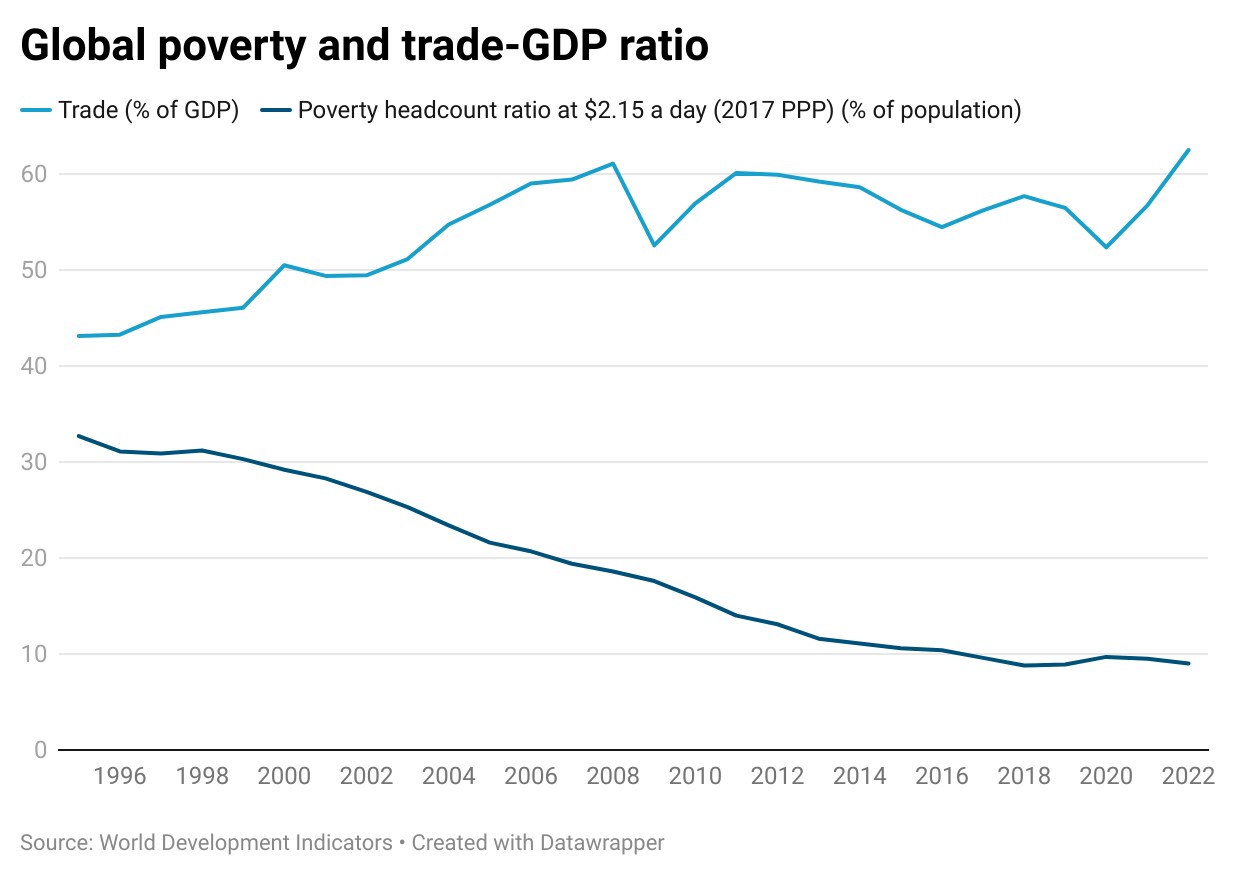
 Rise in trade has been accompanied by a sharp fall in povertyThe World Trade Report says that last three decades have seen an unprecedented reduction in poverty across the world, especially in low- and middle-income economies. This, the report claims, has been facilitated by an increase in trade openness in the world, as seen in the rise in share of trade as a proportion of GDP. Rising trade, the report argues, led to productivity gains, higher income growth from exports, and increased purchasing power because of cheaper imports. The connection between rise in trade and falling global poverty holds even if one takes China out of the equation. “With strong income growth in low- and middle-income economies, the proportion of their populations living in extreme poverty fell from 40% in 1995 to under 11% in 2022. China was only part of this story: take it out of the equation, and the poverty rate in low- and middle-income economies declined from 36% in 1996 to under 14% in 2022,” Okonjo-Iweala says in her foreword.
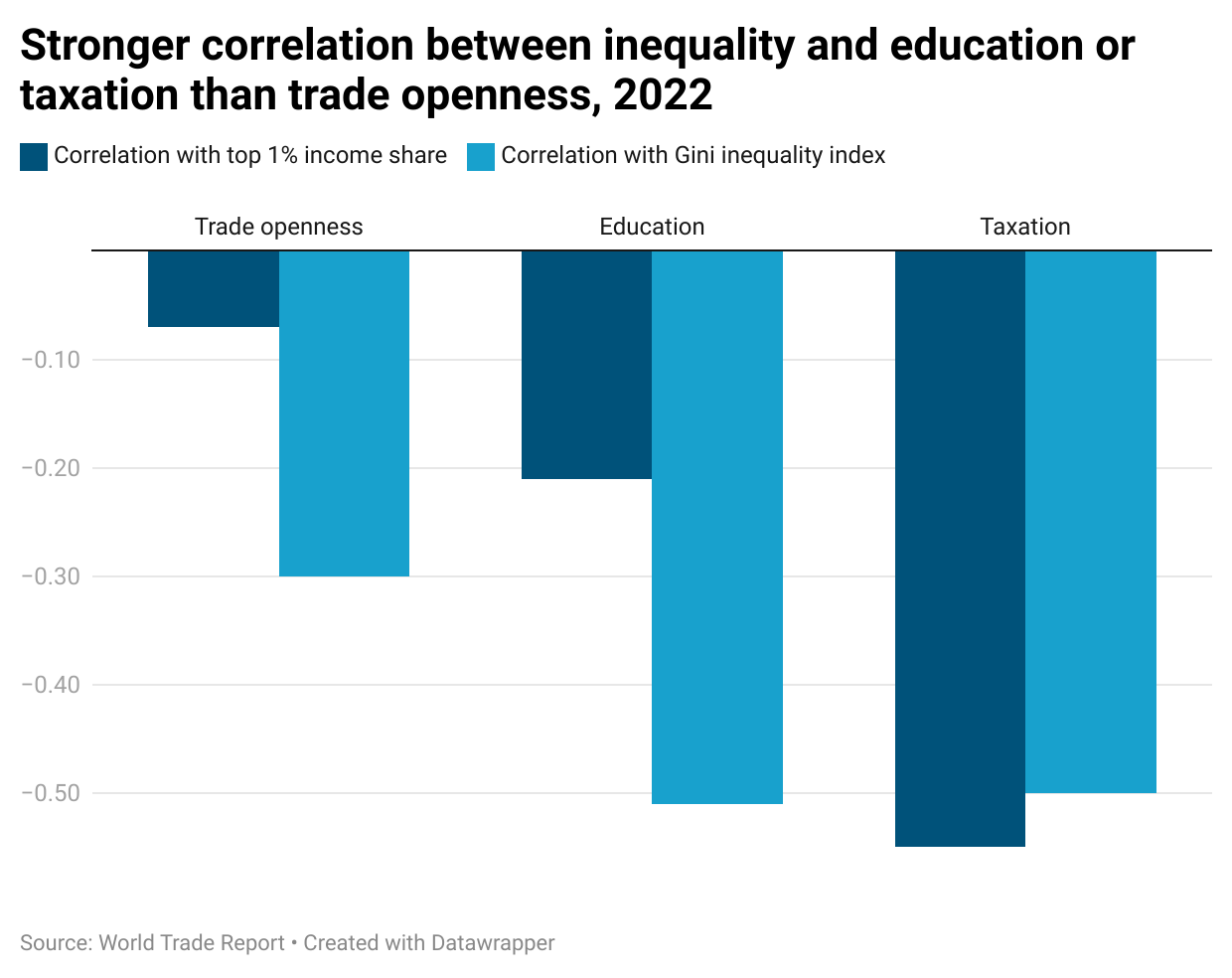
- But its relationship with inequality is more complicatedFree trade, the report claims, has also led to a fall in intercountry inequality. However, this has not been accompanied by a fall in inequality within countries, the report says. Even though poverty in economies has fallen as they have opened up to trade, there is not much of a reduction in the Gini coefficients -- a measure of inequality --- over the years, it adds. In fact, the report produces data to show that within country, inequality responds more strongly to things such as education and tax policy than trade openness.
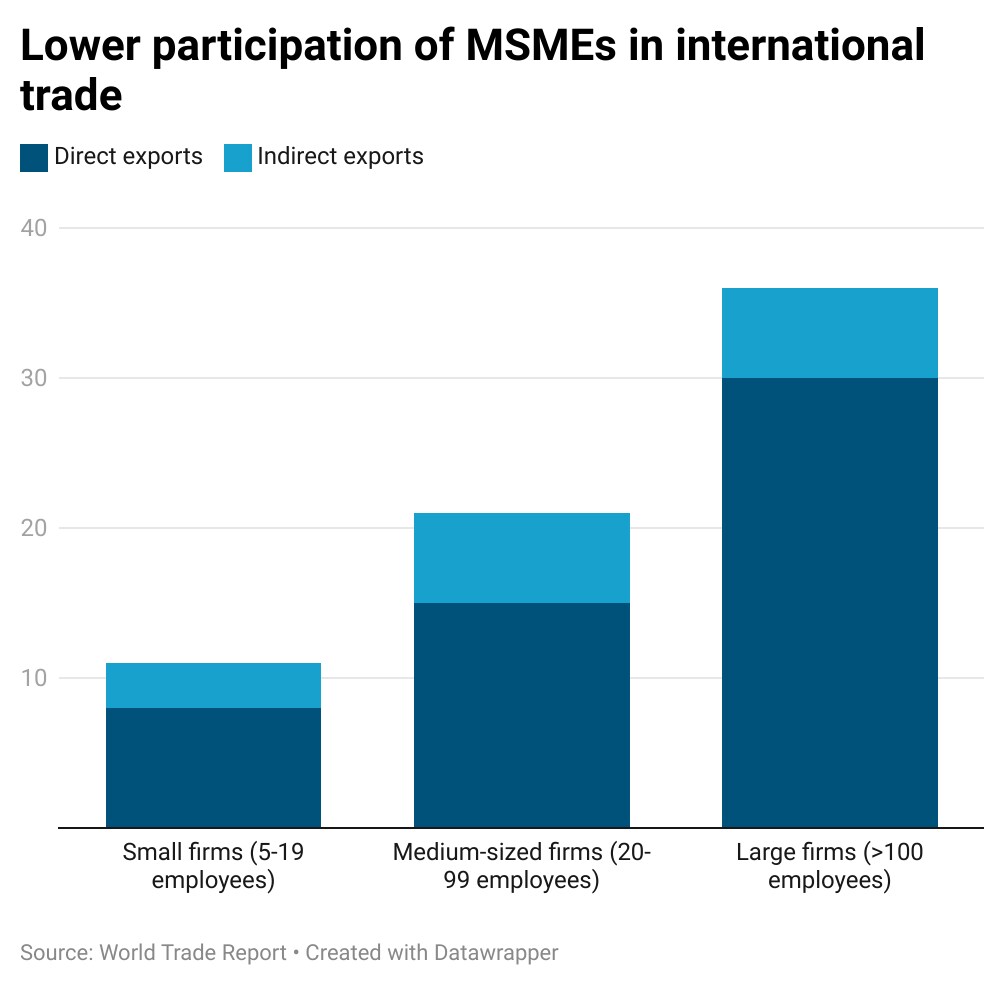
- Gains from trade are skewed against the less-advantagedThere are reasons why greater trade openness might not reduce inequality significantly. The report underlines that the gains from trade are not equally shared within countries. Large firms strongly overpower micro, small, and medium-sized enterprises (MSMEs) in international markets. MSMEs are disadvantaged in front of multinational enterprises (MNEs) in terms of limited access to capital, foreign trading capital, and weak bargaining power compared to MNEs, it says. Gains from trade are similarly skewed against lower-skilled workers as export trade is relatively skill-intensive. “Exporting firm have a larger demand for skills because export trade requires more managerial roles covering different tasks, such as managing foreign regulations or global distribution,” says the report. The lack of accessible education is a major factor in keeping workers out from the export industry, it says.
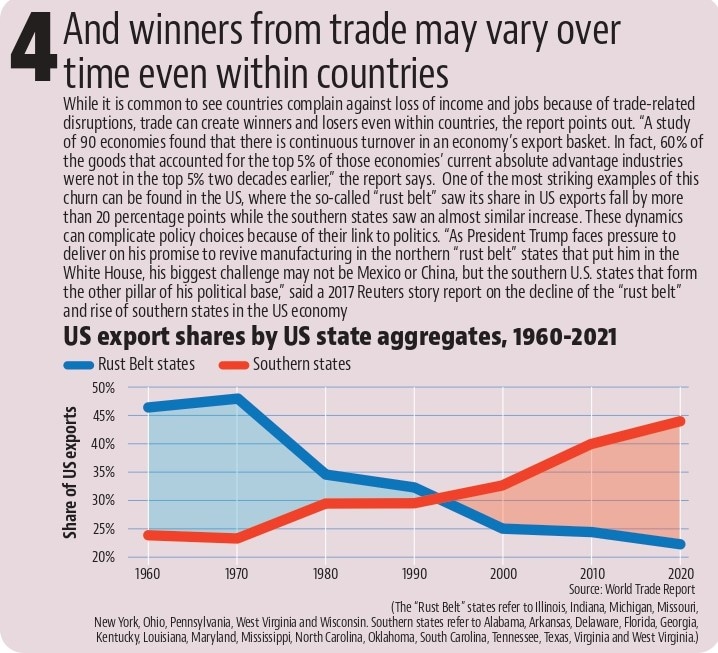
- And winners from trade may vary over time even within countriesWhile it is common to see countries complain against loss of income and jobs because of trade-related disruptions, trade can create winners and losers even within countries, the report points out. “Evidence suggests that one important source of gains from trade, comparative advantage, is highly dynamic. A study of 90 economies found that there is continuous turnover in an economy’s export basket. In fact, 60% of the goods that accounted for the top 5% of those economies’ current absolute advantage industries were not in the top 5% two decades earlier,” the report says, quoting a 2015 National Bureau of Economic Research (NBER) paper (https://www.nber.org/papers/w21753). One of the most striking examples of this churn can be found in the US, where the so-called “rust belt” saw its share in US exports fall by more than 20 percentage points while the southern states saw an almost similar increase. These dynamics can complicate policy choices because of their link to politics. “As President Trump faces pressure to deliver on his promise to revive manufacturing in the northern “rust belt” states that put him in the White House, his biggest challenge may not be Mexico or China, but the southern U.S. states that form the other pillar of his political base,” said a 2017 Reuters story report on the decline of the “rust belt” and rise of southern states in the US economy (https://tinyurl.com/nnepum8m).