
 E-Paper



Dynasty politics derailed UP’s development before 2017: Yogi
Handloom sector is more than an economic activity – it represents India’s identity, craftsmanship and cultural continuity, says chief minister

 Prefer HTon Google


LUCKNOW Chief minister Yogi Adityanath on Friday took pot shots at the previous governments, alleging they were deeply immersed in nepotism, dynasty politics, had no time for people and lacked vision for development.
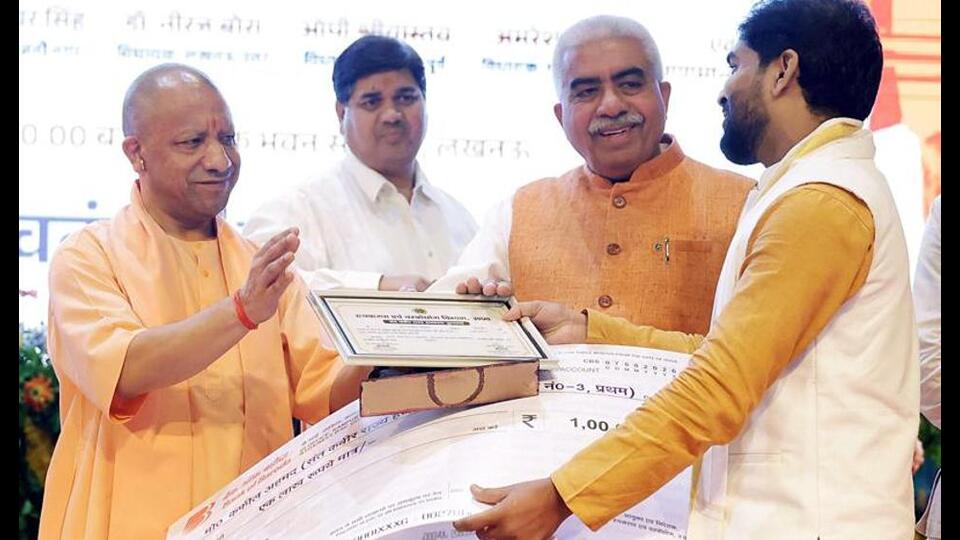
Without naming Samajwadi Party chief Akhilesh Yadav, while addressing a state-level function organised to mark National Handloom Day, Adityanath said: “Some people remain children all their lives. Babua was no different.”
“He would wake up at 12 noon, get ready by 2 pm, head to the gym at 5 pm, and by 7 pm the gatherings would begin. So when did he ever think about the state? They had no interest in development. Whatever resources existed were looted by their family. They themselves had become a threat to women’s safety,” the chief minister alleged while addressing a gathering after presenting the Sant Kabir State-Level Handloom Awards.
He alleged that before 2017, Uttar Pradesh suffered from poor law and order, inadequate electricity supply and poor road connectivity.
“There was no security for daughters, traders, artisans or craftsmen. Markets remained deserted due to frequent riots and curfews, directly affecting handloom workers, artisans, students and women,” he said.
“The state witnessed riots, curfews and deaths caused by encephalitis and dengue. The condition of basic schools for poor children was pathetic. There was neither drinking water nor toilets. Today, go and see for yourself — everything has changed. Students are receiving school bags and other essential facilities,” he added.
The CM said such development work could have been undertaken even before 2014 and 2017, but the previous governments lacked the vision to do so.
“Those governments viewed every issue only through the prism of vote-bank politics. As a result, the dignity of the poor, artisans and craftsmen was neglected. Before 2017, UP did not even have adequate electricity or good roads for transportation,” alleged Adityanath.
The CM recalled that August 7 commemorates the launch of the Swadeshi Movement, which encouraged Indians to embrace indigenous products and reject foreign goods during the freedom struggle.
“Today is National Handloom Day. It was on this very day, August 7, 1905, that India’s freedom struggle received a new direction,” he said.
The CM said the handloom sector is more than an economic activity – it represents India’s identity, craftsmanship and cultural continuity. Every handwoven fabric carries the story of the artisan behind it and reflects centuries of skill, patience and creativity, he emphasised.
Uttar Pradesh is home to several renowned handloom traditions, including the Banarasi silk saree, Chikankari embroidery of Lucknow, Bhadohi carpets and handwoven textiles from Mau, Tanda and Mubarakpur. These crafts provide livelihoods to thousands of weaving families and contribute significantly to the state’s economy and exports.
About 2.5 lakh families, which means nearly 14 to 15 lakh people, depend on this occupation. If the powerloom sector is also included, this number reaches around 30 lakh. Last year, more than 40,000 artisans associated with the handloom sector were provided electricity-related benefits worth ₹109 crore, he said.
Adityanath said: “This is an era of competition. We can remain competitive only if we prepare designs and textiles according to the demands of the time and the market. Looking at the global demand for such products, this is also a golden opportunity for us. Lucknow, Gorakhpur, Barabanki, Ambedkar Nagar, Sant Kabir Nagar, Gorakhpur, Mau, Azamgarh, Varanasi, Bhadohi and Mirzapur, among others, are known for their outstanding handicrafts.”
The CM said the state government was committed to protecting and promoting the handloom sector and assured artisans that the government stood firmly with them.
Highlighting the government’s initiatives, Adityanath said students associated with the Handloom Facilitation Centre in Varanasi were being provided scholarships, training in packaging and skill development, while the PM MITRA Textile Park coming up over 1,000 acres in Lucknow would strengthen the textile sector, which he described as the country’s second-largest source of employment after agriculture.
‘Over 70% of those working in handloom sector are women’
Chief minister Yogi Adityanath said that before 2017, the carpet cluster in Bhadohi had become almost defunct. Today, carpets worth hundreds of crores of rupees are being exported from there to markets across the world. Bhadohi carpets were also installed in the new Parliament of India. At various places in Parliament, one can see the recognition of Uttar Pradesh’s handicrafts and artisans.
“Today, more than 70% of those working in the handloom sector are women. This is remarkable. Prime Minister Modi also presents handicraft products from UP as gifts to heads of state during his foreign visits. This is an honour for all artisans and craftsmen,” he said.


