E-Paper



Global renewable capacity set to grow, positive outlook led by India, Europe
This is mainly led by the outlook for India, Europe and most emerging and developing economies compared with last year’s forecast

 Prefer HTon Google


Renewable sources of electricity generation are continuing to grow strongly around the world, with global capacity expected to more than double by 2030, despite global geopolitical disruption, financial pressures and other supply chain issues, the International Energy Agency has said.
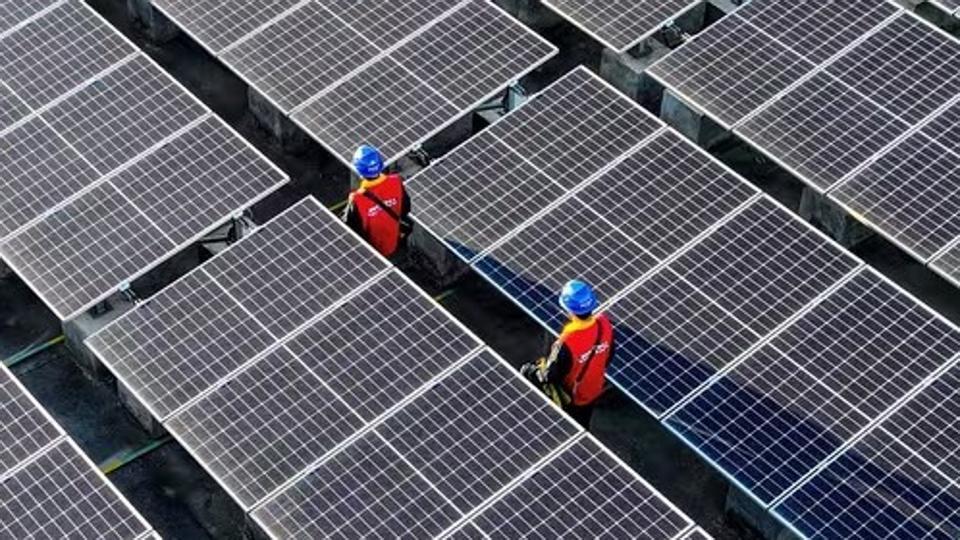
This is mainly led by the outlook for India, Europe and most emerging and developing economies compared with last year’s forecast.
But, the forecast for growth in global renewable power capacity is revised down slightly, mainly due to policy changes in the United States and China.
The renewable energy growth forecast for the 2025-2030 period is 5% lower compared with last year’s report, reflecting policy, regulatory and market changes since October 2024, IEA said, adding that the forecast for the United States is revised down by almost 50%.
Also Read:Why India must drive the future with EVs
This reflects several policy changes, including the earlier phase out of federal tax credits, new import restrictions, the suspension of new offshore wind leasing and restricting the permitting of onshore wind and solar PV projects on federal land. China’s shift from fixed tariffs to auctions is impacting project economics and lowering growth expectations also.
The disruptions are also expected to impact the COP28 agreement to triple renewable energy capacity by 2030. Global renewable power capacity is expected to reach 2.6 times its 2022 level by 2030 but fall short of the COP28 tripling pledge.
“This target can still be brought within reach if countries adopt enhanced policies to bridge gaps in both ambition and implementation. The accelerated case in this report sees global renewable capacity reaching 2.8 times its 2022 level by 2030 if countries minimise policy uncertainties, reduce permitting timelines, increase investment in grid infrastructure, expand flexibility to facilitate integration of variable renewables, and de-risk financing,” the report states.
On the brighter side, the outlook for renewables is more positive in India, Europe and most emerging economies. India’s renewable expansion is driven by higher auction volumes, new support for rooftop solar projects, and faster hydropower permitting. India is on track to meet its 2030 target and become the second-largest growth market for renewables, with capacity set to rise by 2.5 times in five years.
In the European Union, the growth forecast has been revised upwards slightly as a result of higher than expected utility-scale solar PV capacity installations, driven by strong corporate power purchase agreement (PPA) activity in Germany, Spain, Italy and Poland. This offsets a weaker outlook for offshore wind. The Middle East and North Africa forecast has been revised up by 25%, the biggest regional upgrade, due to rapid solar PV growth in Saudi Arabia. In Southeast Asia, solar PV and wind deployment is accelerating, with more ambitious targets and new auctions, the report states.
“The growth in global renewable capacity in the coming years will be dominated by solar PV – but with wind, hydropower, bioenergy and geothermal all contributing, too,” said IEA Executive Director Fatih Birol in a statement.
“Solar PV is on course to account for some 80% of the increase in the world’s renewable capacity over the next five years. In addition to growth in established markets, solar is set to surge in economies such as Saudi Arabia, Pakistan and several Southeast Asian countries. As renewables’ role in electricity systems rises in many countries, policymakers need to pay close attention to supply chain security and grid integration challenges,” he added.
Solar and wind outpaced the growth in global electricity demand in the first half of 2025, resulting in a very small decline in both coal and gas, compared to the same period last year, a new analysis by Ember said.
Record solar growth and steady wind expansion are reshaping the global power mix, as renewables overtake coal for the first time on record, Ember also said on Tuesday.
“We are seeing the first signs of a crucial turning point,” said Małgorzata Wiatros-Motyka, Senior Electricity Analyst at Ember in a statement.
“Solar and wind are now growing fast enough to meet the world’s growing appetite for electricity. This marks the beginning of a shift where clean power is keeping pace with demand growth.”
India achieved record growth in solar and wind, with both exceeding demand growth—this led to a decline in coal use and a 3.6% fall in power sector emissions. Cleaner energy growth was supported by milder weather, Ember added.
HT reported on September 18 that India’s power sector carbon dioxide (CO2) emissions fell by 1% year-on-year in the first half of 2025 and by 0.2% over the past 12 months, only the second drop in almost half a century, a Centre for Research on Energy and Clean Air (CREA) and Carbon Brief analysis had found.
“India’s record solar and wind additions in the first half of 2025 are a clear sign of momentum. Even though electricity demand didn’t grow as strongly this year, clean power grew fast enough to push coal generation down and cut emissions,” said Neshwin Rodrigues, Ember’s Senior Energy Analyst - Asia. “This shows how renewables are increasingly shaping the balance of India’s power system and opening the door to deeper emissions reductions in the years ahead.”
Fossil fuel generation rose in EU and US, says Ember
China and India both saw fossil generation fall in the first half of 2025 as clean power growth outpaced demand. China remained the leader in clean energy growth, adding more solar and wind than the rest of the world combined, helping to cut China’s fossil generation by 2% (-58.7 TWh) in the first half of 2025, Ember said.
In India, growth in clean sources was more than three times bigger than demand growth. However, demand was exceptionally low at 1.3% (+12 TWh), compared to the same period last year at 9% (+75 TWh). This may be linked to milder weather conditions, experts have said.
India’s record solar and wind expansion, combined with lower demand, drove down fossil fuels in the country, with coal falling 3.1% (-22 TWh) and gas 34% (-7.1 TWh).
“By contrast, fossil generation rose in the US and the EU. In the US, demand growth outpaced clean power, driving up fossil generation. In the EU, weaker wind and hydro output led to higher gas and coal generation,” Ember said.