
 E-Paper



Government, Opposition spar over electoral bond roll-out
The Congress stepped up its attack on the government over the issue of electoral bonds and demanded a joint parliamentary committee (JPC) probe into what it termed “opaque” donations.


The Congress and the Bharatiya Janata Party (BJP) sparred over electoral bonds on Thursday, with both sides trading charges over the roll-out of instruments that allow donors to contribute to political parties anonymously.
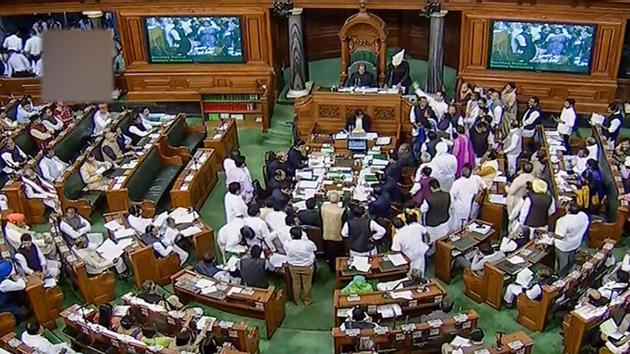
The Congress stepped up its attack on the government over the issue of electoral bonds and demanded a joint parliamentary committee (JPC) probe into what it termed “opaque” donations. The opposition party also urged the Supreme Court to take an immediate view on the legality of these bonds.
The BJP defended the instrument on the grounds that it allowed transparent donations to political parties, including the Opposition, through bonafide bank accounts. “This has been a positive attempt to get clean money into politics,” Union minister for commerce and industry and railway Piyush Goyal said, countering the Congress’s charge.
A series of investigative reports published in HuffPost India said the government ignored the Reserve Bank of India’s (RBI) warnings that the scheme could encourage money laundering, and that the Prime Minister’s Office (PMO) asked the finance ministry to allow unscheduled sales of such bonds before some important state elections. The reports also said the bonds were not untraceable and that the government had also dismissed the Election Commission of India’s objections to electoral bonds.
At a press briefing on Thursday evening, Goyal countered the charges and said: “The Government of India has been in constant discussion with the Reserve Bank of India and the Election Commission. Thus, after bringing the Finance Bill in Parliament on February 1, 2017, this scheme was notified on January 2, 2018. The Bill was passed on March 31, 2017, and we allowed the organisations enough time to consider all aspects.”
The Congress moved adjournment motions in both houses of Parliament over the issue.
Congress leader Manish Tewari told reporters that the party would continue to raise the issue in and outside Parliament as such bonds were a “threat to democracy”. Tewari raised the issue during Zero Hour in the Lok Sabha, accusing the government of making “government corruption official” by introducing anonymous electoral bonds. He also said the earlier regulation over the influence of the rich on politics was no longer there.
However, Tewari’s reference to the role of the Prime Minister’s Office in the issue of such bonds prompted speaker Om Birla to intervene and ask another member to raise his issue, resulting in protests by the Congress members. Congress president Sonia Gandhi, who was in the House, then led a walkout by her party members.
In his conference, Goyal compared electoral bonds with the previous system of funding and said the instrument had made the process of electoral funding clean. “Earlier, there was no record of where the money came from and where it went. The new system will now allow money with KYC [know your customer] tags to buy bonds,” he said.
He added that the BJP remained the only party to fight the problem of black money and had always favoured donations through cheques.
“Earlier, donations worth ~20,000 were allowed in cash. We changed that to ~2,000, so that only poor people could help political parties with cash. Honest and clean money has started to come in Indian politics since then,” he said, adding that a “random serial number” which has been given to the bonds will end “harassment” of the donor.
The bonds, he explained came with in-built security features to ensure forgery doesn’t take place and can be encashed by qualified registered political parties in just one designated bank account.
On the Congress’s allegation that the bonds were aimed at favouring the ruling party, he said those opposing the bonds are “the same lobby that made dubious and wrong charges at the Rafale deal and were rejected by the people of India”.


