
 E-Paper



GRAP 3 curbs re-imposed in Delhi-NCR after air quality deteriorates
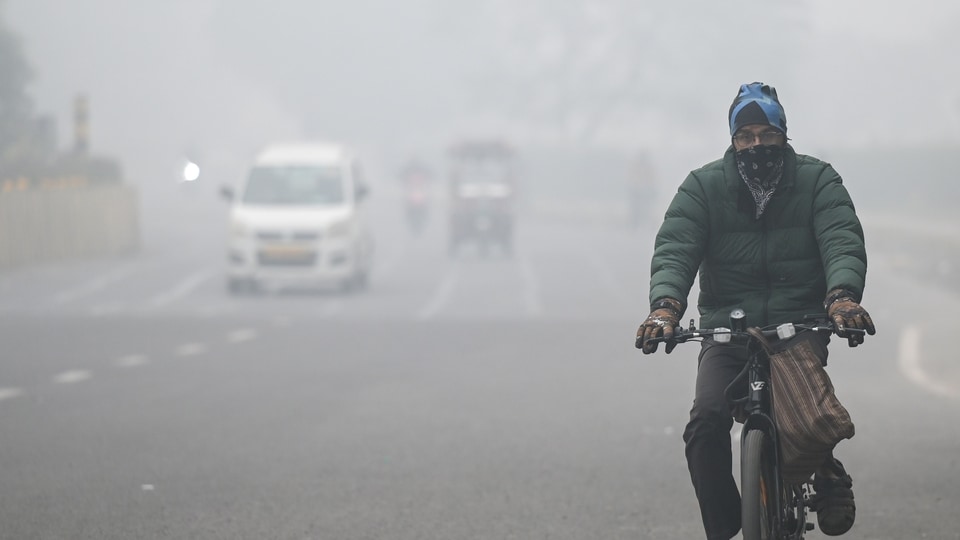
The Centre's air quality panel reimposed GRAP 3 restrictions in the Delhi-National Capital Region after air quality worsened.

 Prefer HTon Google


The Centre's Commission for Air Quality Management (CAQM) on Wednesday reimposed GRAP 3 restrictions in the Delhi-National Capital Region after air quality worsened.
“In an effort to prevent further deterioration of the air quality in pursuance of the Hon'ble Supreme Court's directives, the sub-committee on GRAP hereby decide to invoke ALL actions under stage-Ill ('severe' Air Quality of Delhif of extant schedule of GltAp, with immediate effect in right earnest by all the agencies concerned in Delhi-NCR, in addition to the Stage-l and II actions already in force,” the air quality panel said in a statement.
“The Sub-committee, shall be keeping a close watch on the air quality scenario and review the situation from time to time for further appropriate decision depending upon the Air quaiity in Delhi and forecast made by IMD/IITM,” the CAQM statement added.
ALSO READ: Delhi to experience foggy conditions till Jan 31, AQI in 'very poor' category
Delhi-NCR schools in ‘hybrid’ mode
According to CAQM rules, the governments in Delhi and NCR states will compulsorily conduct school classes for children up to fifth standard in a ‘hybrid’ mode, i.e both in physical and online mode (wherever online mode is feasible).
The CAQM stated that “the NCR state governments may also consider conducting classes for students up to Class V in a “Hybrid” mode as above in other areas in NCR.”
However, the air quality panel underlined that the option to exercise the online mode of education, wherever available, shall vest with the students and their guardians.
The national capital's Air Quality Index (AQI) entered the 'very poor' category with a reading of 330 at 9 am, according to the Central Pollution Control Board (CPCB).
An AQI between 0 and 50 is classified as 'good', 51 and 100 as 'satisfactory', 101 and 200 as 'moderate', 201 and 300 as 'poor', 301 and 400 as 'very poor', and 401 and 500 as 'severe'.


