E-Paper



‘Great disservice to your office’: India stings UNGA Prez for his Kashmir remark
India said when an incumbent President of the UN General Assembly makes misleading and prejudiced remarks, he does great disservice to the office he occupies.

 Prefer HTon Google


India on Friday described as “unwarranted” and “regrettable” the remarks by UN General Assembly President Volkan Bozkir that Pakistan should raise the Kashmir issue more forcefully and that all parties should refrain from steps that affect the status of Jammu and Kashmir.
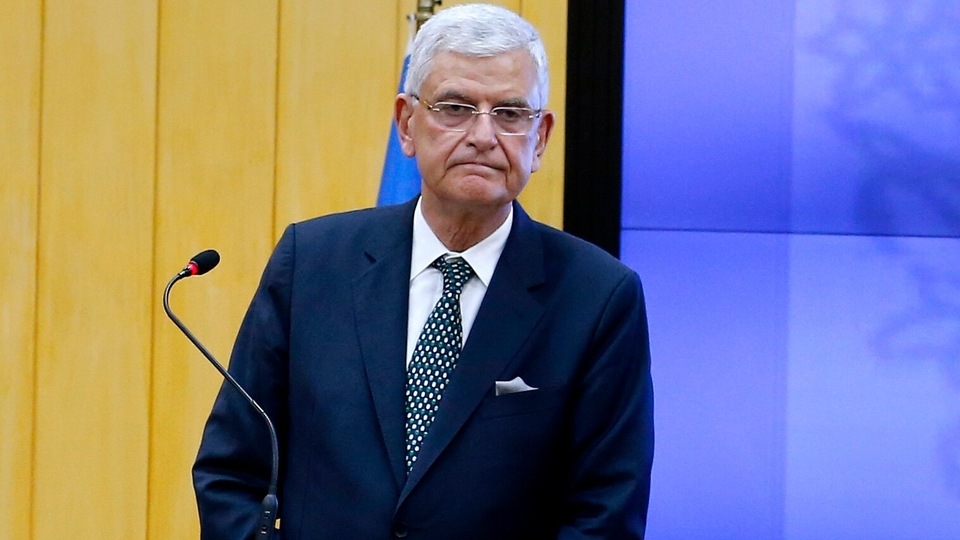
Bozkir, a former Turkish diplomat who assumed office last September, made the comments at a Press interaction with Pakistan foreign minister Shah Mahmood Qureshi in Islamabad on Thursday. Bozkir, the first Turkish national to preside over the General Assembly, was on an official visit to Pakistan during which he also met Prime Minister Imran Khan.
“We express our strong opposition to the unwarranted references made with respect to the Indian union territory of Jammu and Kashmir by the President of the United Nations General Assembly (PGA) Volkan Bozkir during his recent visit to Pakistan,” external affairs ministry spokesperson Arindam Bagchi said.
Bozkir’s remarks that “Pakistan is ‘duty bound’ to raise the Kashmir issue at the UN more strongly are unacceptable”, and there is no basis for comparing the situation in Jammu and Kashmir to other global situations, Bagchi said.
“When an incumbent President of the UN General Assembly makes misleading and prejudiced remarks, he does great disservice to the office he occupies. The PGA’s behaviour is truly regrettable and surely diminishes his standing on the global platform,” he added.
At the press interaction in Islamabad, Bozkir said Qureshi had compared the Palestine and Kashmir issues. He also noted that Palestine has more “political wind” behind it, whereas the Kashmir issue doesn’t have the “same enlarged political wind behind it”.
Noting that it is Pakistan’s duty to bring the Kashmir issue to the UN “more strongly”, he said a meeting could be held on the matter if a group of countries submit an application.
Bozkir added, “As an impartial president of the General Assembly, I must also reiterate that the UN position on Jammu and Kashmir is governed by the UN Charter and applicable Security Council resolutions.
“India and Pakistan’s Simla Agreement of 1972...states that the final status of Jammu and Kashmir is to be settled by peaceful means in accordance with the UN Charter and this is, I think, very important that we must all remember.”
Bozkir further said, “I think both parties, all parties, must refrain from taking steps that could affect the status of Jammu and Kashmir. This is I think the very important part of how we look at the case.”
In August 2019, India revoked the special status of Jammu and Kashmir and split the state into two union territories. Pakistan opposed the move, which Indian officials said was aimed at increasing development, curbing terrorism and bringing the region into the mainstream.
India has rejected Pakistan’s criticism of these developments as interference in its internal matters.