
 E-Paper



Greater Bengaluru Authority replaces BBMP as city’s governing body
The Greater Bengaluru Authority (GBA) has taken control, but BBMP continues to operate until GBA's full formation by 2025, raising governance concerns.

 Prefer HTon Google


The Greater Bengaluru Authority (GBA), that has replaced the Bruhat Bengaluru Mahanagara Palike (BBMP) as the city’s main governing body, assumed control on Thursday. However, the changes will only be on paper as of now.
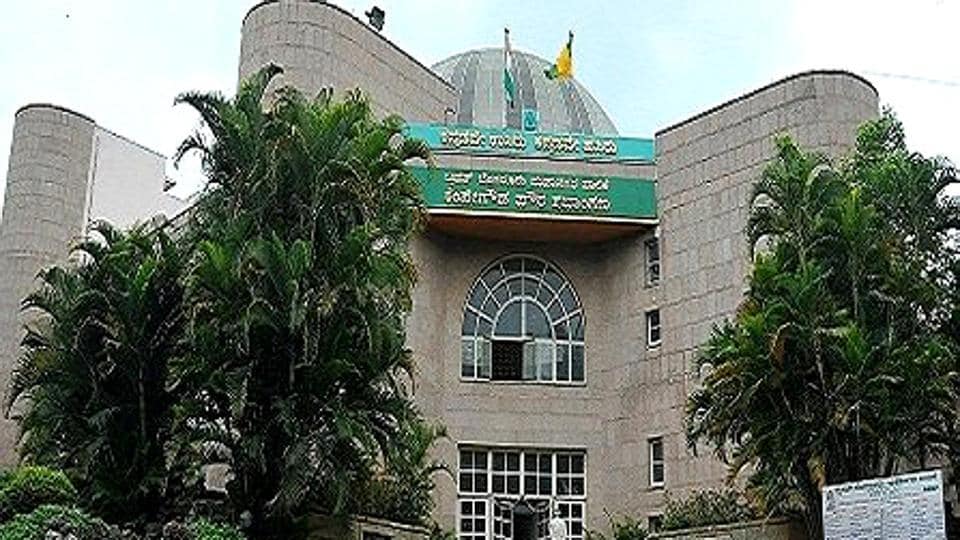
“In exercise of the power conferred by sub-section (3) of section 1 of the Greater Bengaluru Governance Act, 2024 (Karnataka Act No. 36 of 2025), the Government of Karnataka hereby directs that the said Act/all the sections and provisions of the Act shall come into force from ‘Date: 15-05-2025’,” the government notification issued on Wednesday stated. This move comes under the provisions of the Greater Bengaluru Governance Act, 2024.
Under the new administrative framework, chief minister Siddaramaiah will be the chairman of GBA, with deputy CM DK Shivakumar, who is also in charge of Bengaluru development, to serve as vice-chairman.
However, since the GBA is yet to be constituted and the division of the city into multiple corporations has not been finalised — nor have heads for these proposed bodies been appointed — the existing BBMP will continue to function for the time being, said officials in the know of the development.
“Though the notification brings the new authority into effect, the actual formation and the reorganisation of Bengaluru into separate corporations will take time. Until then, the BBMP will remain operational,” said a senior BBMP official said.
He further said that the GBA will oversee a restructured civic framework that introduces a three-tier system: the Greater Bengaluru Authority at the top, followed by multiple city corporations, and then the ward committees. This structure is intended to decentralise urban governance across an area of roughly 1,400 square kilometres, with the current 225 BBMP wards falling under the jurisdiction of the new authority, he added.
Each city corporation within the GBA will be headed by a commissioner and will function with its own mayor and council. Meanwhile, ward committees will include both elected councillors and citizen representatives. The GBA itself will be guided by an executive committee and managed by senior officials, including the Chief Commissioner, who will be appointed by the state government.
“Tushar Giri Nath, additional chief secretary of the Urban Development Department and current BBMP administrator, is expected to become the chief executive officer of the GBA. BBMP chief commissioner Maheshwar Rao is likely to oversee the broader municipal region under this revised setup,” said another official in the know.
The GBA will also bring various civic bodies under one umbrella, including the Bangalore Development Authority (BDA), Bangalore Water Supply and Sewerage Board (BWSSB), and Bangalore Electricity Supply Company (BESCOM), in an attempt to streamline governance and improve coordination.
Members of the GBA, including state ministers, MPs, MLAs, mayors, and heads of civic agencies, will hold voting rights.
Financially, the new corporations will retain the ability to levy taxes such as property tax, advertisement fees, entertainment tax, and infrastructure cess. However, the state government will now determine property tax rates, a move that some experts fear could limit the financial independence of the local bodies. The potential dilution of mayoral powers has also sparked warnings about weakening the principle of self-governance.
According to the critics, the CM’s role as chairman may undermine the spirit of the 74th Constitutional Amendment, which advocates for local self-governance. Urban expert Ashwin Mahesh raised concerns about the bill’s compliance with the 74th Constitutional Amendment and said: “Certainly, there isn’t enough clarity on how it aligns with it, so a round of explanations is needed.”
Vijayan Menon, president of the Citizen Action Forum, criticised the proposed structure as “unconstitutional,” arguing that the bill effectively hands over city administration to a ministerial committee, bypassing elected municipal officials. “The bill envisions a system where we will be paying our property tax not just to the municipal body, but also to a committee led by the CM,” he said.


