E-Paper



Gujarat high court sets aside conviction of 3 men in 2002 riots case in Anand
Justice Gopi cited inconsistencies in how the accused were identified and named and held that there was no credible evidence linking the three to the offences


AHMEDABAD: The Gujarat high court has acquitted three men who had been convicted in 2006 for rioting and arson during the 2002 post-Godhra violence in Anand town, holding that their conviction was not based on reliable and corroborative evidence.
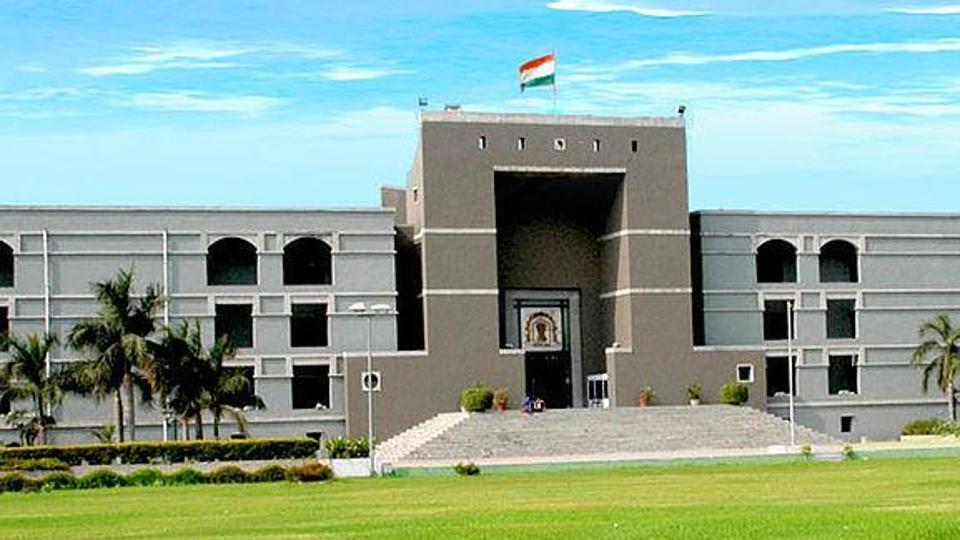
In a 98-page verdict delivered on July 28, justice Gita Gopi cited inconsistencies in how the accused were identified and named and held that there was no credible evidence linking the three to the offences.
The three men, Sachinbhai Patel, Mitul Patel, and Mitesh alias Dhobi, had been convicted by a First Fast Track Court at Anand and sentenced to five years of rigorous imprisonment under Section 436 of the Indian Penal Code for mischief by fire (arson), along with shorter concurrent sentences under sections 143 and 147 for unlawful assembly and rioting.
A fourth man, Alpesh Patel, who was also convicted in the same case, died during the pendency of the appeal.
Justice Gopi said the trial court judge erred in evaluating the evidence.
“Conviction is not based on reliable and corroborative evidence. The identification of the accused have not been proved during the trial. The present appellants, whether were the member of the unlawful assembly, was not proved, and that they had common object of creating arson had not been proved, and any act of the appellants accused in prosecution of the common object, of setting things on fire and damaging the private and public property had not been proved during the trial,” the high court said.
The case was filed in connection with violence in Anand town’s Lotia Bagod area on
March 1, 2002, following the killing of 59 kar sevaks when a coach of Sabarmati Express was set on fire at Godhra station on February 27.
According to the prosecution, the three were part of a crowd that gathered in Anand on March 1 and set shops on fire, looted goods, and caused large-scale damage. There had been a call for a Bharat Bandh, which prompted police to increase patrolling in sensitive areas.
Investigators initially charged nine men in the Lotia Bagod case but the trial court acquitted five of them in 2006, giving them the benefit of the doubt, and convicted the remaining four. One of the convicts, Alpesh Patel, died in 2009, and his appeal abated in 2020.
The high court, which reviewed the evidence, pointed out that the police complaint was filed by a sub-inspector, who said he witnessed mob violence at multiple places but did not identify any individual perpetrator. Several police witnesses, including the investigating officer, also stated that the mob dispersed upon police arrival and that no one was apprehended at the scene.
A separate complaint was submitted by Liyakat Vohra, the owner of one of the affected shops, in which he named six persons, allegedly based on information given by his relatives.
Vohra told the trial court that he did not witness the incident and had listed the names of the accused based on information given by his uncle and brother-in-law.
But his uncle, Mohammedbhai Jamalbhai, said that he had seen a large crowd from a distance but could not identify anyone. He also confirmed that some members of the crowd were trying to put out the fire, not just start it.
Vohra’s brother-in-law, Irfan Yusuf Vohra, was the only person who claimed to have seen the accused. But the court noted that his testimony was not corroborated by independent witnesses or by any Test Identification Parade.
“The conviction is totally based on [his] evidence,” the court observed, adding that even he did not name the accused in the first information report.
The court stated that many shop owners who testified claimed they did not see who caused the damage. Some were not present at the scene; others were declared hostile. No physical evidence connected the three men to the arson, and the investigating officer confirmed that no accused was arrested during patrolling.
Justice Gopi also said that Section 149 of the IPC, which holds members of an unlawful assembly liable for acts committed by the group, requires at least five persons to be convicted. With only four of the remaining nine having been convicted in this case, the court ruled that the charge under Section 149 could no longer be applied.
“The identification of the accused in court is not on account of his [the witness’s] own version. He is not the eyewitness,” the court said, concluding that the prosecution had been unable to prove its case beyond a reasonable doubt.