E-Paper



How Gyanvapi battle may set template for places of worship cases
The case, which includes six other suits claiming ownership of the land, has put India's balancing act between religion, polity, and law in the spotlight.

 Prefer HTon Google


Days after a Varanasi district judge ordered a joint trial of eight suits claiming the existence of Hindu idols inside the Gyanvapi mosque adjoining the Kashi Vishwanath temple, one of the first plaintiffs in the case announced her withdrawal from the matter, alleging pressure and harassment. This is the second time Rakhi Singh has sought to distance herself from the Gyanvapi case since May 2021, when she, within days of a similar announcement, had made a volte-face and chose to stick around.
Also read: Shringar Gauri-Gyanvapi case: Bhadri ex-royal meets plaintiff, assures support to legal battle
Last Wednesday, Singh wrote to President Droupadi Murmu, alleging the other four plaintiffs in the case and their lawyers spread false propaganda against her, adding she was “considering euthanasia” due to mental pressure.
While the Hindu side appears divided, Singh’s withdrawal from the case is unlikely to impact the proceedings before the Varanasi district judge because she is just one of the plaintiffs in the first case and there are four others in the same suit. Besides, there are six other suits in the Gyanvapi matter that have pressed for a claim over title of the land where the mosque currently stands.
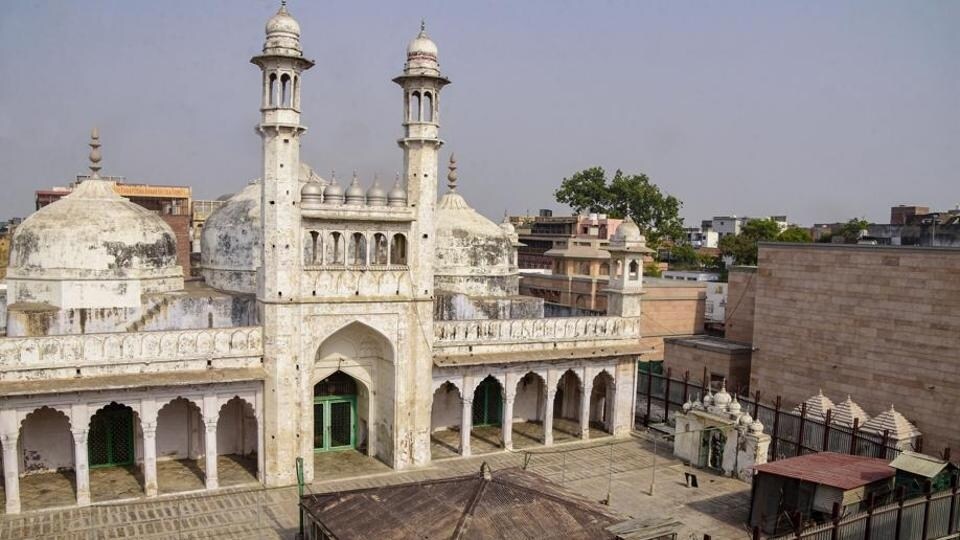
The latest turn of events puts the spotlight back on the Gyanvapi case, which, after the Ayodhya verdict in the Supreme Court in November 2019, is a key marker in India’s balancing act between religion, polity and the law.
Gyanvapi dispute
Less than two years after the Supreme Court delivered the landmark Ayodhya verdict, permitting the construction of a Ram temple at the site where the Babri Masjid stood before it was demolished by a mob in 1992, five Hindu women filed a civil suit in Varanasi in August 2021. Besides Singh, the other four plaintiffs included Laxmi Devi, Sita Sahu, Manju Vyas, and Rekha Pathak.
The women asserted their right to worship inside the Gyanvapi mosque complex, claiming that since the mosque was allegedly built after the demolition of a temple in its place in the 16th century, Hindu deities — some visible, some not so — are present inside the mosque’s precinct. The women asked for yearlong access to pray at a shrine behind the western wall of the mosque complex. The site is currently opened for prayers once a year.
In April 2022, a Varanasi civil court ordered an inspection of the premises through an advocate commissioner. The following month, the civil court ordered a full survey of the mosque complex, rejecting the demands of Anjuman Intezamia Masjid Committee, the panel which manages the mosque, to limit the inquiry to certain parts of the precinct and remove the present surveyor. Even as the committee invoked the 1991 Places of Worship Act to seek the cessation of the survey, the Allahabad high court refused to halt the operation of the civil court order.
The 1991 Act locks the position or “religious identity” of any place of worship as it existed on August 15, 1947. The mosque management committee endeavours to bar all claims over the access to the mosque or title of the Gyanvapi complex relying on the 1991 law. Section 3 of the Act imposes a prohibition on individuals and groups of people against converting, in full or part, of a place of worship of any religious denomination into a place of worship of a different religious denomination, or even a different segment of the same religious denomination.
Also read: Main litigant in Varanasi's Gyanvapi mosque cases to withdraw after ‘lack of resources, harassment’
Supreme Court intervention
On May 13, 2022, the Supreme Court declined to stop at once the survey of Gyanvapi mosque, saying the matter would have to be considered in due course, as the committee appealed against the high court order. Two days later, the Varanasi civil court ordered a section of the mosque complex sealed after Hindu petitioners’ lawyer Hari Shankar Jain claimed that a “shivling” was spotted at the bottom of a tank during the survey.
On May 17, 2022, when the top court took up the matter, the mosque management committee urged the bench to immediately stay the proceedings before the Varanasi court, but to no avail. The bench of justices Dhananjaya Y Chandrachud (presently Chief Justice of India) and PS Narasimha directed the section of the mosque complex where the shivling was purportedly found shall remain protected, adding that Muslims will also have the right to offer namaz in other sections of the mosque without any hindrance. “If a shivling is found, we have to maintain a balance... We have to balance it out. We are aware of the sensitivities involved... This is a situation where everybody must co-operate,” it remarked on that day.
On May 20, the Supreme Court bench, which included justice Surya Kant in addition to the two judges mentioned above, made a crucial observation regarding the applicability of the 1991 Act to the Gyanvapi case. Ascertainment of religious character of a place may not be barred by the 1991 Places of Worship Act, the top court observed on that day as it refrained from interfering with the mosque survey. The court, in its order, shifted the suit filed by Hindu women from Varanasi civil judge to the district judge for deciding the mosque management committee’s preliminary objections against the enquiry.
Noting that the “complexities and sensitivities involved in the matter” would require a “more senior and experienced hand”, the three-judge bench transferred the suit to the Varanasi district judge. It asked the district judge to decide on priority the application of the mosque management committee under Order VII Rule 11 of the Civil Procedure Code (CPC) that challenged the maintainability of the suit on the ground that the case of Hindu plaintiffs was barred by the 1991 Act.
On September 12, the Varanasi district judge dismissed the committee’s application, holding that the suit filed by the Hindu women seeking the right to pray daily to idols installed inside the Gyanvapi Masjid is not barred under the 1991 Act or any other existing laws and should be decided on merits. The district judge emphasised the Hindu plaintiffs were not seeking a title of the property or a declaration that the disputed property is a temple. “The plaintiffs are claiming only right to worship at disputed property,” it added.
The Supreme Court was apprised of the district judge’s decision during the hearing on November 11 when the court extended indefinitely the protection of the section inside the mosque complex where the “shivling” was stated to have been found during the survey. On that day, the bench also asked the Hindu parties to move an application before the Varanasi district judge for consolidation of all the suits filed on the Gyanvapi row.
On May 19, the Supreme Court intervened again to put on hold the Allahabad high court order for a scientific survey to determine the age of the structure inside Gyanvapi mosque that Hindus insist is a shivling and Muslims say is part of a fountain. While the Uttar Pradesh government favoured suspending the impugned order to protect the structure from any harm, the top court said it would hear the challenge to the scientific survey along with the main case filed by the mosque management committee against the first order of survey by the Varanasi civil court that led to the discovery of the purported shivling inside the mosque complex in May last year.
Six lawsuits that seek title
Six suits that were filed after the one filed in August 2021 notably did not just pray for a right to worship but also claimed title over the land where the Gyanvapi Masjid currently stands. Filed through advocate Vishnu Jain, these six suits demanded restoration of a temple at the disputed site following a declaration that the entire area belongs to Hindu deity Asthan Lord Adi Visheshwar. The first plaintiffs of these suits included Satyam Tripathi, Ranjana Agnihotri, Suresh Chavhanke, Mahant Shiv Prakash Pandey and Sitendra Choudhary. Most of these suits were filed as next friend and devotees of the Hindu deities.
The suit by Mahant Shiv Prakash Pandey seeks a declaration that the deity is the owner of the land where the mosque stands and the mosque management has no right to enter upon or use this land and property in any manner.
“Issue mandatory injunction directing Defendants No.1 (UP Central Sunni Waqf Board) and 2 (Committee) to remove the super structure raised over Aadi Visheshwar Jyotirlinga within the time provided by the court failing which same may be removed through the executing agency of the hon’ble court,” prayed this suit, adding a new temple of Aadi Visheshwar must be constructed at the site where the Gyanvapi mosque stands.
The suit filed by Pandey further sought annulment of the registration of the plot in favour of Uttar Pradesh Central Sunni Waqf Board at the disputed site while seeking a restraining order against the board and the committee from making any interference in the worship of the deity within the property in suit. The other five suits plead similarly, pressing for the ownership and title rights over the land where the Gyanvapi mosque stands.
By an order on May 23, the district judge ordered clubbing and joint trial of these six suits and one more suit with the first case filed by Rakhi Singh and others while allowing consolidation of suits. The district judge noted that in all these cases, the subject matter and points raised for determination are almost similar and, therefore, “it will be expedient in the interest of justice” that all the eight suits are tried together. The judge clarified the oldest among the batch of suits, filed by Rakhi Singh and others, will be the leading case and evidence will be recorded in that case.
Long road ahead
A week after the cases were clubbed before the Varanasi district court, the Allahabad high court paved the way for the trial in the matter as it dismissed the mosque management committee’s appeal against the September order which had held the suit filed by Rakhi Singh and others to be maintainable.
However, while the Varanasi district court has fixed July 7 as the next date of hearing, the mosque management committee has decided to challenge the high court’s order on maintainability before the Supreme Court. When the top court will take up the matter, the committee is expected to seek a stay before the proceedings before the district judge.
Besides, the district judge now has eight suits before him. In six of these suits that have sought ownership of the disputed land, the mosque committee has filed separate applications under Order VII Rule 11, demanding rejection of the plaints. The remedy enshrined under Order VII Rule 11 is an independent and special remedy that enables the court to summarily reject a suit at the beginning, without proceeding to record the evidence or conduct a trial, if it is against the set grounds.
There are several grounds that can be raised under Order VII Rule 11, which include a lack of suitable cause of action, undervaluation of the relief claimed and if the suit is barred by limitation or any other statute. The mosque committee has raised the last two grounds mentioned above while pressing for rejection of the six plaints, arguing the suits are filed belatedly (barred by limitation) and further in contravention of the 1991 Places of Worship Act.
The mosque management committee is likely to stress on decisions on their separate applications under Order VII Rule 11 at the threshold before the district court. They rely on a raft of Supreme Court judgments, including the one in Dahiben vs Arvindbhai Kalyanji Bhanushali (2020) that made an affirmation that there “shall” be a rejection of the plaint if it fails to meet the preliminary grounds of maintainability.
The Muslim side also cites the apex court judgment in K Roja vs US Rayu & Anr (1960), which held that while an application under Order VII Rule 11 can be filed at any stage, the court must decide the same before proceeding with the trial. “There is no point or sense in proceeding with the trial of the case if the plaint is only to be rejected at the threshold,” said this judgment. Therefore, the district judge will be urged to first take a call on the applications moved under Order VII Rule 11 in each of the seven suits clubbed by it.
On the other hand, the Hindu side is expected to argue the district court should proceed to record the evidence without the need to decide the applications on maintainability of the seven suits in the first instance. They bank on the Supreme Court judgment in Sopan Sukhdeo Sable vs Astt Charity Commissioner (2004), holding that the trial court can exercise its power at any time before the conclusion of the trial.
With an array of legal battles parallelly set in motion, the Gyanvapi dispute is a microcosm of what is to follow in terms of the role of the judiciary and judicial scrutiny after the 2019 Ayodhya verdict. But there will be many twists and turns before the case reaches its verdict, inevitably in the Supreme Court.