
 E-Paper



Extreme rainfall in short spells becoming common
An area getting more than 204 mm of rain within 24 hours is defined as an extreme rainfall event by the IMD.

 Prefer HTon Google


Despite deficient rainfall in most districts of India this year, there have been floods in several parts of the country due to sudden spells of concentrated heavy rain, according to India Meteorological Department (IMD)’s district-wise rainfall data.
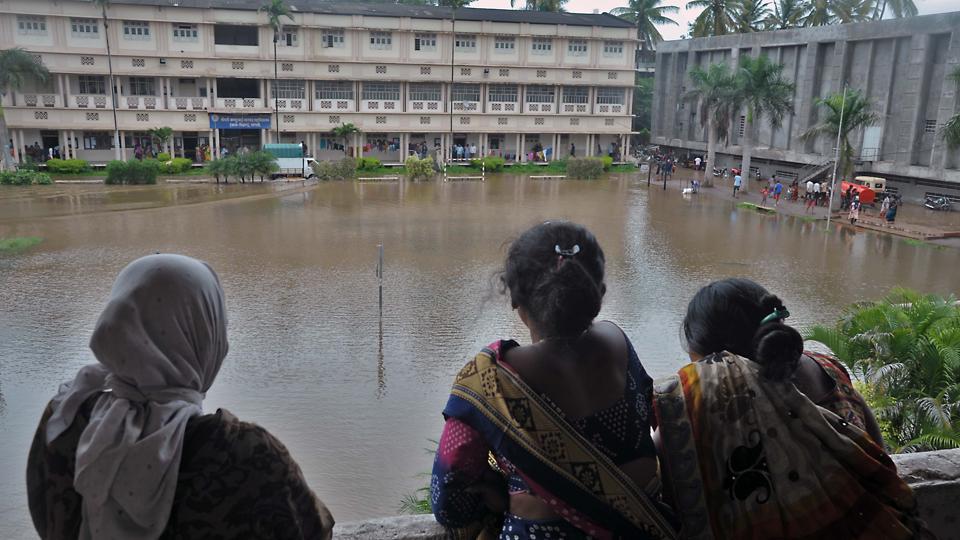
This proves as real the Intergovernmental Panel on Climate Change (IPCC) claim on Monday that extreme rainfall events in south Asia are increasing.
An area getting more than 204 mm of rain within 24 hours is defined as an extreme rainfall event by the IMD.
The IMD’s rainfall data from June 1 till August 8 shows that except in parts of Maharashtra, Karnataka, Andhra Pradesh and Assam, the majority of districts in all other states have deficient rainfall, suggesting that rainfall has not been widespread and has been in concentrated spells in certain areas, causing flooding.
“The signs of climate change causing extreme rainfall are much clearer now,” said K J Ramesh, former director general of IMD. “Most of the flooding this year has been caused by heavy spells of sudden rainfall in a few hours, causing massive flooding and displacement of people.”
On August 1 and 2, Vadodara in Gujarat received 499 mm of rain within 24 hours, which was 83.64% of the total rain this monsoon in the industrial city. While Vadodara, Valsad and a few districts of southern Gujarat received heavy rain in the first week of August, deficiency in rainfall in most other districts of the state was up to 52%.
Bihar is another state that exemplifies contrasts in weather. While parts of northern Bihar such as East Champaran district – it received 87.2% of the total monsoon rainfall in the first week of July -- have had the worst floods in the past two decades, most of southern Bihar and Jharkhand have seen dry weather conditions.
Both in Maharashtra and Karnataka, which have been receiving heavy rain in the past few days, there are regions that have received less than normal rainfall. In Maharashtra, the Marathwada region has 15% rain deficiency whereas in Karnataka, Bengaluru and nearby districts had 32% less rainfall between June 1 and August 8, according to IMD district-wise rainfall data.
The rainfall pattern this year confirms the findings of a study on rainfall in India between 1901 and 2016 by Pune-based Indian Institute of Tropical Meteorology (IITM), which showed that extreme rainfall events intensified in the period 1981-2016 with “significant decline” in monsoon rainfall in eastern Uttar Pradesh, Assam and Meghalaya and increase in East Rajasthan, Kutch and Saurashtra.
In the context of climate change impact on monsoon, Priyadarshi Shukla, one of the co-authors of the IPCC report on “Climate Change and Land” released on Monday, said the change in rainfall patterns in India could lead to food production going down by 23%, disrupting food supply chains and impacting the country’s overall food security.
The monsoon is the most important climatic factor for the Indian agriculture sector and erratic rainfall patterns are adversely impacting agriculture production and quality of horticulture produce in many parts of the country, various government studies in the past decade have shown.


